

KN Magazine: Articles
LIMITS
In “Limits,” Clay Stafford reflects on the lifelong belief that success requires pushing through every obstacle and never admitting weakness. Over time, however, he realized that ignoring personal limits can lead to exhaustion, frustration, and a narrowing of curiosity and creativity. Rather than being barriers, limits can act as guides—helping us focus our energy on what truly matters and preserving the clarity, purpose, and depth that meaningful work requires.

I was raised to believe that when I came to an obstacle, it was a personal shortcoming if I did not push through, a personal failure if I did not succeed, and a personal cowardice if I gave up. Those beliefs inhabited the marrow of my bones and festered in the recesses of my brain. I had no natural limits, none of us did, or so I thought and was bred to believe. Even giving credence to such an absurd suggestion felt irresponsible. I knew I and everyone else could overcome anything if we only pushed hard enough. There was no skill we couldn’t learn, no talent we couldn’t expand, no mountain we could not climb. I not only judged myself; I judged everyone. I taught it to my students and in my lectures. We all needed to be responsible for the optimal performance of our lives. It was called being dependable, being responsible, rising to the challenge, working harder and smarter, and pushing through. The push was always highly emotional, causing stress and conflict not only in me but in all my relationships, where others’ performances fell short, but I knew it was worth it. It brought out the best in all of us. Like a winning coach, I pushed myself and those around me. And when they pushed back, I viewed their lack of participation as denial and even laziness. Emotionally wrought, I could never see the mental clarity lost in this thinking. From the dejected faces of those I lived and worked with, it seemed I failed in the very presence that I thought I was being, the one I thought I was protecting. Even in that, I strove to do better.
The satisfaction of control brought me peace, or so I thought. I put myself in charge of my destiny. I oversaw my own future, and nothing could get in the way of that, and very little did. I offered every problem and relationship a doorway that could make things easier for me and everyone around me, but if it was blocked, I had no qualms about going through the wall. Pushing longer, harder, and stronger was, to me, a form of commitment. Staying with a problem until the end of the day, even if that day ran into the night, or even several days without sleep, was applaudable devotion and intention. Accepting limits or growing tired meant one had no self-respect. This was how a meaningful life was to be built; the lives of the great men and women I read in biographies exemplified that. They pushed through because they had something all of us could acquire: character. They built meaningful lives; I would, too. Endurance, discipline, and refusal to quit were the framework of success. Refusal to quit meant refusal to retreat, like cowards, like those who were weak. Even rest itself, I told myself, could wait. “I can sleep when I’m dead” was not uncommon coming out of my mouth in reply to those who were close to me and cared, as I popped my trucker’s caffeine pills, drank my ten Cuban coffees, and my gallon of daily tea.
The cost of this thinking and living with such force didn’t show up immediately. It took decades. That’s the deception we take to heart when we believe the deceitfulness chocked at us by the sycophants of the famous. The famous lied to the watching world, the obsequious flatterers lied to readers of books about great men and women, and then I took those as truths and lied to myself. Sure, the lies gave me extra waking time, or something that resembled it anyway. I learned how to stretch the day thinner, how to draw more from myself than I thought I could. The point that activity didn’t always equal accomplishment, though, was often lost on me. What I gained in hours, I lost, though I didn’t realize it, in life and relational clarity. After decades of this rat race, my attention to the important things, not just the walls to burst through, began to dull. My decisions about where to focus slowed. Simple things began to take longer, though I attributed that to age. Regardless, the very life I had always believed I was protecting by defining my own fate began to resist me.
I began to see, or rather I began to feel, that the very wall that I could not seem to push through was myself. Nothing dramatic happened to show me this. Fatigue didn’t announce itself to me publicly. Nothing in my life collapsed. Feeling tired all the time wasn’t bad; it was my baseline. Yet, focus began to take on the persona of irritation toward my work, myself, and the people around me. I no longer set out to tackle only the big things; small problems now carried more weight than they should have, and small mistakes by others began to irritate me. Life began to feel painful, even at times undesirable. Everything became such a big deal. I found that where I used to slam through walls, I began to make choices not out of intention, but out of relief. I became drawn to whatever would end the discomfort the fastest.
Being successful, I began to wonder, why did I feel at rock bottom? Being high in my profession, having relationships others would envy, having built the life I envisioned, something had to change, though I didn’t know how to give it a name. My choices began to become ill-guided, not from indifference, but from dullness. The part of me that once noticed nuance grew silent. Subtle distinctions in life, work, and people disappeared. I lost my sense of when effort was required and when time was the truer answer. I could still function, but I was compensating, now relying totally on force on everything where attention and inspiration once worked cleanly.
Then came denial, and the emotional cost that followed. Each time I overrode the yokes, big and small, that pulled me down, I taught myself not to listen. Signals that I used to welcome began to annoy me. They were inconveniences to my peace. Discomfort became something to suppress, to submit to silently rather than with understanding. Gradually, all trust eroded, not just in my body, mind, emotions, or energy, but in myself in general. A faint impatience began to settle in, yet flat, a sense that I was now pushing through life, all parts of it, still accomplishing, but rather than moving with it, things were no longer flowing.
As a result of shutting out the world and the world within my own head, my world narrowed. Limits began to change perspective. Everything became about getting through the day. Curiosity, my lifeblood, even began to fade. I knew something needed to be done, but that was the problem. I had everything I could ever want. Recovery from that seemed crazy and certainly ungratefully indulgent. Surprise began to have no place or excitement. My world was perfect. I was not in crisis, yet I was living as though I were. Survival mode replaced presence without my consent. Everyone around me felt it or felt the brunt of what I would not share.
I think the most dangerous part was how ordinary it all felt. Nothing told me to stop. Nothing told me to slow down. Nothing hinted at any type of collapse. Nothing told me I needed to stop bashing walls. No one told me I had a problem, or if they did, I didn’t hear. What I was doing, though, was operating below capacity, and I’d been doing it for way too long. I focused on my limitations to the point of obsession, at the expense of seriousness and gratitude about what I could control. There were limitations that I could not power through, I realized after too many years. And because I didn’t realize this earlier, all limitations, even challenges, began to operate out of the same intensity. Out of the blue, it hit me that if I couldn’t power through certain things that didn’t erase who I was or what I could become despite them. I realized that maybe those walls were there for a reason, that maybe I was meant to be something I didn’t consciously see myself as. The realization was slow and painful, but my life began to change. Centering took the place of warfare.
My limits took on a new light. They were never obstacles; they were misconceptions on my part. They were even guardians of who I was meant to be. The sad thing is, I had been deluded and deluded myself for a lifetime. I recognized the pundits of the super life were frauds. I began to respect those limits. At first, I didn’t respect limits dramatically or perfectly, but rather honestly, and, when I did, something softened inside me like the Grinch’s frozen heart. Efforts on things that were within my limits became cleaner. Decisions within my framework grew quieter and more precise. Life began to deepen again, rather than merely expanding. I began to do less because I stopped slamming into walls and instead spent my time doing more. That was the paradox. In fact, I did better at everything I did. The cost of refusing to stop at natural limitations had been the gradual loss of the very capacities that made my efforts meaningful in the first place. Limits and walls became not challenges to defeat, but invitations to stop long enough to acknowledge, honor, and preserve those things that did matter within the sphere of life I’d been given in which to live. Limits became no more than a beautiful river in my life, a life without a boat, that asked me to choose the path to the left or to the right when it told me in so many ways I could not cross but promised adventure no matter which direction I chose.

Clay Stafford is a bestselling writer, filmmaker, and founder of the Killer Nashville International Writers’ Conference, Killer Nashville Magazine, and the Killer Nashville University streaming service. Subscribe to his newsletter at https://claystafford.com/.
LISTENING
In “LISTENING,” Clay Stafford reflects on how stillness, restraint, and quiet attention reshape understanding, relationships, and meaning. Instead of solving, pushing, or fixing, he discovers that discernment and presence — listening without needing to act — can deepen insight and transform how we live, create, and make decisions.
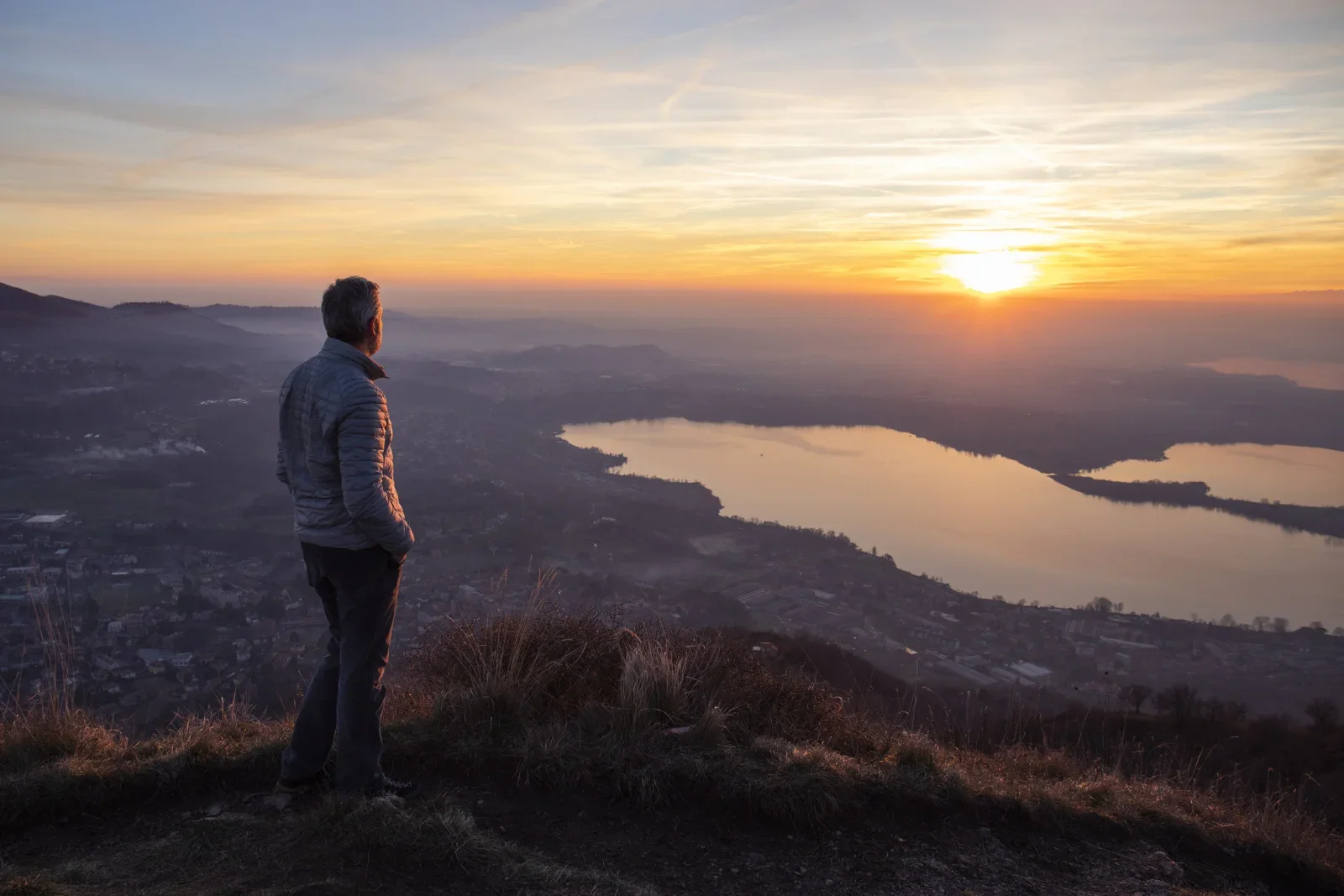
I always believed that human glory and life’s meaning were found in the senses: what I saw, touched, felt, heard, smelled, and tasted as I sped down the passing lane of accomplishment. These things provided the richness of living, complementary to the mountainous regions of sentience, the arcs and trajectories of being, and the hills and valleys of experience, the satisfaction of the present moment, and the excitement of things to come. Moving through those elevations and absorbing the delight of each moment seemed attainable only through effort and discipline, verified by visible signs of progress. Passivity, I believed, would not allow fate to deepen. Nor would acceptance or routine. I was not born intentionally appreciating what surrounded me. It was up to me to seek it out. Without intention or constant effort, something in me dragged me downward, turning me negative, and closed my eyes to the beauty held even as close as a flower in my hand.
For me, work and sacrifice were never separate. I approached my work the same way I approached my love of conduct: as a builder, a creator, someone constructing what I envisioned and leaving nothing to chance, mitigating the risk of even a moment lived without purpose. Committed to experience and beauty and the love of spirit, I lived with the belief and what felt like proof that if I worked hard enough, planned carefully enough, and remained devoted to improvement, the more profound human aspects, such as spirituality, intellectual pleasure, and emotional fulfillment, would arrive on their own. I only needed to lay the tracks. I assumed understanding, timing, and wisdom would naturally follow once the visible work and confirmation to my senses were undeniable. What I did not realize was that the skill that mattered most, the one that would ultimately transform my existence and my relationships, was not something I could see, touch, feel, hear, smell, or taste. It was not visible at all. It belonged to the category of things I assumed would take care of themselves if I were disciplined enough to live an examined, well-lived reality.
Whether innate or shaped through observation as I grew and matured, I came to believe that vitality was shaped entirely by purposeful intention. When something failed to work, maybe a relationship, a decision, or a season of my lifestyle, I tried to fix it the only way I knew how: by adding more effort, more thinking, more explanation, more force, more control. Wasn’t it my responsibility to build an existence I could eventually look back on without regret, one I could reach the end of and say, well done? For me, clarity came from that assertion, from believing meaning could be pressed into place if I pushed hard enough and demanded transformation. It was unsettling to discover that my diligence, the very trait I trusted most, was often working against me.
At one of my lowest points, I realized that one’s lot was more than experience, sensation, and action. Viability, I found, communicates just as clearly when it is encountered quietly, indirectly, and without urgency. Being a fixer revealed its limits in moments that required no solution, situations that asked for no action, and questions that had no immediate answers. I flailed there. I didn’t know how to stand still. I wanted so much more from destiny than what I believed I had been given that I failed to notice what was already present. When this recognition arrived, it did so subtly, yet with quiet unease. The problems that continued to trouble me were not rooted in lack of effort or achievement. They stemmed from failure to listen to things that did not need to be, but were, without asking for my attention.
Hearing and choosing when not to attend was what I had missed. Discernment. Not paying attention for approval or instruction, but being attentive for boundaries, for signals, for the difference between what wanted to be rushed and what needed time. I had to hear the quiet truth that some things were not asking me to act, repair, or improve; they were asking me to stop interfering. And yet, I wasn’t taking heed.
To my surprise, taking into account itself became an act. It was not passive. It required restraint and patience. Concentrating asked me to tolerate uncertainty without rushing to resolve it. It asked me to leave unfinished things unfinished, to resist tidying them up or wrapping them up prematurely. Keeping my ears open meant trusting that clarity sometimes arrived only after I stopped demanding it.
At first, this felt unproductive. From the outside, monitoring resembled hesitation, pausing instead of advancing, waiting instead of fixing. When I stopped pushing, I felt lost. In doing nothing, I wondered what I was doing at all. There were fewer markers of progress, no surge of momentum, no thrill of accomplishment. Slowing down felt uncomfortable in a world and in my own world that rewarded decisiveness and speed. And yet, something began to change.
When I took note instead of forcing outcomes, the quality of my decisions shifted. My perceptions changed. I stopped shaping results that didn’t truly fit. I recognized when something was complete rather than refining it beyond necessity. I learned, often uncomfortably, that others did not always want solutions; they wanted to be heard. Silence, I discovered, could carry weight without being filled, and tuning in altered my understanding of doubt. Uncertainty became information rather than a shortcoming. Things were not broken; they were unresolved, and that distinction mattered. It gave me patience I had never practiced before.
I came to understand that the apparent inactivity of focusing was itself a form of action. It was not instinctive. Like any skill, it was built slowly through humility, repetition, and restraint. It sharpened not through effort, but by stepping back and allowing actuality to reveal itself without interruption. Once perceived, it grew. It became the foundation beneath every visible skill, every tangible accomplishment. Everything I did depended on this quiet test for its truest execution.
The quietness began to permeate my continuation. I found myself longing for it. No amount of effort could replace it. No amount of planning could override it. Without lending an ear, progress dissolved into noise. A new reality had come. And in returning to the full circle, I discovered something unexpected: even stillness had direction. I had not underestimated listening because I considered it unimportant. I underestimated it because it was quiet.
Clay Stafford is a bestselling writer, filmmaker, and founder of the Killer Nashville International Writers’ Conference, Killer Nashville Magazine, and the Killer Nashville University streaming service. Subscribe to his newsletter at https://claystafford.com/.
THE CHAIR IS STILL THERE
On mornings when creativity feels hollow and momentum seems absent, Clay Stafford learned a crucial lesson: the work of a life isn’t built on inspiration or certainty. In “The Chair Is Still There,” he reflects on how discipline, presence, and the simple act of returning to his chair—cup of coffee in hand—reframe his creative life, strengthen his relationship to his art, and allow meaning to emerge without fanfare.
By Clay Stafford

Mostly working from home for the majority of my life, there was no boss to meet, no comptroller checking my clock-in for work, no meetings I had to be on time for, only me, waking up and stretching in bed, thinking of how I envisioned my day to play out.
Most days were and are filled with excitement. I knew what I was going to do. I loved what I did. I was blessed to be able to do it. Most mornings were filled with ambition and excitement, so I couldn’t wait to get to work and get started. But there were those dreaded mornings when I awoke, stared at the ceiling, and realized there was no fuel in the creative engine for the day. On those mornings, there was no urgency to get out of bed, no spark inspiring me to begin. There wasn’t even resistance. In the dim light of the morning sun coming through the cracks of the closed plantation shutters, there was simply a hollow quiet where momentum typically was and should have been. Those moments felt empty, nothing resembling the welcomed heaviness of life, just a distant void, as though everything that normally mattered had somehow, during the night while I was dreaming, slipped down the hallway to another bedroom and closed the door, sometimes even locking it behind it, climbing into the bed and pulling the covers over its head.
Those were days that felt like failures even before they began, and because I predetermined them while lying in bed, they usually turned out as I expected. I used to think I could only show up for my life when my inner world was in agreement, when want and purpose matched, when I knew why I was doing something, and when the effort made sense. I could only do things when I felt like it or when the meaning was clear. When that alignment was absent, I assumed the day was already lost and a wasted day of failure lay ahead. I felt it in my heart and even in my bones. I hadn’t yet learned that the real discipline of my life wasn’t built on feeling ready, but on returning.
It wasn’t until later in my life, when maybe maturity or practice, or even serendipitous events, proved me wrong, that I realized these mornings were simply a different kind of threshold, their own unique entry into a day that, at first glance, felt formless and uninspired. Somewhere along the way, I learned that discipline, what I needed to create the perfect day, was less about preplanning, force, or even intention, but more about presence.
I don’t know when my thinking started to shift. I certainly didn’t make it happen. I didn’t will it. It certainly wasn’t some trite self-help or productivity hack. It didn’t even arrive with some revelation. It came oddly and unplanned, as a habit. Whether I had the vision for the day or not, I got my coffee as usual, set up my desk, and sat down in my chair to work, even when I didn’t know what I wanted to work on or, if I did, even when I wasn’t inspired. Motivation didn’t earn me a spot at my desk. Routine did. On those days, I kept the bar low. I didn’t promise much to those hours except the assurance to my computer that I’ll be close by if needed. No plans were negotiated, no meaning defined, and rarely was any enthusiasm offered to the Muse as tribute. Sometimes on those days, I thought my purpose in life was to drink a cup of coffee, watch my birdfeeder, and ponder, in the world of evolution, what crazy lizard found itself jumping out of a tree and realizing it could fly, thus creating a new species of birds. In other words, with no plans or inspiration, I sat there because I didn’t know what else to do.
It surprised me at some point how little was required to sit there. It was freeing. Even on those hollow mornings, the chair was still there, waiting. I didn’t need conviction. I didn’t need direction. I didn’t need to believe that anything I was doing mattered. I only needed not to leave. I needed to sit with whatever drifted through my mind. The common thread behind it all was my chair, on productive days and on days of nothing. It was always sitting there, consistent, no matter where my head was. So, I returned to it, some days with more fervor than others, but always with a refusal to hand over control to the weather outside (I write outside on my porch) or even the weather, no matter how calm or turbulent, going on inside of me.
Those neutral days of nothingness were not heroic. They were days that neither lifted nor dragged, days that offered no motivational or dramatic reason or inspiration to move forward, but at the same time, no compelling reason not to be there. It seemed on those days that the world asked nothing of me other than attendance in that chair, across the lawn from the birdfeeder, pondering the processes of the past few million years.
When I think back on my own evolution now, what strikes me is not how much time I wasted sitting there, but rather how honest those hours were. Out of boredom, I did begin to tinker, but without the need or motivation to impress, accelerate, or aim beyond the moment, I moved straight to the essentials as they popped into my head. It was all rather casual. There was no adornment, no performance, no word count, no chasing of superiority. Just small, impulsive, inner-driven activities, whether rain or shine, just some sort of private continuity with days more productive, but with no invisible audience or ego applauding, but at the same time nothing left undone. When inspired, sitting in the chair, I did what I felt inspired to do, letting direction come from the nothingness.
Over time, something shifted. Those neutral (I wouldn’t call them wasted) days, those unremarkable returns to the chair each morning, began to alter the way I understood myself in the same way that I could envision lizards growing wings millions of years ago. I don’t think I ever patted myself on my back for my consistency of sitting in a chair (that hardly seems a heroic act), but I did begin to trust it as an inkling of something I couldn’t put my finger on began to take form in my consciousness, in my being. Showing up and sitting down, I began to sense that I did not need to feel aligned with my work or even with myself to remain connected. Just drink coffee and watch the birds, and occasionally look at my computer screen. I didn’t need the weather, inside or out, to give me permission. Before I stepped into the day, I needed to go to my chair and sit. And, surprise to me, somewhere along the way, my fingers would find their way to the keyboard, and I would start to type. Somewhere by the end of the day, I would pause and look back on all that I had accomplished, even though I had had no preplanned direction.
Trust accumulated in ways I couldn’t have articulated then, but it did soften the drama around the difficulty of being aimless. It quieted the argument between desire and duty. It reframed commitment as identity rather than effort. I began to see that most of what endures in life is built not on bursts of certainty but on the steady, unimpressive, evolutionary cadence of return.
The curious, but also understandable, thing is that the work of my life didn’t constantly improve in those days, but my relationship with my work, and even myself, did. Sitting down in my chair became less conditional, less dependent on mood or inspiration, or the unpredictable tides of self-belief or raw motivation. Sitting down in my chair became, instead, something like a morning welcome, a companionship, coming with the predictability and comfort of knowing that the sun will rise each day and I will sit: steady, imperfect, patient.
Looking back, I never found the dramatic clarity I once believed I needed to move forward. I saw something quieter. I discovered that life continues, like birds in flight, even when eagerness does not. I found that meaning doesn’t always come hand in hand with willingness. I discovered that neutrality is fertile in its own way. We don’t need a parade; we only need a chair.
I once thought that discipline was a loud, cinematic declaration, something founded in great ambition or proven with relentless, knock-the-walls-down drive, but the truth, for me, instead lived in a place outside on the back porch, an ordinary chair, waiting without fanfare, and asking for nothing other than my presence. “Come as you are,” it called. “If nothing else,” it said in its Southern way, “just sit a spell.”
Perhaps the unexpected lesson for me is this: the parts of life that endure are not always those born from passion, certainty, or predetermination while lying in the bed in the morning and staring at the ceiling with the morning light coming in through the shutters, but instead it is from the steady, unremarkable decision to get my coffee, in my routine, and sit in my chair long enough for meaning to find its way back. The chair is always waiting.
Clay Stafford is a bestselling writer, filmmaker, and founder of the Killer Nashville International Writers’ Conference, Killer Nashville Magazine, and the Killer Nashville University streaming service. Subscribe to his newsletter at https://claystafford.com/.
THE WORLD GOT WIDER
For years, Clay Stafford believed that meaningful work required external confirmation—applause, validation, or visible momentum—but that belief quietly narrowed his life and creative choices. In this reflective craft essay, he explores how releasing the need for approval transformed uncertainty from a warning into a companion, allowing courage, creative freedom, and authentic purpose to take the lead in both writing and life.
By Clay Stafford

For a long time, I believed that anything worth pursuing should come with a clear signal, some sign, momentum, or external confirmation that I was moving in the right direction. I think I was waiting for the circus to come to town. Looking for that exterior confirmation, though, quietly narrowed my world without me even noticing.
I didn’t really understand this belief, this idea that I was essentially performing for others. I didn’t think about it. It wasn’t something I put into words. It just showed up, thoughtlessly, like the morning sun. Unlike the mark of a new day, however, this subconscious belief or need for validation manifested as hesitation, maybe doubt. When no one clapped, no one replied to my desperate phone calls, letters, or emails, or no one offered a word of encouragement or support, I found I slowed down. I started to wait. “Give me a sign,” my needy heart exclaimed. I started second-guessing my map. I equated uncertainty with fear, that I was about to make a mistake.
I don’t know when this thinking began; it may have started in childhood, perhaps reflecting a need for parental approval in a conditionally loved world. The shame is that it shaped my life more than I realized. It made me cautious, even timid, in moments that required courage. Wherever it began and however it grew, this subconscious belief that I needed that validation trained me to seek approval from others rather than to seek direction from within. I couldn’t help but think that when progress was slow, and especially when it stalled, it was proof that I was off track. When I felt something mattered, but yet it demanded so much unapplauded effort, I wondered if I wasn’t forcing something that should not be rather than earning something that should not have to be affirmed.
Somewhere along the way, it hit me. Why? Maturity? God-given insight? Not sure. I know nothing external changed. There were no circus clowns. No breakthrough arrived. But inside me, the moment that my life began to change, the moment that I began to change, was a shift in the limiting belief itself.
Somewhere in my Los Angeles days, I began to notice that the work that mattered most, not only to me, but to others, oddly rarely announced itself. In its inception, in its call to adventure, it made no promises. I didn’t have to wait for the green light to proceed. I didn’t need any person in power to give me some grand confirmation that I had finally found the path. Instead, my life and work began to show up, not with fireworks, but in small, unglamorous ways.
I found I was passionately involved in my work and life when previously I would have told myself to quit. Problems or roadblocks? Instead of avoiding or dismissing them and walking away, I found I started returning to them day after day, living and loving life regardless of who, if anyone, ever noticed. The silence, the fact that no one was even noticing, stopped coming across to me as a warning. The silence became the mental space where my life and work began to live and grow. And from the silence, to my surprise, others began to notice.
“Reassurance” is the key word. I no longer needed it. And when I began to accept this, to believe and live it, subtly, my attention changed. Without needing approval, I began to notice the quiet pull toward specific ideas or desires that were intrinsically my own, not someone else’s to validate. Life started at that moment to be an adventure, even if it was nothing more than showing up, even when nothing was resolved. It didn’t matter. I was living me. I accepted that sometimes understanding comes only after effort, not before. Looking back, I realized that my strongest decisions, the ones that actually changed and transformed my life, were rarely made in moments of confidence. They were made in moments of scared commitment.
With regret, but also with thankfulness for the experience, I realized how much life-energy and opportunity I had wasted, misreading what were, in fact, neutral conditions and neutral exterior feedback. No response didn’t mean that anyone was rejecting me. Resistance didn’t mean I was going in the wrong direction. Slow progress didn’t mean I was a failure or ill-equipped.
Letting go of the belief that I didn’t need external validation for how I wanted to live my life didn’t erase doubt. Don’t get the wrong impression. But what it did was to strip doubt of its authority. Uncertainty stopped being a verdict and became something I could walk alongside. I could live in the present, not the past or the future, and though it might feel uncomfortable to take risks others dared not, doubt was no longer in charge. Living the life I wanted to live became the mantra.
Letting go of that belief, that need for affirmation, didn’t suddenly make my progress in the world easier, but it did make it wider. Possibilities that had always been there came into view, and I was able to accept them without any need for anyone else’s approval. These possibilities that I dared not dream of didn’t change. They were there all the time. I simply stopped requiring permission to see them. Or honor them. Or rather, I realized the only permission I needed to live the life of my dreams on my own terms was mine.
I realized the world doesn’t widen because circumstances change. It widened when I stopped asking permission to dream big dreams. I wasn’t walking with the consent or acceptance of others anymore. I was walking with uncertainty, and noticing I still belonged, not to the whims of others, but to myself. I began writing my life, telling the story I knew should be told, even when I walked alone.
Clay Stafford is a bestselling writer, filmmaker, and founder of the Killer Nashville International Writers’ Conference, Killer Nashville Magazine, and the Killer Nashville University streaming service. Subscribe to his newsletter at https://claystafford.com/.
This Crazy Writing Life Performs Killer Nashville Post Mortems
In This Crazy Writing Life, Steven Womack reflects on the energy, community, and evolution of the Killer Nashville conference. With humor and honesty, he shares insights into the changing landscape of mystery and crime writing, the importance of connection in a writer’s life, and why building relationships—not just networks—remains at the heart of every successful writing journey.
By Steven Womack
As I write this, it’s been almost three weeks since the 2025 Killer Nashville conference concluded. I intended to sit down and very quickly dash out some thoughts on what has become over the last couple of decades a major international writing conference.
The only problem is I was so overwhelmed by it all that it took me a few days to recover, then another week or so to gather my thoughts and wrap my head around what it all meant. While I’ve been to Killer Nashville many times as a panelist or a guest speaker, this was the first time I’ve ever gone full tilt on the conference (I was supposed to go total immersion last year, but I got an unexpected visit from Mr. Covid).
So this was the year when I went all-in on KN. I was on three panels, plus the wonderful Jaden (Beth) Terrell and the equally wonderful Lisa Wysocky and I did a master class called “Setting, Sidekicks, and Secrets” that took all of Thursday afternoon. I also attended a half-dozen or so panels. It was both intense and simultaneously exhilarating and exhausting.
After all this, what’s the takeaway?
First—and this is not a particularly brilliant observation—Killer Nashville has evolved from a small regional conference first conceived by its founder, Clay Stafford, twenty years ago to a major national mystery conference. I’d go so far as to say its eclipsed just about every other conference of its type. The program booklet alone is 100 pages long. The number of sponsors grows every year, and its two awards—the Silver Falchion and the Claymore Awards—have become major mystery awards, as evidenced by how many winners are now including the award on their websites, social media, and C.V.s. Major figures in the mystery and crime arena—like this year’s Guest of Honor appearance by Sara Paretsky—now show up at KN.
Second observation: Killer Nashville celebrates mystery and crime fiction, but its over-riding focus is on writing crime fiction. Aspiring writers come to Killer Nashville to learn about the craft and business of writing crime fiction. A great deal of the conference concentrates on putting writers together with agents and editors. Panels covered topics like “Steal Like an Artist: Learning from Other Author’s Novels,” “Writers and Taxes,” and “Writing Intimacy: From Fade to Black to Open Door.” These are all craft components and business components of the writing life.
While there’s plenty of stuff at Killer Nashville to interest readers, and readers certainly seem to be welcome, writers and aspiring writers are going to get the most out of the weekend.
This separates it from other conferences like Bouchercon, which remains the largest mystery convention in the world. Bouchercon brings together fans and creators of crime fiction on an equal basis to celebrate the genre. Fans go there to meet their favorite authors, and authors go there to be seen and to maintain a presence in the mystery community. While there are panels on craft (although after attending a number of Bouchercons, I can’t remember any), people mostly go to Bouchercon to either meet their heroes or to network and do business. I was introduced to my longest running literary agent at the Toronto Bouchercon in 1992.
At the 1995 Bouchercon in Nottingham, England, I met Anne Perry, which was a great thrill. We had the same editor at Ballantine Books, and he introduced us. For writers, that’s the great benefit of attending conventions and conferences. Once you’ve been multiply published, you probably don’t need a panel on writing compelling dialogue. But to meet your own literary heroes or make friends with a fellow writer who will introduce you to their editor or agent is a real plus (and obviously, you can do the same thing for other writers as well). I’ve met people at Bouchercon and other conferences who’ve remained lifelong friends.
Third observation: Killer Nashville has grown to the extent that it is, in some ways, busting at the seams. The conference sold out, and it can’t grow any bigger without relocating to a larger venue (you know how those pesky fire marshals are). More importantly, the schedule is jammed from morning ‘til night. I realize that the event schedulers have to try to accommodate every author who wants to be on a panel, and that’s a truly noble objective. But when you’ve got a moderator and five panelists speaking on a panel that only lasts 45 minutes, then by the time everyone’s introduced and you leave ten minutes at the end for Q&A, each person has maybe five-to-seven minutes speaking time. This precludes any kind of really deep dive on any subject.
Final observation: Despite its growth and evolution from a minor regional conference that nobody’s ever heard of to one of the 800-pound gorillas in the mystery world, Killer Nashville remains one of the most cordial, relaxed, friendly conferences out there. There’s very little competition among authors for attention (in fact, I saw none), and the people who run the conference, all the way up to founder Clay Stafford, remain approachable, helpful, and easy to work with.
So what’s the final takeaway?
Writers tend to be introverts. Given our druthers, most of us would probably stay home in our jammies and pound away on a keyboard while our coffee sits there getting cold. Unfortunately, that’s not the way This Crazy Writing Life works. Writers, publishers, editors, proofreaders, everyone who occupies a place on this long journey is a human being and humans need connection. Publishing is an industry built on connections. Sometimes the hardest thing to do is to break out of our shells and comfort zones and get out there in the world, get our work out there into the world. I hate the term networking; it seems so mercenary. I’d prefer to think of it as building relationships based on mutual affection, goals, and aspirations.
And speaking of which, I’m off next week to St. Petersburg Beach to attend the annual Novelists, Inc. conference. I’ve mentioned Novelists, Inc. in previous columns. This is a different kind of conference. It’s all business and lots of hard work, but it also takes place on a gorgeous beachside resort, and the sponsors compete to throw the best dinners, parties, cocktail hours, and other goodies.
I know, I get it. It’s a dirty job but somebody’s gotta do it.
Thanks for playing along. See you next time.
Creating Your Personal and Business Road Map to Success as an Author! – Wrapping Up the Lessons Learned
In the final installment of her craft series, Pamela Ebel ties together the essential strategies for building a successful writing career—reminding us that writing is both an art and a business. From identifying your readership to managing contracts and sustaining long-term goals, this article provides a practical framework for mapping your personal and professional author journey.
By Pamela Ebel
The time has come to talk of many things we’ve covered in the first three articles in this series and wrap them up with string and sealing-wax.
In Article One, we determined that writing and publishing is a business. Because successful businesses have a concrete list of goals to be achieved, we outlined the skills needed to reach them. The list included 1) learning to avoid the ‘one right answer’ when outlining our career goals, 2) learning to create a structure to keep us on track to achieve those goals, 3) developing ‘situational awareness’ to respond to the impact that time and events have on those goals, and 4) Answering Five Questions that will help us move forward on the path to writing success.
Closing out our journey, we’re reminded that lives and career paths are not linear and therefore goals will run into head winds, be impacted by situations that slow us down or stop us completely for a time. Such is life, and if we’re confronted by the need to answer why the sea is boiling hot or whether pigs have wings, the answers to the following questions will help get us get back on the path.
The Five Questions to Answer
Who is our target readership?
Is it large enough to provide a livable income for our personal and business needs? While this seems to go without saying, the impact of events in this day and age make asking and answering this question crucial. Traditional Publishing houses are consuming each other at voracious rates. Small and Independent Publishers are feeling the stresses of a reading public that seems to shift reading habits and preferences rapidly. Self-published authors who found ways to swiftly reach their intended readers are also beginning to feel the head winds as technologies change and readers see more ‘look-alikes’ available in their preferred genres.
This means many readers no longer feel tied to ‘recognized author loyalties.’ It’s like reading tea leaves, yet failure to search the bottom of our cups may lead to a Mad Hatter’s Tea Party and failure.What value does our writing provide the readers?
Once we decide on the genre(s) and publication platform(s) we plan to use to reach readers, it will be time to determine what our works offer the readers that is different from similar writings. Writers have created virtual worlds to communicate with the readers in ways that feel as though they are ‘personal friends.’ We need to assess the brand we create, study the market place to look for trends that are working, and search for inspiration to create new approaches to support our work.What is our business model?
Are we writing in the traditional world with an agent that makes the contacts for us; an editor that is assessing our work and keeping us on ‘deadlines’ and a legal team assessing contracts, copyright issues and other artistic rights? Or are we working with a small press, independent press, university press, or a hybrid of some sort, that don’t always have access to those resources? Or are we creating a self-publishing career where we wear all of the above hats? These models will different revenue streams, pricing strategies, and time and work flow management supports. We need to decide what we can handle and what we need to seek help for.How are we working to build a sustainable business?
We need to go back to that list of goals we created when we decided to turn writing into a career and tweak them with solutions that answer these questions: What are our strategies for attracting new readers and keeping those who have invested in our writing so far? Networking strategies? Communication mechanisms, online and in-person? Calendaring and committing to attendance at conferences? Author/reader gatherings? Appearances at Public Events in the communities we live in? We need to remember all of these impact our family and other work obligations.How do we manage the skills sets needed to operate our business?
There are numerous operational questions that will arise when we begin to write full time. Chief among the early questions are, which computer, printer, and writing programs will fit our needs?
It’s at this point we need to look into the various publishing platforms we hope to submit to and publish with. Many online and traditional publishers no longer accept PDF submissions. So, we need to decide if purchasing this program and the supporting program, Acrobat, are necessary. Everyone will have to decide if a Mac of PC is the best set up for them. Depending on whether we plan to work with an agent and traditional publisher, a small press, a hybrid or go the self-publishing route we’ll have to contend with contracts for editing services, formatting services, publication clauses. and the financial decisions that arise. We should consider the possible need for tax professionals and intellectual property attorneys who can assist in avoiding tax and legal pitfalls. Finally, we’ll need to decide whether we should acquire professionals to assist in publicity development.
Looking at the issues above, we’re reminded WRITING IS A BUSINESS! And what we don’t know or choose not to consider can cost us. If we’re willing to take the time to consider the points raised in this series and frame answers that best suit our individual needs, we can Create Personal and Business Road Maps to Success as Writers.
Good luck to us all!
Creating Your Personal and Business Road Map to Success as an Author: Creating Situational Awareness of Time and Events Impacting Our Journey
Writing full-time isn’t just a career shift—it’s a life overhaul. In this article, Pamela Ebel breaks down how to reassess your goals using situational awareness. Through perception, comprehension, and projection, learn how to stay aligned with your purpose even as time, life, and industry trends (like AI) reshape the landscape.
By Pamela Ebel
Article One of this series explored the hurdles faced when we begin the change to writing as a full-time endeavor. We considered why and how to avoid the ‘One Right Answer’ when setting our professional goals.
Article Two examined how new goals may require major changes in our professional and personal lives. Their impact on our families, friends, and co-workers—many of whom will become the first audience for our writings—need to be addressed. To lessen that effect we discussed the need to explain the goals to these groups, include them in the decision-making process, seek their acceptance, and bring them along on the journey.
Now we’ll work to acquire or refine skills that ensure our goals stay relevant and achievable.
Creating Situational Awareness
Situational Awareness is something most of us do every day. We look around carefully as we head to our car in a darkened parking lot; prepare for an important meeting by studying those who will attend and the topic(s) to be covered. The list of things we believe require us to be aware of certain situations is prolific.
Still, when it comes to personal and professional goals, we often struggle to examine them with fresh eyes because, having committed to them early on, we’ve become victims of habit. To avoid this pitfall, let’s start creating situational awareness.
There are three parts to the process:
1. Perception– Start by examining our current writing situation to see what key elements, events and/or individuals have changed since we set the original goals. This requires refreshing memories about what our professional and personal lives were like before beginning the journey.
Next, we look at what changes have occurred. Did we quit the other career completely or did we move to part-time? Were there any major changes in our personal lives such as marriage, births, divorce, death, illnesses, relocation, which changed our plans? The answers may have altered our initial goals and immediate environment.
2. Comprehension– This step is often the hardest for us to tackle. When we delve back into the time, place, events, and the people that existed when we announced, “I’m going to be a writer full time!” what ifs abound.
The results of those original decisions may or may not be satisfying. They are, however, the reality we must work with when deciding if goals need to be changed. Consulting with the people that were and are still a part of our decision-making process will help in comprehending the new situation.
3. Projection– Identifying goals affected by time and events is the challenging part of this exercise.
Looking back, we should note the goals that have been met and are still worth time and effort to pursue because…? Beware of keeping goals based on the ‘One Right Answer’ or on habits that are outdated. List the reasons that justify maintaining and supporting certain goals.
Then take a close look at the goals that don’t appear successful or relevant considering added information. Checking with those individuals who have been with us from the start and other writers on similar journeys will allow us to make predictions of what is likely to happen in the near future.
Wait! This process is asking us to recalibrate our futures based on guesses about known and unknown facts and situations? When would we find ourselves in such a predicament having been so careful at the beginning? What could possibly throw the ‘best laid plans’ into such disarray?
One word that comes to mind – AI!
From Federal Court decisions in search of a way to demand and determine the presence of the ‘Human Hand’ in a work seeking publication and copyright protection under the U.S. Constitution to copyright protection in general being threatened with extinction in the United States, our journeys are now filled with land mines of questions that may have answers or no answers, all of which threaten to blow up the carefully planned journeys.
All of the above information suggests that we need all the help we can get to navigate through uncharted waters. That brings us to the final discussion in this series—what are the Five Questions we need to know and answer to have a successful personal and professional writing career? Join me for the final discussion soon.
Prepping for Killer Nashville: Top Tips for Attendees
Prepare for Killer Nashville with these top tips for attendees, from setting goals and creating your schedule to making lasting connections with industry professionals. Whether you're a first-time attendee or a seasoned author, these tips will help you maximize your experience.
This is your year! You’ve taken a tremendous leap to make writing a priority and take your author career seriously. You’re ready to step up your game and attend Killer Nashville—or any writer’s conference, for that matter. Whether this is your first or fifteenth conference, you may find some of the following tips a useful review of “do’s” and “dont’s” as you prepare for conference attendance.
3+ Months BEFORE
1․ Set Attainable Goals
A simple yet not-so-simple task. What are your goals for the conference? (Hopefully, you have at least a couple in mind. If not, please don’t skip this section!)
Does your list of goals look something like this?
Get a book deal!
Perfect my writing skills this weekend
Get personal feedback on my manuscript from an attending author
Pitch every agent and publisher
Build a large following
You’ve got some great ideas, but they are more suited for long-term goals rather than something that can be achieved during a weekend conference. Think of those things within your control (you can’t control whether an agent will request your manuscript, but you can ask for feedback or attend a pitch session), and consider what you most want to learn, improve, or accomplish to build success. Just as a house is constructed one board and brick at a time, so is a writing career.
A new writer might set goals such as these:
Connect with peers to share support and advice
Seek seasoned authors for possible mentoring
Attend workshops designed to hone writing skills (character development, plot structure, building tension, etc.)
Gain inspiration and motivation from keynote speakers
Explore different genres and writing styles, and participate in discussions that might spark new ideas for your work
Learn about writing contests, anthologies, and other opportunities to get your work published and recognized (consider submitting to the Killer Nashville Magazine, for example)
Consider signing up as a volunteer and learn more about what it takes to make a large-scale event successful
A writer who has written a book or two and is seeking publication might set goals such as these:
Meet industry professionals to gain insights into the publishing world and establish professional contacts
Gain industry knowledge through workshops and panel discussions to learn about current trends, marketing strategies, and the business side of writing
Receive critiques and get feedback on your writing from experienced authors and peers, who can provide valuable perspectives and suggestions for improvement
Take advantage of opportunities to pitch your manuscript or book ideas to agents and publishers
Explore publishing options: Learn about traditional and self-publishing routes, including the pros and cons of each
Meet with other writers and those in the business to build your professional network
A seasoned author may set goals such as these:
Learn about effective ways to build your author brand, use social media, and market your books
Develop or refine your elevator pitch, author bio, and other materials that present you as a professional writer
Find collaboration opportunities: Look for potential co-authors, writing groups, or other collaborative projects
Be present by offering to moderate a panel or present at the conference, actively take part in book signings, engage audience members and fellow writers
Volunteer to judge contest entries, contribute to scholarships, or advertise your books or services on conference materials
By setting achievable goals, you can maximize the benefits of attending a writers’ conference, ensuring that you leave with valuable knowledge, connections, and inspiration to advance your writing career.
2․ Design and print your business card
Business cards, you say? Yes. Whether you’re published doesn’t matter. You are attending a conference because you are a serious writer. You are a professional. Professionals carry business cards. You need them to exchange with other writers. You need them to hand out to industry professionals. You need them. Grab yourself a nice business card holder (these cost little, you can find a decent one for under $20), then study sample business cards. If you’re new to marketing yourself, keep it simple. Often simpler is better anyway, whether you’re a new writer or seasoned author.
Here’s a quick list of the essentials to include: your name, email, phone number, website, and social media. Optionally, you can add your face (I prefer this because I often forget names, but I don’t forget a face). You can also add a QR code that links to your email, website, or social media platform (LinkedIn, Facebook, Twitter X, Instagram). And if your name is the same across all platforms, you could simply put the icons for each platform on which you have a profile. There are many sites where you can create and order business cards for low cost—consider starting with 50. Think that’s too much? Probably not; you’d be surprised. You could print them up through your local print shop or UPS store, or use an online service such as Vistaprint, Canva, Shutterfly…there are many options, and often they have basic templates you can customize to make the job even easier. Compare reviews, costs (for both cards + shipping), and see what works best for you. It doesn’t need to cost you hundreds of dollars. As a personal example: my order of 100 cards on premium paper, plus a card holder (both with economy, free shipping) cost $35. Not bad for post-inflation.
3․ Research
Do your homework before you go! Learn what agents are attending (agents and special guests like keynote speakers are often listed on a dedicated webpage such as the “Who’s Who”). See which agents might be appropriate for your book and check their websites, wish lists, and social media for any updates. Often, even agents that are closed will request manuscripts at a conference! If you find an agent or two (or five) that would be a perfect match for your project, add them to your notes, along with their website and wish list, and consider adding a manuscript critique and/or agent roundtable with them. They don’t bite—promise!
Don’t forget to look at the keynote speakers as well—are they authors you recognize? Have you read their books? If not, grab a book or two they’ve written. The reason for this is twofold: they’re a keynote speaker for a reason, and reading their works may inspire you and teach you something about the craft. Two, it will give you a chance to meet them “up close” during their book signing. Remember, you’re there to learn and they’re there to offer wisdom. This is a great time to ask that burning question about how did they do it! Other poignant questions you might ask are:
What character did they relate to the most?
Do they outline or pants it?
What was the most challenging part of writing the book?
How do you handle writers’ block or creative burnout?
How do your personal experiences inspire your writing?
What advice would you give an aspiring author?
You could ask a question like one of these at the book signing or at a panel the author might present at. Be sure to ask questions that will help everyone, not just something very specific to your own situation (which also may be difficult to answer). And don’t ask all six items in the bulleted list above! Keep it simple, be polite. Pick your top one (maybe two) burning questions, and move on. There are hundreds of other people in attendance, and often many will cram into panels with popular authors, thus, taking up loads of time and not giving others a chance to ask their questions is like cutting in line: it ain’t cool y’all.
1 to 3 Months BEFORE
4․ Create Your Schedule
Most conferences will have a plethora of workshops and panels to choose from, with topics ranging from improving your skill set to the business side of writing. Killer Nashville is no different. Which means there are often multiple panels running concurrently. How do you choose when there are so many options—often hundreds of lectures—and you can only pick a handful? Here’s a handy guide to do just that:
A․ Set your goals (see #2). If your goals are to learn more about the craft, plan to focus most of your attention on that area. If it’s the business-side of writing, or a mix of both, then you’ll want to split your time accordingly.
B․ Print out the schedule (yes, even in the tech-fancy world we live in, I still print things because it’s easier to work with a printed version than a screen) OR copy/paste it into a Word document for editing digitally.
C․ Go through each hour of each day and carefully review the panels and workshops. Highlight the ones that instantly resonate with you. Don’t worry about highlighting more than one that run at the same time. For now, just mark the ones you want to attend.
D․ Take a break, then go through the list again, this time remaining objective and keeping your goals in mind. If you’ve got three panels highlighted at the 9:00AM-9:45AM slot on Saturday morning, you know you can’t do all three (unless you’ve cloned yourself). Prioritize by selecting the top panel based on your writing goals, and what you think would benefit you most this year. Label your selections as #1, #2, #3, for first/second/third choice.
E․ A couple days before the conference, recheck the schedule online and see what, if anything, has shifted. There’s always a potential for speakers to cancel, panels to get switched, or topics to be deleted or added. Compare it to what you have (especially your top choices—ensure those still exist) and change your current selections if needed.
If possible, get a map of the hotel meeting rooms ahead of time so you know what’s where. By following the steps above, you can confidently walk into the conference on Day 1, prepared with a plan to attend the sessions that will help you grow in your career. Remember to be flexible: things can change in real time too! Sometimes, due to unforeseeable events, your top choice panel could wind up canceled. Hence why choosing more than one panel to attend is helpful. If the primary one disappeared, you’ve got an alternate ready.
At the Conference
5․ Show Up
This seems like a no brainer. But “showing up” means more than simply being physically present. You need to show up with the right attitude to be both physically and mentally present. If your attitude is “I better get an agent at this conference or else…”, or “If I don’t win something, this was all a waste,” then you may need to step back and consider why you’re attending in the first place. Where do your thoughts settle? Do you find yourself focused on the past and what you could’ve/should’ve/didn’t do? Or are you constantly in the future—what needs to be done, what you will do, what your hopes are? A focus on the past or future isn’t inherently wrong or unhealthy. We all need time to reflect on the past for self-discovery and learning, and we need to consider the future to visualize our goals. But when attending a big event like Killer Nashville, focusing on the present is going to keep you grounded and be the most helpful as you navigate panels, listen to speakers, meet with authors, speak with agents, and network with fellow writers.
There will be a lot going on at once, and a mind that remains in the past or the future will miss the moment and recall it only as a blur. It may still feel like a blur, no matter how “in the present” you keep yourself, but you’ll recall much more and experience it better if you keep yourself in the moment.
Finally, don’t forget to breathe. Remember why you’re here. Take a minute to catch your breath now and then, between panels, take a walk or sit in a quiet place if you need to. This is an exhilarating time, so if you’re not enjoying yourself, take a “time out” to reassess, and get back into it.
6․ R.E.S.P.E.C.T
You made it, and so did your favorite author. They’re signing books and there’s a line out the door. Now it’s your turn! Don’t be “that” guy. You know, the one that holds up the line because they want to ask several questions about the characters and plot choices and how the author started and who’s their agent and…. There’s nothing wrong with wanting to ask questions, but remember to be considerate of others’ time (both the authors/speakers and other conference attendees). Always be respectful to industry professionals too—do not corner an agent in the bathroom or stalk them to their room or car. It’s one thing to ask an agent if they don’t mind hearing your 30-second pitch (assuming you’ve researched them and ensured they’re an appropriate fit for your project), it’s another to shove a paper copy of your full manuscript in their direction, or attempt to hold them ‘hostage’ in a conversation.
7․ Dress professionally comfortable
Typical attire for a conference will vary, but it’s always safe to assume business casual. Other tidbits of advice: check the weather ahead of time, and even if it doesn’t look like rain, it can’t hurt to pack a raincoat! Bring a light jacket, blazer, or cardigan: sometimes meeting rooms can be chilly. And have deodorant and breath mints at the ready (in your purse or the canvas bags often provided during registration). You never know when you might need a touch up or a breath refresher—especially before a pitch session! Now is not the time for crocs and beach shorts, nor do you need to dress in a tux.
For men: polos, button-downs, sweaters, or even a conference-related t-shirt, khakis, chinos, dress slacks or dark jeans. Shoes could be loafers or stylish sneakers.
For women: blouses, sweaters, or other nice tops, including a conference-related t-shirt, slacks, skirts, dress pants or dark jeans. Unless you’re comfortable in high-heels for long periods of time, flats, low heels or stylish boots are a good go-to.
Remember: there will often be frequent walking, standing, and sitting, so comfortable shoes and clothes are a must! Dressing in layers can help with fluctuating temperatures inside and out. Accessories should be simple and functional—though at Killer Nashville, you’ll likely get a stylish tote bag at registration to keep your notebook, pens, pencils, and business cards.
Though the atmosphere at Killer Nashville, and any writers’ conference, is relaxed and welcoming, having a professional and polished look can make a good impression on peers and industry professionals.
About 2 Weeks Post-Conference
8․ Follow-ups and Thank yous
The conference is such an exciting event, and you’ll likely meet countless people—agents, editors, new writers, seasoned authors, career professionals with unique expertise (retired FBI agents, doctors, forensics experts, etc.) When you have friendly conversations and make connections, you want to keep those folks in your network. You do that by following-up. About two weeks after the conference, email the people who’ve provided you business cards. If you need to, write something memorable in your notebook or on the card itself so you can remember why you exchanged business cards or to spark your memory about your conversation and questions you may have had for them. You won’t have time (and neither will most attendees) to ask all the questions or plan a writers’ meet up. Save that for later, and do so in the follow-up.
If an agent requested materials (woohoo!), take a second look at your manuscript. Do not send anything that’s not 100% ready. I wish I could tell you they’re dying to read what you’ve got and are sitting by their empty inbox waiting for it to come through. Sadly, this isn’t the case. There’s nothing wrong with waiting a couple more months to get your materials in order and as close to perfect as possible, then send it to them with a reminder that you met at the conference (following their guidelines, of course).
Send thank yous to agents you’ve met who took time to chat with you. Send the authors and keynote speakers a “thank you.” There are probably a hundred people you could thank, but sending it to the people who you connected with or did something meaningful should be adequate. Be sure to be as specific as possible (what is it they said or did that made you grateful enough to reach out?).
Often, the lifelong connections are formed in these follow-ups. (Maybe not always with agents, but certainly possible with other writers!). Connections don’t happen overnight, and relationships don’t forge over a weekend, but they can certainly start there.
Whatever your goals, whatever your stage in the writing journey, I hope you make it out to Killer Nashville this year! If you’re attending the conference, I’d love to meet you!
Chrissy’s work has appeared in three consecutive issues of Bridgewater State University’s “Embracing Writing” book for first-year freshmen. Her writing portfolio also includes publications in The Broadkill Review, SUSIE Mag, The Storyteller, and informative pieces for a local online newspaper. One of her unpublished novels, Foul Play, was a Suspense Finalist for the 2022 Claymore Award, and an excerpt from her unpublished novel Overshadow won Top Three Finalist of the 2024 Thomas Mabry Creative Writing Award. Though her background is in counseling, having earned a master’s degree in this field, when it comes to the art of writing, she’s an autodidact. She studies books she loves and enjoys completing various creative writing classes online, and attending writer’s conferences whenever she can; Killer Nashville is one of her favorites. Additionally, she’s volunteered since 2023 as a general editor for the Killer Nashville Magazine. She resides in Tennessee with her family, their talkative Husky, and a frenetic cat. You can find her online here: https://chrissyhicks.wordpress.com/ where she occasionally blogs about the writing life and reviews craft books.

Submit Your Writing to KN Magazine
Want to have your writing included in Killer Nashville Magazine?
Fill out our submission form and upload your writing here: