
KN Magazine: Articles
This Crazy Writing Life: Four Million And Counting! Please, Somebody, Make It Stop!
In this installment of This Crazy Writing Life, Steven Womack examines the explosive rise of AI-generated books and the growing challenges facing today’s writers. With millions of titles flooding the market each year, he explores how shifting publishing models, algorithms, and emerging technologies are reshaping the industry—and what it means for authors striving to create meaningful, lasting work.
By Steven Womack
As I mentioned in a previous installment of This Crazy Writing Life, it’s impossible to determine how many books are published each year throughout the world. However, most experts seem to agree that our best guess estimates now pop four million a year.
Four million books a year!
It gobsmacks the imagination. And with the advent of generative AI, that number’s going nowhere but up. It’s indicative of how much alarm this has caused that Kindle Direct Publishing (KDP)—Amazon’s indie pubbing platform—now limits you to publishing three books a day. If you’re good with AI, you can produce a “book” in under an hour. There’s evidence that there are thousands of accounts out there uploading more than 100 books a month.
It’s insane.
So when British writer and indie pubbing guru James Blatch (who is perhaps best known as Mark Dawson’s partner in what used to be called Mark Dawson’s Self-Publishing Formula before rebranding itself) wrote a Substack post a couple of months ago in which he suggested that KDP should charge $300 per upload…
Well, as we say in the screenwriting biz, chaos ensued.
This sent people straight into panic mode. I get it; most self-published books don’t earn $300 over the course of their entire lives (and a lot of trad books don’t). This would put a ton of folks out of business. And it’s going against the tide of where the indie-pubbing industry is headed. Ingram used to charge to upload a book, but now they’ve dropped that.
Apparently, Blatch (who is a genuinely nice guy; I had dinner with him and Mark Dawson at the Novelists, Inc. conference a few years ago) received nothing short of an avalanche of insults and threats over this idea. In a follow-up to the original Substack post, he wrote that:
Clearly the figure of $300 was the main issue. Even if it covers all derivatives, including translations, it would adversely affect more authors than I considered. But I will stand by the theme of the post.
Blatch makes a good case for putting up some kind of seawall against this word tsunami. If there’s no limit to AI slop, then we’ll all soon be drowning in it. Let’s also not forget The Elephant in the Middle of the Room, which is that a great many human-written indie-pubbed books should have never seen the light of day either (okay, there, I said it).
Of course, I’m not talking about your book or mine, but c’mon folks… We’ve all seen indie-pubbed books that are, frankly, embarrassing.
Prior to AI, my reasoning would have been that the market would have been the seawall. Word gets around that a book sucks and nobody will buy it. But these AI-generated tomes are also encased in AI-generated covers and backed up by AI-generated marketing. And if you’ve ever noodled around with AI covers and marketing (I have), you’ll soon learn that AI can produce some pretty good B.S. Their covers aren’t bad either.
This massive digital landslide hurts serious indie-pubbed writers. Amazon doesn’t give a rat’s rusty flip about you as an author. What they do care about is profit, and how do you protect profit?
By not p^*#ing off your customers.
Blatch wrote that Amazon has achieved this by altering its algorithm so that indie titles are penalized and held back from some chart positions. The algorithm has been tilted to the conservative side, so that books that make the best-selling charts tend toward those with a larger sales history.
I get why Amazon does this.
But it still hurts.
What we’re up against is the business model of AI-generated books. Humans who take writing seriously want to produce quality work that sustains itself over a long period of time. In the early days of my writing career, I imagined that my books would be a kind of annuity that would support me in my dotage and then continue to produce for my family after I’ve gone (reality quickly shut that dream the hell down).
AI-generated books are a new business model. When you’re producing a hundred books a month, if each one sells a couple dozen copies before people realize they’re drek, then you’re on your way to making a good living.
All this sounds like there are people running clandestine AI-slop farms from obscure offshore locations with no extradition treaty, like the folks with exotic accents who call me ten times a day offering me help with Medicare or make an offer on my house. That’s not always the case, though. Consider romance novelist Coral Hart, who was profiled a couple of months back in The New York Times. Ms. Hart is open and aboveboard about it: she creates romance novels with AI (specifically Anthropic’s Claude). She produced more than 200 last year, selling over 50,000 copies, and earning a good, solid six figures. To prove it could be done, she generated one while being interviewed.
It took her not quite 45 minutes.
So that’s what we’re up against. The competition was bad enough before AI. Now it’s even worse, and it’s not going away.
Now this effluent storm has even hit the trad publishing space. Hachette cancelled publication of the horror novel Shy Girl by Mia Ballard in the wake of The New York Times raising suspicion about the book. The cancellation of the novel, originally self-published and then picked up by Hachette after presumably good numbers and reviews, has caused a real ruckus in publishing. Apparently, there was a lot of speculation about AI content in the book from the get-go, but Ms. Ballard has vehemently denied in interviews and statements that she had anything to do with this. She maintains that the editor used AI to change some of her text without her knowledge.
But this begs the question of why a professional author wouldn’t go over the editorial revisions and catch the AI changes. Most writers that I’ve ever known, myself included, go absolutely medieval over a manuscript that’s been touched by an editor. Sharyn McCrumb once told me she was so put out over a copyeditor’s changes to her manuscript that she had two rubber stamps made. The first read Stet. The second read Stet, damnit!
The other issue that pops up here is why didn’t Hachette catch the AI problem before the Times pointed it out. Publishing industry guru Jane Friedman speculated that perhaps publishers need to start taking advantage of tools like Pangram, which are designed to detect AI. Maybe trad publishers are just behind the learning curve on AI.
But, Friedman pointed out, the real issue is that AI has now evolved to the stage where it’s going to get harder and harder to detect it. As she wrote: “I hope (finally?) that this is a wake-up call for publishing professionals. This is just the tip of the iceberg.”
Jane Friedman is spot on with this one. AI isn’t going anywhere; in fact, it’s going to get a little bit better each day. I read a blog post by a very famous and important writer (no need to name names here) who raged against AI, saying it was the devil incarnate and he’d never have anything to do with, never touch it.
I think that’s short-sighted. For one thing, if you don’t know anything about AI and refuse to even look at it, then you won’t notice it when it sneaks into your life. If you consider AI the enemy (and I don’t, by the way), then the first rule of war is know your enemy.
To circle back around to James Blatch, he wrote recently that he’d had a conversation with a senior Amazon executive, who told him that Amazon would never introduce an AI checker. As soon as you created one, AI would find ways to get around it. The technology moves too quickly on both sides of the equation.
I don’t have an answer to this one. I’ve noodled around with AI and found it to be an incredibly useful tool. I’ve done everything from generating marketing copy with AI just to see what it looks like, to screening stocks for options opportunities, and planning travel itineraries. AI’s like any other tool; it can be used for useful, worthwhile purposes or it can be used to cause great harm.
The one thing I would never do is use AI to generate copy that I then put my name on.
Bottom line: this is the price we pay for, as the old curse says, living in interesting times.
Next month, I’ll have some news on a project I mentioned in a previous column.
Until then, as always, thanks for playing along.
Editors- You DO Need Them
Editors aren’t optional—they’re essential. Whether you're self-publishing or submitting to a publisher, investing in the right kind of editing at the right time is crucial to your success as a writer. Here's what you need to know.
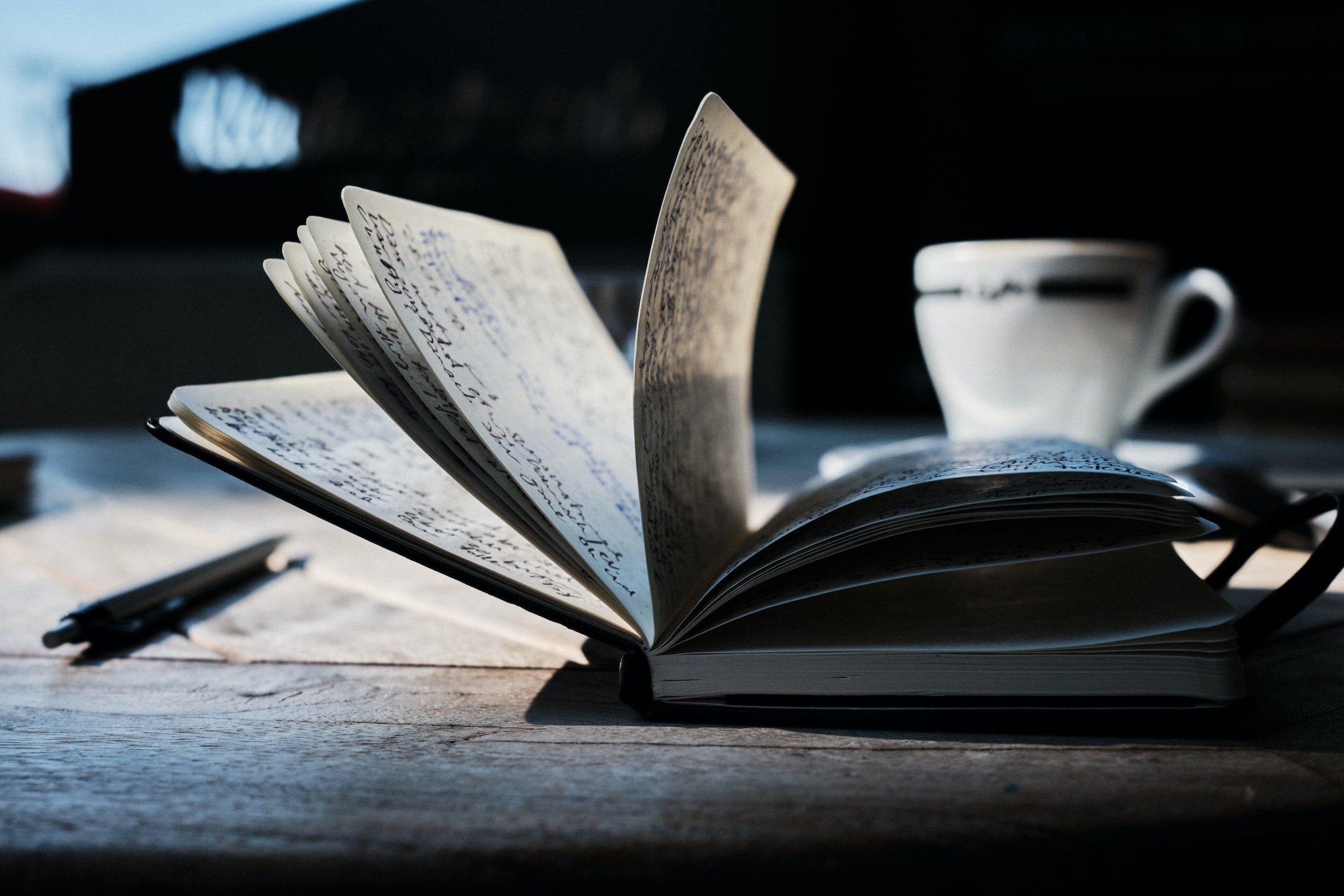
Editors are essential to improving your work and aiding your success. Most writers are blind to the faults in their own writing, despite being sharp about discovering them in every other printed work. I’m no exception, and though I’m paid to evaluate and edit other manuscripts, I still pay another good editor to help make my manuscripts better. However, when I send my manuscript to my editor, I’ve done a great deal of cleanup beforehand, to give her less work to do. Note that some editors charge by the page, which is a crap system. Something that needs a lot of cleanup takes far more time than a very clean page, so go for editors who work hourly, to save yourself money. And get honest ones- my editor thought the latter half of a novel needed rewriting, so sent it back for revisions before spending hours editing something that would be significantly changed.
There are different types of editors and editing, and disagreement about which is which, as some of these terms are variable. Some combine more than one of these in their inclusive editing. Know up front what you’re getting and paying for.
Manuscript evaluation/appraisal— This high-level check is for the essential quality of your manuscript. Does it work as a book? Does it have commercial viability? Does it have the elements it needs for publication, or are there major problems which must be corrected first?
Developmental or Story editing— This is a check that the structural story works as it is, or may need chapters/characters moved around, added/deleted, or simply further detail in certain areas. Completed story arcs?
Line editing— This check is for content and flow, things like consistency of voice, point-of-view, tone, and clarity, and slack writing which may sag or need some punching up.
Copy editing— This type drills down to the precision bits on a word-for-word basis, usually working to a style type or sheet. Different copyeditors work using different standards, though, so make sure you agree with yours.
Proofreading— Checking for any and every error, in text, layout, numbering, placement, etc.
Fact checking— If you have a manuscript with a lot of facts in it, you may need one of these editors for verification of the information you’ve included.
Because most Indie writers don’t have a lot of surplus income, they blanch when told they MUST have a good editor for their work, before it goes out to the buying public. Since good editing runs $50 or more per hour, they despair at not having hundreds of dollars to make their work better. Especially when they hear that there are different levels of editing, and the work might need more than one editing pass. Ouch! When you’re talking about a thousand dollars or more for each book, that’s real money to most writers.
And if the writer is expecting an editor to wear all those hats and correct all the errors in a manuscript in one pass, and to do it cheaply, well, that’s like looking for unicorns. So the money-impaired writer is tempted to skip the process altogether, or to assume a publisher (if they go that route) will take care of that. Skipping (or even skimping) on editing is a bad business decision that will adversely affect a writing career. As a reader, when I encounter a poorly-edited book, I seldom read that author again. If their story wasn’t even worth an editing pass, then it’s not worth wasting my time to read it, or anything else by them. So what’s a poor writer to do?
It’s never too early to start your search for a good editor, to get them lined up for when you’ve got a work ready for their red pen. Know what type of editing you’ll be getting for the money and get some samples up front. Many writers got burned paying for poor levels of edits they didn’t want or need. You’ll need to do some careful research for this one, to find someone you’re comfortable working with, who can be trusted to work in a timely fashion, and who provides quality for the price. You can start an editing fund right away, even if it’s a few bucks a week. Forego the pricey coffee, young hipster, and bank those four dollars so your work will be better. Your stories are worth it, aren’t they?
Here are some ways to get your manuscript in shape BEFORE you send it to the editor. The less work the well-paid editor does, the less you pay. You’ll see that each method described here will do some of the work of different editors. It’ll catch a lot of simple stuff, but it’s extra work that takes an editor more time to point out and mark up.
Study about feedback, using beta readers, writing groups, and workshops. Get advance feedback for your work through the methods described there. Story edits for flaws can cause massive rewrites, driving up the cost of your editing, and taking a lot of extra time. When your story passes muster with all your free feedback sources, then send it on to a pro.
Our brains play tricks when scanning text, gliding over mistakes, so copy the text into a different type of file, and change the font, and the size, and print it out. You’ll catch a lot of things you didn’t see before.
Get a helper, someone to listen, and read through your work- slowly. Do this in stages, so you don’t overdo it. Mistakes will sound like dull clunks in many cases. You’ll wince when hearing some of the stuff you wrote that looked okay on paper. Mark it all and fix that stuff!
Some people recommend reading it backwards. If that floats your boat, go for it. Haven’t tried that one yet.
Check with the editor in advance when you know you’ll soon have a manuscript for them. They might be busy for weeks with the work of someone else, and you don’t want to have your manuscript sitting around. Once you’ve put in all the free feedback, and had other eyes on the text, NOW you’re ready for a proven, paid set of eyes for your work. You’ll swear up and down your manuscript is perfect, but you’ll be shocked to discover what you missed when you get it back.
On the path to success, quality is necessary to establish a trusted “brand”- with clean, well-told stories, your audience will grow. Having a lot of mistakes in your manuscript will get you dinged in reviews, and may convince some to not buy or read it. Lay the groundwork for a long-term writing career you can be proud of.
Dale T. Phillips has published novels, story collections, non-fiction, and over 80 short stories. Stephen King was Dale's college writing teacher, and since then, Dale has found time to appear on stage, television, radio, in an independent feature film, and compete on Jeopardy (losing in a spectacular fashion). He's a member of the Mystery Writers of America and the Sisters in Crime.
Submit Your Writing to KN Magazine
Want to have your writing included in Killer Nashville Magazine?
Fill out our submission form and upload your writing here: