

KN Magazine: Articles
THE CHAIR IS STILL THERE
On mornings when creativity feels hollow and momentum seems absent, Clay Stafford learned a crucial lesson: the work of a life isn’t built on inspiration or certainty. In “The Chair Is Still There,” he reflects on how discipline, presence, and the simple act of returning to his chair—cup of coffee in hand—reframe his creative life, strengthen his relationship to his art, and allow meaning to emerge without fanfare.
By Clay Stafford

Mostly working from home for the majority of my life, there was no boss to meet, no comptroller checking my clock-in for work, no meetings I had to be on time for, only me, waking up and stretching in bed, thinking of how I envisioned my day to play out.
Most days were and are filled with excitement. I knew what I was going to do. I loved what I did. I was blessed to be able to do it. Most mornings were filled with ambition and excitement, so I couldn’t wait to get to work and get started. But there were those dreaded mornings when I awoke, stared at the ceiling, and realized there was no fuel in the creative engine for the day. On those mornings, there was no urgency to get out of bed, no spark inspiring me to begin. There wasn’t even resistance. In the dim light of the morning sun coming through the cracks of the closed plantation shutters, there was simply a hollow quiet where momentum typically was and should have been. Those moments felt empty, nothing resembling the welcomed heaviness of life, just a distant void, as though everything that normally mattered had somehow, during the night while I was dreaming, slipped down the hallway to another bedroom and closed the door, sometimes even locking it behind it, climbing into the bed and pulling the covers over its head.
Those were days that felt like failures even before they began, and because I predetermined them while lying in bed, they usually turned out as I expected. I used to think I could only show up for my life when my inner world was in agreement, when want and purpose matched, when I knew why I was doing something, and when the effort made sense. I could only do things when I felt like it or when the meaning was clear. When that alignment was absent, I assumed the day was already lost and a wasted day of failure lay ahead. I felt it in my heart and even in my bones. I hadn’t yet learned that the real discipline of my life wasn’t built on feeling ready, but on returning.
It wasn’t until later in my life, when maybe maturity or practice, or even serendipitous events, proved me wrong, that I realized these mornings were simply a different kind of threshold, their own unique entry into a day that, at first glance, felt formless and uninspired. Somewhere along the way, I learned that discipline, what I needed to create the perfect day, was less about preplanning, force, or even intention, but more about presence.
I don’t know when my thinking started to shift. I certainly didn’t make it happen. I didn’t will it. It certainly wasn’t some trite self-help or productivity hack. It didn’t even arrive with some revelation. It came oddly and unplanned, as a habit. Whether I had the vision for the day or not, I got my coffee as usual, set up my desk, and sat down in my chair to work, even when I didn’t know what I wanted to work on or, if I did, even when I wasn’t inspired. Motivation didn’t earn me a spot at my desk. Routine did. On those days, I kept the bar low. I didn’t promise much to those hours except the assurance to my computer that I’ll be close by if needed. No plans were negotiated, no meaning defined, and rarely was any enthusiasm offered to the Muse as tribute. Sometimes on those days, I thought my purpose in life was to drink a cup of coffee, watch my birdfeeder, and ponder, in the world of evolution, what crazy lizard found itself jumping out of a tree and realizing it could fly, thus creating a new species of birds. In other words, with no plans or inspiration, I sat there because I didn’t know what else to do.
It surprised me at some point how little was required to sit there. It was freeing. Even on those hollow mornings, the chair was still there, waiting. I didn’t need conviction. I didn’t need direction. I didn’t need to believe that anything I was doing mattered. I only needed not to leave. I needed to sit with whatever drifted through my mind. The common thread behind it all was my chair, on productive days and on days of nothing. It was always sitting there, consistent, no matter where my head was. So, I returned to it, some days with more fervor than others, but always with a refusal to hand over control to the weather outside (I write outside on my porch) or even the weather, no matter how calm or turbulent, going on inside of me.
Those neutral days of nothingness were not heroic. They were days that neither lifted nor dragged, days that offered no motivational or dramatic reason or inspiration to move forward, but at the same time, no compelling reason not to be there. It seemed on those days that the world asked nothing of me other than attendance in that chair, across the lawn from the birdfeeder, pondering the processes of the past few million years.
When I think back on my own evolution now, what strikes me is not how much time I wasted sitting there, but rather how honest those hours were. Out of boredom, I did begin to tinker, but without the need or motivation to impress, accelerate, or aim beyond the moment, I moved straight to the essentials as they popped into my head. It was all rather casual. There was no adornment, no performance, no word count, no chasing of superiority. Just small, impulsive, inner-driven activities, whether rain or shine, just some sort of private continuity with days more productive, but with no invisible audience or ego applauding, but at the same time nothing left undone. When inspired, sitting in the chair, I did what I felt inspired to do, letting direction come from the nothingness.
Over time, something shifted. Those neutral (I wouldn’t call them wasted) days, those unremarkable returns to the chair each morning, began to alter the way I understood myself in the same way that I could envision lizards growing wings millions of years ago. I don’t think I ever patted myself on my back for my consistency of sitting in a chair (that hardly seems a heroic act), but I did begin to trust it as an inkling of something I couldn’t put my finger on began to take form in my consciousness, in my being. Showing up and sitting down, I began to sense that I did not need to feel aligned with my work or even with myself to remain connected. Just drink coffee and watch the birds, and occasionally look at my computer screen. I didn’t need the weather, inside or out, to give me permission. Before I stepped into the day, I needed to go to my chair and sit. And, surprise to me, somewhere along the way, my fingers would find their way to the keyboard, and I would start to type. Somewhere by the end of the day, I would pause and look back on all that I had accomplished, even though I had had no preplanned direction.
Trust accumulated in ways I couldn’t have articulated then, but it did soften the drama around the difficulty of being aimless. It quieted the argument between desire and duty. It reframed commitment as identity rather than effort. I began to see that most of what endures in life is built not on bursts of certainty but on the steady, unimpressive, evolutionary cadence of return.
The curious, but also understandable, thing is that the work of my life didn’t constantly improve in those days, but my relationship with my work, and even myself, did. Sitting down in my chair became less conditional, less dependent on mood or inspiration, or the unpredictable tides of self-belief or raw motivation. Sitting down in my chair became, instead, something like a morning welcome, a companionship, coming with the predictability and comfort of knowing that the sun will rise each day and I will sit: steady, imperfect, patient.
Looking back, I never found the dramatic clarity I once believed I needed to move forward. I saw something quieter. I discovered that life continues, like birds in flight, even when eagerness does not. I found that meaning doesn’t always come hand in hand with willingness. I discovered that neutrality is fertile in its own way. We don’t need a parade; we only need a chair.
I once thought that discipline was a loud, cinematic declaration, something founded in great ambition or proven with relentless, knock-the-walls-down drive, but the truth, for me, instead lived in a place outside on the back porch, an ordinary chair, waiting without fanfare, and asking for nothing other than my presence. “Come as you are,” it called. “If nothing else,” it said in its Southern way, “just sit a spell.”
Perhaps the unexpected lesson for me is this: the parts of life that endure are not always those born from passion, certainty, or predetermination while lying in the bed in the morning and staring at the ceiling with the morning light coming in through the shutters, but instead it is from the steady, unremarkable decision to get my coffee, in my routine, and sit in my chair long enough for meaning to find its way back. The chair is always waiting.

Clay Stafford is a bestselling writer, filmmaker, and founder of the Killer Nashville International Writers’ Conference, Killer Nashville Magazine, and the Killer Nashville University streaming service. Subscribe to his newsletter at https://claystafford.com/.
Horror with Character
In crafting the LIT horror series, the author dives deep into character-driven storytelling—building complex, imperfect individuals who blur the line between hero and victim. This is horror not just designed to terrify, but to reflect the humanity behind the fear.
By Mark Anthony
Many years ago, I had a bizarre and uncomfortable nightmare. One of those unsettling dreams that plagues when you wake. Hoping it won’t come back, it replays behind your eyes as you go to bed the next night. Whilst working as a Cancer Nurse, COVID decided to arrive, and I found myself living in a very unsettled, scared, world. From this, I decided to finally play with those scenes that had kept expanding in my mind. Quite naturally for me, my imagination began to weave them into a story. Building upon thought, creating visions and moments like jigsaw pieces which, as my mind was manifesting them, it was piecing them together to form complete pictures.
I have always been a storyteller and, on reflection, a fan of very specific stories. Whether written, or on screen, I have always been drawn to tales of normal people in extraordinary, otherworldly, situations. The archetypal stereotype of the determined hero, the ordained victim, and the clear win or lose motive, did not interest, or inspire my imagination. The tropes of the pure virginal hero and the twisted, ugly monster arguably had their time. The audience became desensitised to heads rolling. To blood, blood, and more blood.
However, the juxtaposition of a normality infected by a world of stark anomalies and extraordinary dangers enthralled me. The closer horror is entwined with reality, the more unsettling it can become. The harder it is to draw that line between fantasy and reality, between the good and the bad, the more horrific it can be. And a key aspect of creating this uncanny stage is the characters within it.
In the beginning, the first of the LIT novels started with the framework for one, single protagonist. Her physical appearance, her mannerisms, her voice were a mimicry of someone I already knew. A real, tangible person used as a blank sheet to add the vast amounts of color that would make her an intriguing, natural individual in this dark world that I planned to create. I had a rough idea of what would happen and how I would develop the atmosphere that would be humming throughout the entire story. Foreboding, bleak.
The first chapter was all about her. Intimate, and to be honest, as much as it was there to reveal her essence to the reader, it also served to plant my own seed of who this young woman was and would become. Strong, stoic yet selfish. Determination fuelled by self-absorption. Clever and manipulative.
In the third chapter, Sam was created. An amalgam of different people from my past. A dynamic young man, smart, candid, and irrepressible despite the horrors that hid within. A rebel within his own mind. Most people can relate to this. There to push against the inner demons with varying degrees of success. He was to be an open book, in stark contrast to the pure, but damaged, introvert of chapter 1. An openly gay man who demonstrated that we all have so much more in common with each other than not.
The second chapter, however, was an afterthought. I find it very interesting on reflection that he quickly became a reader favourite—a 9-year-old boy. A pure innocent. A character there to inject heart and yes, I will admit, give this horrific tale some balance. It is funny but I once had him described to me as the “pathos” of the story. . .and I felt largely offended! Yes, I was genuinely offended, not about this young character but. . .for this young character. However, he fulfilled the ‘pathos’ brief. A child who deserved no guilt, no fault, and no karma. Yet even he wasn’t going to be spared from the same terrifying existence as the others. He would experience the same losses and grotesque rules. Perhaps he would become the character that most people would “root for.” And they did.
Many people don’t notice that it takes quite a lot of time in LIT, before our three protagonists are there in the same space at the same time. Whilst writing, I had a concern. When these individuals came together, in the same space, would they all still be able to hold their own. To remain as equals. Each a fully formed 3-dimensional protagonists? Yes. By carefully keeping their characters in limbo, swaying between the macabre and the mundane, it creates a deep understanding of the individual that invests the reader in all three equally. When they come together, the reader’s familiarity with each of the individuals allows for an intriguing ensemble to develop that embraces the reader like a special treat.
With the three protagonists in play, each continued to have their own distinct storyline. That took a deal of planning, but more so, a need for intuition and an understanding of the people that had been created. As any writer would agree, after a time the characters are able to take on a life of their own. Their mannerisms, their reactions and even their dialogue begin to write themselves. Each of the above is paramount in giving the reader the feeling that they are gaining the gift of insight into someone else’s life, someone else’s thoughts, and feelings. And within the universe of LIT, someone else’s trauma, terror, and bravery. Why would they make the decisions they make? Take the path they chose in any given situation? Because that’s what real people do.
These three characters with their own unique afflictions demonstrated what I had learnt over the course of my life. No one is 100% good or bad. No one is either hero or villain. Every person has the ability to be brave, to be scared, to fight or run. Everyone is influenced by their own experiences, successes, and traumas. That is what I wanted to achieve in the LIT series.
Horror writers tell tales to scare, titillate and sometimes, simply to shock. I wanted to create a story that not only terrified the reader but also, moved them. The best way to achieve this was to give the true victims of evil a basis in our own reality. A small part of them will then resonate within each of us. Do you agree with their decision? No, but you understand why they made them. Do you like them? Sometimes, you won’t, but isn’t that just like real life?
Horror and suspense greatly benefit from the gift of thoughtful, natural character arcs. One grizzly scene set-up only to follow another fulfills just a small component of a memorable horror story. There is so much more that can be done to grasp the reader. Not only does strong character development prevent reader boredom, it enhances the intrigue of the ‘What next?’ It drives curiosity for the avid fan of dark writing and gives them protagonists that embody universal character traits. Traits that one can both relate to and be repelled from. It makes us question what would we do if faced with the same dilemma? Are we coward? Hero? Or a bit of both depending on the circumstance and drive. This is the task of the storyteller. Their reader is a guest, to be guided through our world. Our characters take them on a journey both from within and outside their mind.
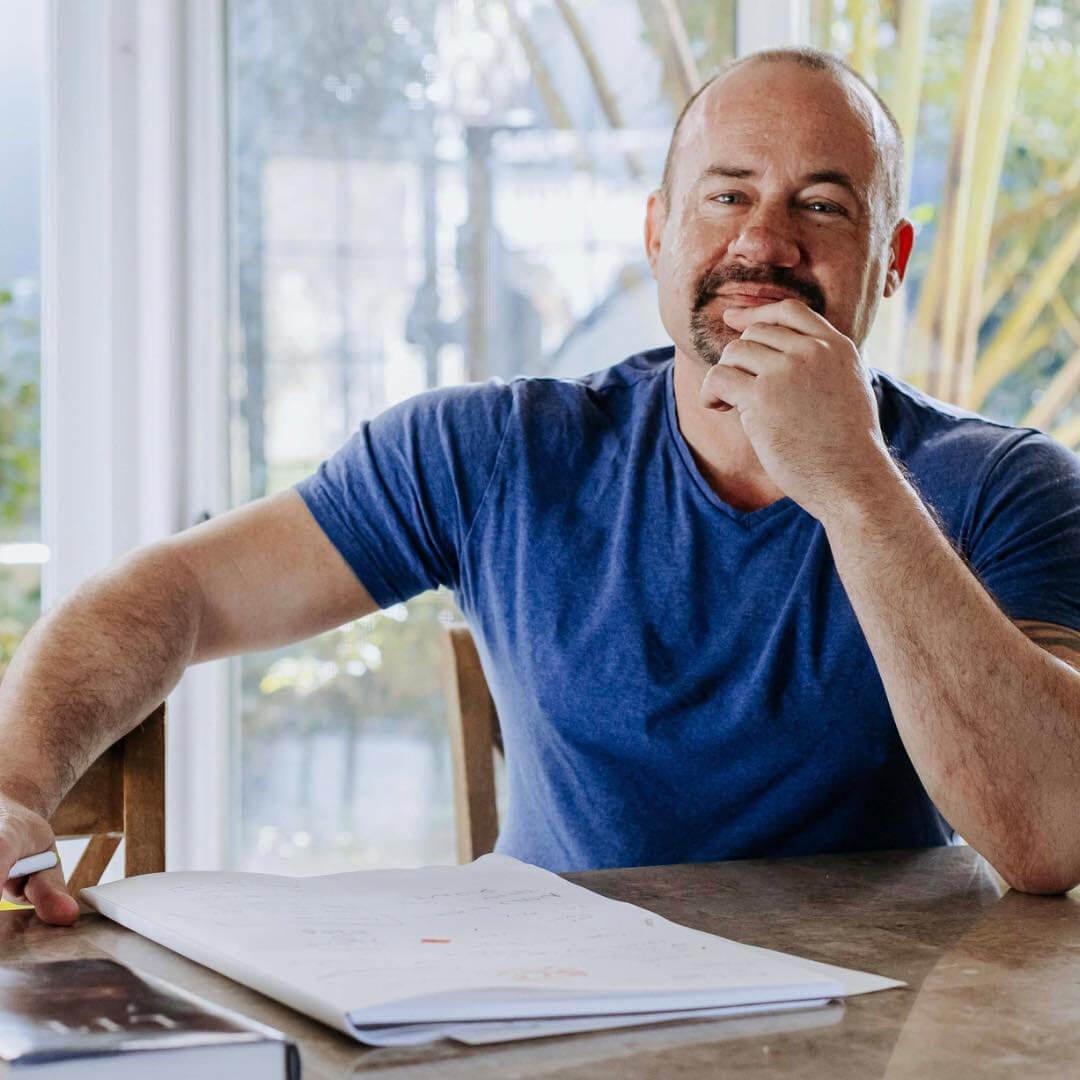
Mark Anthony is the award-winning author of the supernatural horror series, “LIT” He lives in Perth, Western Australia with his husband and 9 year old son. Anthony began writing whilst working as a Cancer Nurse when the COVID-19 lockdowns commenced in 2020 and has since produced a sequel “ASCENT”. “RAGE” the third book in the series has an expected release for April 2024.

Submit Your Writing to KN Magazine
Want to have your writing included in Killer Nashville Magazine?
Fill out our submission form and upload your writing here: