
KN Magazine: Articles
WORKING WITHOUT AN ECHO
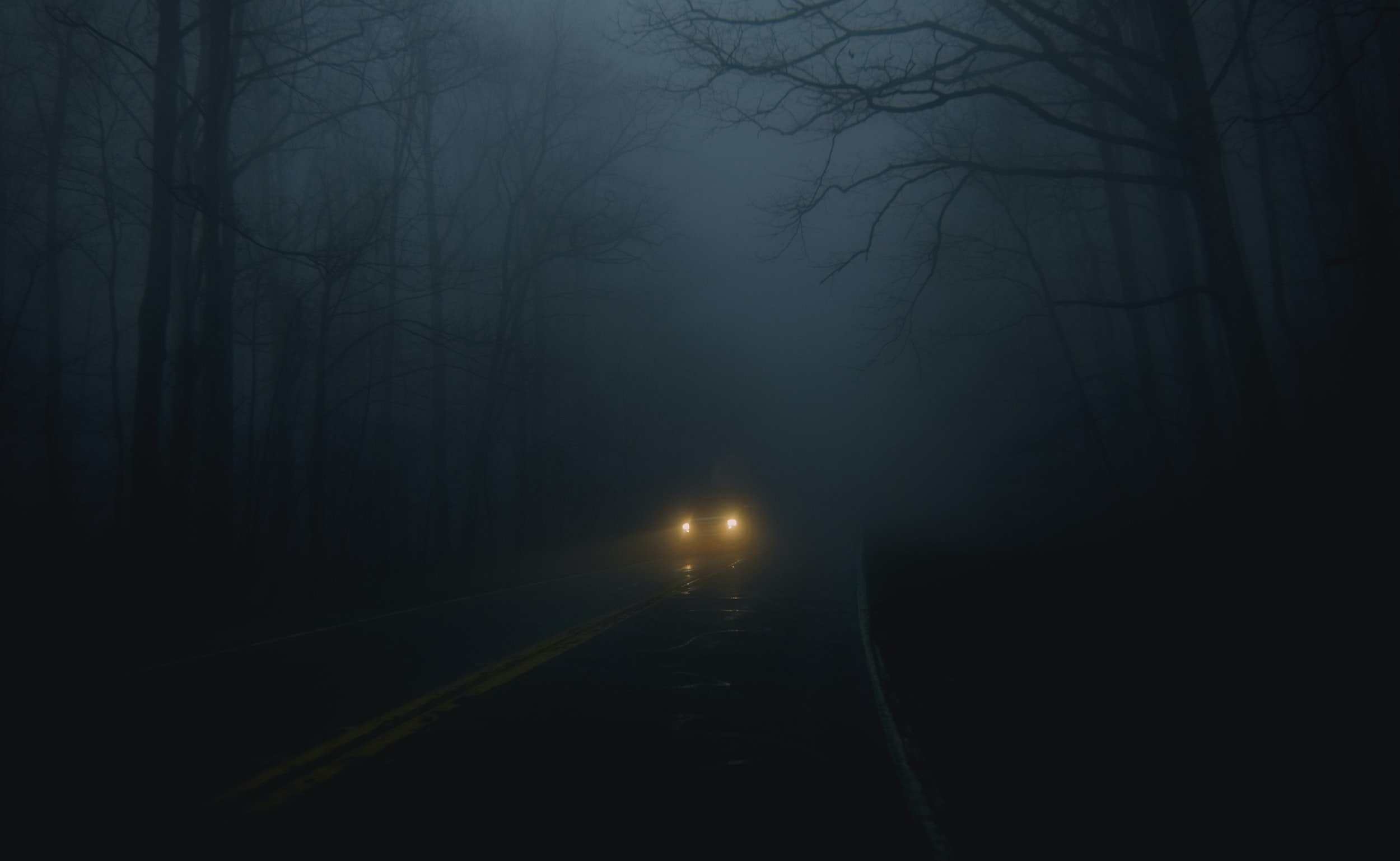
In the quiet that follows when affirmation disappears, work takes on a different weight. This reflective essay explores what happens when creative effort continues without feedback, applause, or visible response—and how meaning, purpose, and identity can deepen when the work no longer asks to be witnessed in order to matter.
By Clay Stafford

There are stretches when work and life carry on, yet the world goes strangely muffled, and I’m left facing a reflection I don’t repetitively acknowledge. The first time I became aware of this was after years of working in the collaborative arts of television, film, and theater, when, without those lively moments, without the noise, silence itself became its own uncanny yet welcoming mirror. To this day, the likeness I see unnerves me.
The experience I’m thinking of wasn’t dramatic. Nothing collapsed. Nothing extraordinary happened. I changed where I wrote. I was living in Los Angeles then, surrounded by the hum of other people’s stories. That was all. I was young. I switched employment and went from the noise of collaborative rooms to the hush of a rented space on my own. Nothing refashioned in my profession except the location and the environment. I kept doing what I promised, tending the responsibilities I chose, still delivering work, but without the usual affirmations. Where daily life had once been bustling, there were now no replies in hallways, no nods in breakrooms, no signs in studios that anything I was offering was reaching beyond my own effort. In the absence of feedback, I learned that the material I was writing and the life I was living were now without endorsement, and the meaning of things changed when nothing echoed back.
Without response, the work felt different beneath my hands. I still had the discipline to continue, but without reflection or resonance, I began to feel the dull ache of questions rising from somewhere older than ambition, closer to the ribcage: What is this for? Does any of this matter? Had I mistaken movement or activity for direction? It surprised me how much the small, ordinary reassurances had once steadied me. A single thank-you, a simple hurrah, being noticed in passing, none of it had seemed important at the time, but when it disappeared, I felt the floor shift a little. I realized how soundlessly I had leaned upon them.
What steadied me again wasn’t a surge of motivation or a sudden breakthrough. It was a kind of returning, almost like walking back to the trailhead after getting lost. I noticed that the reasons I began hadn’t dissolved just because no one was nodding along. The values underneath the effort remained, unchanged and unmoved. The silence hadn’t drained them of meaning; it had only stripped away the applause I didn’t know I’d been listening for.
Working without affirmation brought me face to face with a question I hadn’t needed to ask before: did the work matter only when it was witnessed, or did it matter even here, in secret, when there was no audience to gather the story? It was an uncomfortable distinction. There was no performance in that space, no cleverness, just me and the truth of what I cared about.
Staying with the work in that lonely townhouse on Bedford Drive, where jacaranda petals stuck to the windshield, wasn’t about mettle. It wasn’t about proving anything, not even to myself. It felt smaller than that, more silent. I continued because continuing felt more honest than stopping. The pull didn’t come from momentum or reward; it came from alignment, as if turning away would have been a small betrayal of something I couldn’t name.
In that hush, something shifted. It wasn’t confidence or inspiration. It was a steadier posture, days spent without waiting for an echo, returning without asking to be met halfway. There was nothing heroic or cinematic about it. I certainly didn’t feel that. I simply stayed.
Affirmation did come back eventually, and the validity of the choice I had made did come, though in indirect ways I couldn’t have predicted. By then, the ground beneath the work had already changed. It no longer asked to be seen to matter. The meaning of what I did through my work had moved inward, even to a place where applause, even though it later came, couldn’t reach it.
I once believed that meaning required an audience. Now I suspect that the audience only revealed what was true long before anyone clapped. When the echo disappeared, and I kept going anyway, the work stopped asking who was watching and started quietly telling me who I was. It was from there that I became.

Clay Stafford is a bestselling writer, filmmaker, and founder of the Killer Nashville International Writers’ Conference, Killer Nashville Magazine, and the Killer Nashville University streaming service. Subscribe to his newsletter at https://claystafford.com/.
This Crazy Writing Life: Binge Writing In This Crazy Writing Life
In This Crazy Writing Life, Steven Womack reflects on binge writing, distractions, and the challenges of balancing creativity with the chaos of everyday life. From clickbait breakthroughs to Whac-A-Mole metaphors, he explores the unpredictable rhythms of a writer’s world.
By Steven Womack
I recently watched a YouTube interview with John Grisham in which he described his writing “ritual.” Grisham writes a book a year, like clockwork, and he starts at seven o’clock each morning. He begins a new novel every January first, and he’s finished in six months. His writing studio is a separate building with no phones, internet or any other distractions. He’s focused, his writing time is rigidly structured, and it rarely varies.
I’ve read interviews with other writers who have similar routines or rituals. Most of them involve getting up at the butt-crack of dawn, never letting anything disturb them or their focus, and incorporating a certain approach to the work that can best be described by the term laser-locked.
I wish I could do that but, dang it, I just can’t. For one thing, if I’m up at 7 o’clock in the morning, it’s because I haven’t been to bed yet. Grisham says he writes five days a week. I’ve heard other writers say they write every day, seven days a week, and if they happen to finish one manuscript in the middle of their writing day, then they just open a new file on the computer and start the next book.
This baffles me.
All this can’t help but remind me of the old Richard Pryor joke about the friend whose wife was in labor for two days straight. “I don’t want to do anything that feels good for two days straight!”
It’s not that I’m lazy, although lately—for a lot of reasons—I haven’t been very productive. I actually work quite hard and am reasonably organized and structured. But I’m not by any stretch of the imagination laser-locked. I find that writing works best when the mind and the imagination are allowed to wander about for awhile, to roam around and look in corners and see what’s there. I even find distractions useful, especially if I’ve written myself in a corner. I’m in the middle of a scene or a chapter and suddenly I don’t know which way to go next.
So I pull up the old web browser and find some clickbait to explore. I’m a sucker for clickbait. Throw a box up on my screen with a lead like Ten Forgotten One Hit Wonders From 1966 and it’s a pretty good bet I’m gonna click that sucker. And if I don’t recognize one of the one-hit wonders, I’m going to pop over to YouTube and watch some old black-and-white kinescope of the band performing it on Shindig.
Strangely enough, when I’ve finished watching the YouTube video and go back to the screen where the manuscript is perched, something magical will have happened and I know where to go next. This happens to me a lot. Does this mean that while I’m watching some obscure video that my subconscious is churning around trying to solve the problem? Or is just that clearing the mind for a few minutes allows you to look at the scene differently than when you were creatively deep in the weeds and saw no way out?
I don’t know. Truthfully, I don’t really analyze it very much. Overthinking these things is not a good policy either.
Many years ago, in the early days of my teaching career at Watkins Film School, the writer/director/producer Coke Sams visited the school and spoke to our students. Sams, whose credits include Ernest Scared Stupid and Existo, among many others, described his process and it gave me great comfort. He said that when he’s working on a project—whether it be a script or a film or anything else—when he’s on it, he’s totally on it. He’s completely absorbed, swallowed up by it, or to coin a Tarentino-ism, he gets medieval on it.
Then when he’s done, he needs some serious time off.
“I’m a binge-writer,” he told our students.
That’s it. Somebody finally nailed it. When I’m in the middle of a project, I’m on it like white on rice. I once finished the first draft of a novel in seven weeks. Usually, it takes a lot longer, but when I’m done, I’m spent. The well is dry.
And I need to allow time for it to fill up again.
Then, there’s life. Life can really get in the way of the important stuff like writing.
On the surface, 2025 has been a productive year so far. I finished writing, editing and indie-pubbing an eBook memoir of my twenty-five years as a film school professor, Death Of A College. After at least five years, I finally won the battle with Harper Collins to get the rights back to my standalone thriller By Blood Written, revised it, and indie-pubbed it with its new title, Blood Plot.
Two books in six months; not too shabby.
Dig a little deeper, though, and the lipstick rubs off this pig pretty easily. After a solid year of writing a proposal for a three-book historical series for an editor at a medium-sized publisher, I was thrilled to get an offer. This would be the best book deal I’ve had in a long time and one of the best ever. This project could turn my struggling career around. Only problem is this medium-sized traditional publisher is the process of being acquired by a larger, multi-media, deep-pockets company (this is why the editor was able to offer me a more lucrative deal than one usually sees these days). Until the acquisition is complete, contracts can’t be signed and, obviously, advances will not be forthcoming.
The acquisition process is coming up on two years now.
If I were as focused and disciplined as some other writers, I’d have gotten to work on this project so that when the contracts came through, I’d have the three books finished. But for some reason or other, I just can’t seem to muster the bandwidth. For one thing, while I trust the people involved and do believe this will eventually happen, there’s that voice inside my head that constantly reminds me that when something sounds too good to be true, it usually is.
Then there’s the outside world. I don’t know how you guys feel, but I and many of my friends feel like the world’s becoming a little more unhinged every day. Politics, the economy, wars raging, floods flooding, people starving… I’m reminded of the song by Paul Thorn, one of my favorite artists, who wrote and sang a wonderful song called What The Hell Is Going On?
That sums it up for me, or as Yeats wrote: Things fall apart; the centre cannot hold.
So far this year, I’ve had two friends pass away in a ten-day stretch. We’ve had to throw several thousand dollars at my wife’s old car to keep it running because, candidly, I can’t afford to replace it. We discovered hidden water damage that caused the siding on the front of our house to decide it wanted to be set free from the rest of it. That was a quick wheelbarrow full of cash down the drain (and you can only imagine how helpful our insurance company was).
Life seems to be one problem after another, one shock after another, one hassle after another. Life is full of conflict and complications. Makes it very hard to focus on that chapter you need to get out today…
Years ago, we were in San Francisco and went to Musée Mécanique, the museum of coin-operated machines and arcade games. It’s a real hoot; if you’re ever in San Francisco, it’s a must-see. While there, I encountered an arcade game that took me back fondly to my younger days: Whac-A-Mole.
For the uninitiated, Whac-A-Mole is an arcade game with a bunch of holes on the top. At random intervals and speeds, small fake-furry plastic moles pop out of the holes and the player whacks them with a soft, spongy mallet. You knock one mole back into its hole and another one pops up, rapid-fire.
My only question is when did a silly arcade game become a metaphor for life?
My wife took a photo. For five years, a framed copy of the photo hung outside my office door for the five years I was Chair of the Watkins Film School. It perfectly encapsulated my job description.
Here it is and I hope you get a chuckle out of it. That’s it for this month’s episode of This Crazy Writing Life. As always, thanks for playing along.

P.S. I don’t know whether this column will be published in Killer Nashville Magazine before or after this year’s Killer Nashville conference begins on August 21st. For the first time in a couple of years, I’m going to be able to attend the whole conference (last year I had to cancel because of Covid). I’m doing a Master Class with Jaden Terrell and Lisa Wysocky and appearing on two other panels. I’m looking forward to meeting as many folks as possible.
And if this column appears after the conference, I hope you all had a great time.

Submit Your Writing to KN Magazine
Want to have your writing included in Killer Nashville Magazine?
Fill out our submission form and upload your writing here: