

KN Magazine: Interviews
“A Casual Conversation with Susan Isaacs”
In this informal and delightful follow-up conversation with bestselling author Susan Isaacs, we chat about writing description, plotting mysteries, working with ADHD, and how building a fictional series can feel like creating a second family. A refreshing reminder of why writers write—and why conversations like this matter.
Susan Isaacs interviewed by Clay Stafford
I had a wonderful opportunity to just chat with bestselling author and mystery legend, Susan Isaacs, as a follow-up to my interview with her for my monthly Writer’s Digest column. It was a wonderful conversation. I needed a break from writing. She needed a break from writing. Like a fly on the wall (and with Susan’s permission), I thought I’d share the highlights of our conversation here with you.
“Susan, I just finished Bad, Bad, Seymore Brown. I loved it. And I now have singer Jim Croce’s earworm in my head.”
“Me, too.” She laughed.
“I love your descriptions in your prose. Right on the mark. Not too much, not too little.”
“Description can be hard.”
“But you do it so well. Any tips?”
“Well, I’ll tell you what I do. Two things. First, I see it in my head. I’m looking at the draft, and I say, ‘Hey, you know, there’s nothing here.’”
I laugh. “So, what do you do?”
“Well in Bad, Bad, Seymore Brown, the character with the problem is a college professor, a really nice woman, who teaches film, and her area of specialization is big Hollywood Studio films. When she was five, her parents were murdered. It was an arson murder, and she was lucky enough to jump out of the window of the house and save herself. So, Corie, who’s my detective, a former FBI agent, is called on, but not through herself, but through her dad, who’s a retired NYPD detective. He was a detective twenty years earlier, interviewing this little girl, April is her name, and they kept up a kind of birthday-card-Christmas-card relationship.”
“And the plot is great.”
“Thanks, but in terms of description, there was nothing there. But there were so many things to work with. So, after I get that structure, I see it in my head, and I begin to type it in.”
“The description?”
“Plot, then description.”
“And you mentioned another thing you do?”
“Research. And you don’t always have to physically go somewhere to do it. I had a great time with this novel. For example, it was during COVID, and nobody was holding a gun to my head and saying ‘Write’ so I had the leisure time to look at real estate in New Brunswick online, and I found the house with pictures that I knew April should live in, and that’s simply it. And I used that house because now April is being threatened, someone is trying to kill her twenty years after her parent’s death. Though the local cops are convinced it had nothing to do with her parents’ murder, but that’s why Corie’s dad and Corie get pulled into it.”
“So basically, when you do description, you get the structure, the bones of your plot, and then you go back and both imagine and research, at your leisure, the details that really set your writing off. What’s the hardest thing for you as a writer?”
“You know, I think there are all sorts of things that are hard for writers. For me, it’s plot. I’ll spend much more time on plot, you know, working it out, both from the detective’s point-of-view and the killer’s point-of-view, just so it seems whole, and it seems that what I write could have happened. For me, I don’t want somebody clapping their palm to their forehead and saying, ‘Oh, please!’ So that’s the hard thing for me.”
“You’ve talked with me about how focused you get when you’re writing.”
“Oh, yes. When you’re writing, you’re really concentrating. We were having work done on the house once and they were trying to do something in the basement, I forget what it was. But there was this jackhammer going, and I was upstairs working. It was when my kids were really young and, you know, I had only a limited amount of time to write every day, and so I was writing and I didn’t even hear the jackhammer until, I don’t know, the dog put her nose or snout on my knee and I stopped writing for a moment and said, ‘What is that?’ and then I heard it.”
“But it took your dog to bring you out of your zone. Not the jackhammer.”
“You get really involved.”
“Sort of transcending into another universe.”
“The story pulls you in. The weird thing is that I have ADD, ADHD, whatever they call it. I know that now, but I didn’t know that then, back when the jackhammer was in the basement. In fact, I didn’t know there was a name for it. I just thought, ‘This is how I am.’ You know, I go from one thing to the next. But people with ADHD can’t use that as an excuse not to write because you hyper-focus.”
“That’s interesting.”
“You don’t hear the jackhammers.”
“So things just flow.”
“Well, it’s always better in your head than on the page,” she says, “as far as writing goes.”
“I’d love to see your stories in your head, then, because your writing is great. As far as plotting, the book moves along at a fast clip. I noticed, distinctly, that your writing style is high with active verbs. Is that intentional or is that something that just comes naturally from you?”
“I think for me it just happens. It’s part of the plotting.”
“Well, it certainly moves the story forward.”
“Yes, I can see it would. But, no, I don’t think ‘let me think of an active verb’. You know,” she laughs, “I don’t think it ever occurred to me to even think of an active verb.”
“That’s funny. We’re all made so differently. I find it fascinating that, after all you’ve published, your Corie Geller novel is going to be part of the first series you’ve ever written. Everything else has been standalones.”
“Yes. I’m already writing the next book. Look, for forty-five years, I did mysteries. I did sagas. I did espionage novels. I did, you know, just regular books about people’s lives. But I never wrote a series because I was afraid I after writing one successful mystery, that I would be stuck, and I’d be writing, you know, my character and compromising positions with, Judith Singer goes Hawaiian in the 25th sequel. I didn’t want that. I wanted to try things out. So now that I’ve long been in my career this long, I thought I would really like to do a series because I want a family, another family.”
“Another family?”
“I mean, I have a great family. I have a husband who’s still practicing law. I have children, I have grandchildren, but I’m ready for another family.”
“And this series is going to be it?”
“It’s not just a one-book deal. I wanted more. So, I made Corie as rich and as complicated and as believable as she could be. It’s one thing to have a housewife detective. It’s another to have someone who lives in the suburbs, but who’s a pro. And she’s helped by her father, who was in the NYPD, who has a different kind of experience.”
“And that gives you a lot to work with. And, in an interesting way, at this stage of your life, another family to explore and live with.” I look at the clock. “Well, I guess we both need to get back to work.”
“This has been great. When you work alone all day, it’s nice to be able to just mouth off to someone.”
We both laughed and we hung up. It was a break in the day. But a good break. I think Susan fed her ADHD a bit with the distraction, but for me, I learned a few things in just the passing conversation. Writers are wonderful. If you haven’t done it today, don’t text, don’t email, but pick up the phone and call a writer friend you know. I hung up the phone with Susan, invigorated, ready to get back to work. As she said, it’s nice to be able to just mouth off to someone. As I would say, it’s nice to talk to someone and remember that, as writers, we are not alone, and we all have so much to learn.

Clay Stafford is a bestselling writer and filmmaker and founder of Killer Nashville International Writers’ Conference. https://claystafford.com/

Susan Isaacs is the author of fourteen novels, including Bad, Bad Seymour Brown, Takes One to Know One, As Husbands Go, Long Time No See, Any Place I Hang My Hat, and Compromising Positions. A recipient of the Writers for Writers Award and the John Steinbeck Award, Isaacs is a former chairman of the board of Poets & Writers, and a past president of Mystery Writers of America. Her fiction has been translated into thirty languages. She lives on Long Island with her husband. https://www.susanisaacs.com/
Author Amulya Malladi on “Research: Doing It, Loving It, Using It, and Leaving It Out”
In this informal and delightful follow-up conversation with bestselling author Susan Isaacs, we chat about writing description, plotting mysteries, working with ADHD, and how building a fictional series can feel like creating a second family. A refreshing reminder of why writers write—and why conversations like this matter.
Amulya Malladi interviewed by Clay Stafford

“I’m talking today with international bestselling author Amulya Malladi about her latest book A Death in Denmark. What I think is fascinating is your sense of endurance. This book—research and writing—took you ten years to write.”
She laughs. “You know, it was COVID. We all didn’t have anything better to do. I was working for a Life Sciences Company, a diagnostic company, so I was very busy. But you know, outside of reading papers about COVID, this was the outlet. And so that’s sort of how long it took to get the book done. I had the idea for a long time. I needed a pandemic to convince me that I could write a mystery.”
“Which is interesting because you’d never written a mystery before. Having never worked in that genre, I’m sure there was a learning curve there for you.”
“A lot of research.”
“You love reading mysteries, so you already had a background in the structure of that, but what you’ve written in A Death in Denmark is a highly focused historical work. It’s the attention and knowledge of detail that really made the book jump for me. Unless you’re a history major with emphasis on the Holocaust and carrying all of that information around in your head, you’re going to have to find factual information somewhere. How did you do that?”
“Studies.”
“Studies?”
“You’ll need a lot of the studies that are available. Luckily, my husband’s doing a Ph.D. He has a student I.D., so I could download a lot of studies with it. Otherwise, I’d be paying for it. Also, I work in diagnostic companies. I read a lot of clinical studies. So these are all peer-reviewed papers that are based on historic research, and they are published, so that is a great source, a reference.”
“But what if you don’t have that access?”
“You can go to your library and get access to it as well. If you’re looking for that kind of historic research, this is the place to go.”
“Not the Internet? Or books, maybe?”
“Clinical studies and peer-reviewed papers, peer-reviewed clinical studies, they’re laborious.”
“And we’re talking, for this book, information directly related to the historical accuracy of the Holocaust and Denmark’s involvement in that history?”
“You have to read through a lot to get to it. And it’s not fiction. They’re just throwing the data out there. But it’s a good source, especially for writers because we need to know about two-hundred-percent to write five-percent.”
“The old Hemingway iceberg reference.”
“To feel comfortable writing that five, you need to know so much more. I could write actually a whole other book about everything that I learned at that time. And that is a good place to go. So I recommend going and doing, not just looking at, you know, Wikipedia, and all that good stuff, but actually going and looking at those papers.”
“Documents from that time period and documents covering that time period and the involvement of the various individuals and groups.”
“When you read a paper, you see like fifteen other sources for those papers, and then you can go into those sources and learn more.”
I laugh this time. “For me, research is like a series of rabbit holes that I find myself falling into. How do you know when to stop?”
“The way I was doing it is I research as I write, and I do it constantly. You know, simple things I’m writing, and I’m like, ‘Oh, he has to turn on this street. What street was that again? I can’t remember.’ I have Maps open constantly, and I know Copenhagen, the city, very well. But, you know, I’ll forget the street names. That sometimes takes work. I’m just writing the second book and I wanted Gabriel Præst, my main character and an ex-Copenhagen cop, to go into this café and it turned into a three-hour research session.”
“Okay. Sounds like a rabbit hole to me.”
“You’ve got to pull yourself out of that hole, because, literally, that was one paragraph, and I just spent three hours going into it. And now I know way too much about this café that I didn’t need to know about. Again, to write that five-percent, I needed to know two-hundred percent. I am curious. I like to know this. So suddenly, now I have that café on my list because we’re going to Copenhagen in a few weeks, and I’m like, ‘Oh, we need to go check that out.’”
“So you’re actually doing onsite research, as well?”
“Yes. I use it all. I think as you write you will see, ‘Okay, now I got all the information that I need.’
“And then you write. Research done?”
“No. I was editing and again I was like, ‘Is this really correct? Did I get this information correct? Let me go check again.’”
“Which is why, I guess, your writing rings so true.”
“I think it is healthy for writers to do that, especially if you’re going to write historical fiction or any kind of fiction that requires research. Here’s the important thing. I think with research, you have to kind of find the source always. You know? It’s tempting to just end up in Wikipedia because it’s easy. You get there. But you know, Wikipedia has done a pretty decent job of asking for sources, and I always go into the source. You know you can keep going in and find the truth. I read Exodus while I lived in India. One million years ago, I was a teenager, and I don’t know if you’ve read Leon Uris’s Exodus, but there’s this famous story in that book about the Danish King. When the Germans came, they said, ‘Oh, they’re going to ask the Jews to wear the Star of David,’ and the story goes, based on Exodus, that the king rode the streets with the Star of David. I thought that was an amazing story. That was my first introduction to Denmark, like hundreds of years before I met my husband, and that story stayed with me. And then I find out it’s not a true story. You know? You know, Marie Antoinette never said ‘Let them eat cake.’ And so it was like, ‘Oh.’”
“Washington did not chop down the cherry tree.”
“No, and the apple didn’t fall. I mean, it’s simple things we do that with, right? With Casablanca, it’s like you said, you know, ‘Play it again, Sam.’ And she never said that. She said, ‘Play it.’ And you realize these become part of the story.”
“Secondary sources then, if I get what you’re saying, are suspect.”
“Research helps you figure out, ‘Okay, that never happened.’”
“When you say that you’re writing, and you’re incorporating the research into your writing sometimes you can’t, you’re not in a spot where the research goes into it. So, how do you organize your research that you’re not immediately using?”
“I don’t do that. I’m sure there are people who do that well. I’m sure there are people who are more disciplined than I am. I’m barely able to block my life. I mean, it’s hard enough, so you know if I do some research, I know there are people who take notes. I have notes, but those are the basics. ‘Oh, this guy’s name is this, his wife is this, he’s this old, please don’t say he’s from this street, he’s living on this street…’ Some basics I’ll have, so I can go back and look. But a lot of the times I’m like, ‘What was this guy’s husband doing again?’ I have to go find it. I won’t read the notes in all honesty, even if I make them. So for me, it’s important to go in and look at that point.”
“And this is why you write and research at the same time.”
“And this is why maybe it’s not the best way to do the research. It takes longer, like I said, you spend three hours doing something that is not important, but hey, that was kind of fun for me. I was curious to remember about Dan Turéll’s books, because I hadn’t read them for a while.”
“Some writers don’t like research. You like research. And for historicals, there’s really no way around it, is there?”
“I take my time and I think I really like the research. I have fun doing it.”
“Does it hurt to leave some of the research out?”
“Oh, my God, yes. My editor said, ‘You know, Amulya, we need the World War II stuff more.’ I’m like, ‘Oh, really? Watch me.’ So I spend all this time and I basically wrote the book that my character, the dead politician, writes.”
“This is an integral part of the story, for those who haven’t read the book.”
“I wrote a large part of that book that she is supposed to have written and put it in this book. I put in footnotes.”
“Footnotes?”
“My editor calls me and she’s like, ‘I don’t think we can have footnotes and fiction.’ I’m like, ‘Really?’ And she goes, ‘You know, you can make a list of all of this and put it in the back of the book. We’ll be happy to do that. But you can’t have footnotes.’ I felt so bad taking it out because this was really good stuff. You know, these were important stories.”
“So it does hurt to leave these things out.”
“I did all kinds of research. I read the secret reports, the daily reports that the Germans wrote, because you can find pictures of that. I kind of went in and did all of that to kind of make this as authentic as possible, and then she said, ‘Could you please, like make it part of the book, and not as…’ She’s like ‘People are going to lose interest.’ So yeah, it does hurt. It really didn’t make me happy to do that.”
“You reference real companies, use real restaurants, use real clothing, use real drinks. You use real foods. Do you have some sort of legal counsel that has looked over this to make sure nobody is going to sue you for anything you write? Or how do you protect yourself in your research?”
“When I’m being not-so-nice about something, I am careful. I have not heard anything from legal. Maybe I should ask tomorrow. I think Robert B. Parker said this in an interview once: ‘If I’m going to say something bad about a restaurant, I make the name up.’”
“Circling back, you do onsite research, as well.”
“Oh, yeah. I’ve been to Berlin several times, so I know the streets of Berlin. I know this process. I know what they feel like. It’s easier to write about places you’ve been to, but the details you will forget. Even though I know Copenhagen very well, I still forget the details. ‘What is that place called again? What was that restaurant I used to go to?’ And then I have to go look in Maps, and find, ‘Ah, that’s what it’s called here. How do they spell this again?’ But I think, yes, from a research perspective, if you are wanting to set a whole set of books somewhere, and if you have a chance to go there, go. Unless you’re setting a book in Afghanistan, or you know, Iraq, then don’t go. Because I did set a book partly in Afghanistan and I remember I talked to a friend of mine. She’s a journalist for AP and she said, ‘Oh, you should come to Kabul.’ And I’m like, ‘No, I don’t think so, just tell me what you know so I can learn from that and write it.’ She’s like, ‘You’ll have a great time on it.’ And I said, ‘I will not have a great time. No, not doing that.’ But I think, yes…”
“When it comes to perceived safety, you’re like me, an armchair researcher. Right?”
“Give me a book. Give me a clinical study. Give me a peer-reviewed paper, I’ll be good.”
“What advice do you have for new writers?”
“Edit. Edit all the time. I’ve met writers, especially when they are new, they say things like, ‘Oh, my God! If I edit too much, it takes the essence away. I always say, ‘No, it just takes the garbage away.’ Edit. Edit, until you are so sick of that book. Because, trust me, when the book is finished and you read it, you’ll want to edit it again because you missed a few things. I tell everybody, ‘Edit, edit, edit. And don’t fall in love with anything you write while you’re writing it because you may have to delete it.’ You know, you may write one-hundred pages and realize, I went on the wrong track and now I have to go delete it.”
“And take out the footnotes.”
“Yeah, and take out the footnotes.”
Clay Stafford is a bestselling writer, filmmaker, literary theorist, and founder of Killer Nashville International Writers’ Conference. https://claystafford.com/
Clay’s book links: https://linktr.ee/claystafford

Amulya Malladi is the bestselling author of eight novels. Her books have been translated into several languages. She won a screenwriting award for her work on Ø (Island), a Danish series that aired on Amazon Prime Global and Studio Canal+. https://www.amulyamalladi.com/
Amulya’s book link: https://linktr.ee/amulyamalladi
Author Chris Grabenstein on “Switching Genres and James Patterson’s Advice on How to Make a Million Dollars”
Chris Grabenstein interviewed by Clay Stafford

Author Chris Grabenstein grew up outside Chattanooga, Tennessee. So did I. But we didn’t know each other until we met one year at Killer Nashville International Writers’ Conference. We quickly learned we had much in common, including a sense of twelve-year-old-boy humor. Chris was learning his craft and making his way writing for grown-ups when I met him then. Really funny stuff. It was the John Ceepak mystery series with such delightful titles as Whack a Mole, Tilt a Whirl, and Mind Scrambler. I liked him so much and he was such a personable guy, I brought him back several years later as a Guest of Honor at Killer Nashville and he had, not surprisingly, changed audiences on me. He was now a multiple award-winning #1 New York Times bestselling children’s author. We sat down together to talk about co-writing with James Patterson, his transition from writing for adults to middle-grade readers, daily word counts and revising schedule, what’s important for him, his advice for writers, and James Patterson’s advice on how to make a million dollars.
“Chris, you’ve got this great series going for adults, and suddenly you write for kids. What caused you to switch, or were you writing both at the same time?”
“It was actually a major switch. I have like twenty-four nieces and nephews, and at the time they were all under the age of eighteen, and they said, ‘Uncle Chris, can we read your books?’ No, no, there’s a few f-bombs being thrown around, there’s a lot of adult situations. There was an editor who was looking for ghost stories for middle grade readers, kids ages eight to twelve. The third book I wrote had gotten rejected by everybody. It was a ghost story. So my agent said, ‘Well, Chris wrote a ghost story, but it’s not for middle grade readers,’ and the editor said, ‘Well, if the story is any good we can turn it into one.’”
“That’s kind of a novel approach. And certainly serendipitous.”
“Yes. And so he read my third book, which was 110,000 words long, and said, ‘This would be a great book for middle-grade readers. You just have to get rid of the adult situations, the adult language, and cut it down to like fifty-thousand words.’”
“And that’s how you switched from adult to children’s books?”
“My agent said, ‘Do you want to do that?’”
“That’s like cutting sixty-thousand words out.”
“By the time I wrote that third book, I’d already spent a year working on it, so I knew I was going to have to spend another year on it. But my nieces and nephews, they really wanted to read something, so I said, ‘I’m going to do it.’”
“There’s certainly more to it than just cutting words.”
“I always recommend if you’re going to try a new category, get to know it a little bit, read a bunch of books. So I started reading a lot of books for eight-to-twelve-year-olds. I said, ‘Maybe I can do this’ and I put in a couple of fart jokes.”
“There’s got to be more than that.”
Chris laughs. “The kids have got to be in charge of the story. They’ve got to be the one solving whatever the mystery is. Carl Hiaasen wrote for that age group, Hoot, and there’s a great book called Holes by Lois Sachar. I read those, and they helped me get the sense of writing for children in that age group. And as I wrote, I was tapping back into that Mad Magazine twelve-year-old kid that I used to be, and I was having such a blast, too, and I said maybe I should be doing this.”
“So not only were you saving the manuscript, you were having fun.”
“I wrote it. We turned it into that editor who was looking for middle grade books, but his boss no longer was looking for ghost stories.”
“You’re kidding.”
“So it died once again. My wife and I don’t have any kids, but we borrowed two from our friends, Kath and Dave, who had kids who were like nine and ten, and they loved this book. They read the manuscript, you know the draft of it, and they were running around their church going, ‘We read the best book. We read the best book.’”
“Sounds like they were telling God.”
“It turns out a member of their congregation happens to be the head of the children’s department at Harper Collins, and she hears these two kids raving about some new book. My buddy Dave is a fire chief here in New York City, and he’s rather gregarious and not shy. In fact, he was one of the inspirations for Ceepac, the character of Ceepac. He said, ‘Oh, yeah, my buddy Chris wrote the best book. The kids love it more than anything they’ve ever read.’ And so the president of Harper Collins Children interviewed the two kids.”
“What?”
“Yes. She wanted to talk to me about it. My agent then called up one of his friends he knew at Random House who does children’s books and says, ‘You know, Harper Collins is interested in this thing my guy, Chris, wrote,’ and we got an offer from both houses, and Random House had a two-book offer.”
“And that’s how you started writing for kids.”
“That’s how I started writing for kids. Then, Harper Collins, that editor who we weren’t able to work with, liked it so much said, ‘Could you do something for me?’”
“You’re kidding.”
“That’s how my series, Riley Mack and the Other Troublemakers started was with her, and I did four ghost stories for Random House.”
“Ghost stories again. Full circle. So how did you get involved co-writing with James Patterson? You had previously worked in advertising with him. Was that how you had the connection?”
“Not exactly. I went down to teach at his son’s school. And if you’re writing for kids, you want to do a lot of school visits. It helps book sales and also helps you keep in touch with the kids who are going to be in your audience. And so the Palm Beach Day Academy, where James Patterson’s son was going to school, wanted me to come because they had heard that I used improvisational comedy, and their kids at the Palm Beach Day Academy were so success-oriented, they wanted them to loosen up a little bit. So they had me come in and do my improv show, and I think Jack Patterson went home and said to Jim—I call him Jim, because that’s what we called him in advertising—that guy Chris Grabenstein is pretty funny.”
“Interesting.”
“And they just happened to have their book fair the same night that I was there, so they invited me to come. James Patterson was the guest speaker. I sat down in the front row with his wife, Sue, who used to work at J. Walter Thompson, too. I think Jim remembered, ‘Oh, yeah, Chris was a pretty decent guy. He was pretty talented, and he was easy to work with’ because that’s Jim’s criteria.”
“Nice criteria. I use it in my own company. Makes the days go better.”
“It’s like life’s too short. Advertising was such a royal pain and publishing can sometimes be that. He just wanted co-authors who are good at what they did and were not prima donnas, and were not divas, and just did it for fun. We have a good time, and we’ll do the next one. So that’s how I got started writing books for James Patterson. He had me audition on the fifth book in one of his other series, and that went well, and then we did, I Funny, and we did six books in that. While we were working on I Funny the Treasure Hunters thing came up. We did nine books, and we’ve done three dozen books together.”
“How do you find the time? And when you say you wrote these books, we’re talking multiple drafts of each book, not just a first manuscript.”
“It’s that old advertising discipline. People get shocked when I tell them every commercial you saw of mine that made it to air, I probably wrote between one hundred and three hundred scripts that died. Either my social creative director, my creative director, my executive creative director, the marketing people, the account people, the salespeople; somebody killed it. It could have been the president of Miller Brewing Company. Somebody killed it, and you just get used to ‘All right. There’s another idea. There’s another idea,’ and you develop a discipline.”
“And a thick skin.”
“The Brits call it bum glue, where you sit down every day for a prescribed period of time, and you write, and I do that every day. I try to write two-thousand new words every day, and I start the day going over the two-thousand words I wrote the day before, basically to get back into the zone. Doing a little bit light editing on those helps me to say, ‘Okay, I remember where we are. Oh, and this was gonna happen next.’”
“It helps when you have a plan to sit down each day, certainly. I get that.”
“Someone wrote, ‘When you know what’s gonna happen next, that’s when you should stop writing for the day, you should just like, walk away,’ and for me it’s two-thousand words, and I usually start getting a little fatigued at that point.”
“But these are not necessarily words you’re going to keep. Because, as you said, you have great ideas and then not so great. But still, two-thousand words is a lot of words. Is that like the adamant goal? Two thousand every day before I stop?”
“Yes, if I’m in the groove. If I’m traveling, or I’ve got copy editing that needs to be taken care of, or lots of school visits, then I might do one-thousand.”
I laugh. “Showing yourself some grace.”
“Two-thousand words a day goal is when I’m drafting. When I finish my first draft, usually aiming for a page or word count that I will totally overshoot, I begin the real editing. I believe in the Stephen King credo: ‘Second draft equals first draft minus ten-percent.’ I always cut at least ten-percent. The manuscript I am working on now, it’ll be more like twenty-percent, because I really overwrote. I will spend a week or two cutting, editing, revising. Then I show the manuscript to my wife, my first reader. She gives me notes about anything that confused her or took her out of the story. I make more cuts and tweaks. Finally, I send it to my agent and editor. The editorial process will go on for at least two to three more revisions. If the editor sees major work to be done, that could go up to seven or eight back-and-forths, with major structural changes.”
“That’s a lot of drafts. Many beginning writers don’t realize how many drafts you sometimes have to go through.”
“Escape from Mr. Lemoncello’s Library went back and forth seven times and took over two years to complete after I had finished what I thought was my perfect first draft!”
“And that was also your first movie. Any advice you’d like to pass on to us writers?”
“One of the best books I ever read about writing was Stephen King’s On Writing: A Memoir of the Craft where he writes about his story, and then in the middle part, he sort of blocks out how you can write, because I never thought I could write. You know, those first adult books for seventy-, eighty-, ninety-thousand words long was really different for me because at the same time I was writing those, I was writing commercials. Commercials are seventy words you’ve got if you talk wall-to-wall in a thirty-second commercial, which you never want to do. You’ve got seventy words to play with, but Stephen King really breaks it down nicely.”
“For the bigger book.”
“He does the analogy of building a house where, if you come every day and put one brick down, make sure it’s level, plumb and square. Come back the next day, put down the brick next to it, make sure it’s level, plumb and square. If you do that consistently for five days. You’ll have one row, you know. Then before long we have a wall. After that you’ll have four walls, and then you’ll figure out how to put a roof on.”
“As an author, what’s most important to you?”
“Two things, I think. Number one, that I’m entertaining my audience because I come from being a performer. I always entertain my audience. The second, that I get to keep doing it. I don’t care so much about the big advances and stuff. I even told one of my agents that, and they went, ‘What?’ I don’t care about that because I have confidence that if the book’s good and people like it, we’ll earn some money down the line. But I just want to be able to keep writing.”
“And that’s the real reason to write, isn’t it? Because you love it for the sake of writing.”
“I will share what James Patterson taught me. We used to have a training program in advertising. I don’t think anybody has the money to do that anymore. And he came in and gave this lecture once to everybody: creative people, account people, media people, research people, all the new hires. We’re all together, like twenty or thirty of us, and we had different lectures every week. So, James Patterson is going to come in now and talk to us about how to be creative. He comes in, and back in those days, he had a big, bushy beard, big old, kind of curly, bushy beard. He came up to the podium. We’re at Madison Avenue, big, you know, office building, just like Mad Men in the conference room, and he says, ‘All right. I’m going to teach you how to make a million dollars a year in advertising. The secret is…’ Before he could say another word, the door flies open, and this knucklehead comes running into the room with a banana cream pie and slams it in James Patterson’s face. And remember he’s got a beard, so he’s got all this cream, and crust, and stuff, and yellow goo just dripping down his beard, and we’re all going, ‘That guy is so fired. He is going to be so fired.’ Jim cleans himself up a little bit. He said, ‘All right. I just showed you how to make a million dollars a year in advertising. Throw a pie in their face, and once you have their attention, say something smart.’”
“Wow.”
“I never forgot that lesson. That’s why all my stories, all my commercials, start with some kind of boom, something that grabs the reader’s attention, and once you have their attention, they’ll stick around for the exposition, and to learn a little bit more. So many mysteries I read start out with, ‘I’m working in this small town, where I run the donut shop. It’s also a dry cleaner, and I’ve been doing it for all these years.’ Have somebody come in and, I don’t know, have a donut explode or something. Get my attention, and if you do that, I’ll stick around for the rest of your story.”
I smile. “And there’s nothing better for a kid than an exploding donut. I can see why the kids love you.”
Clay Stafford is a bestselling writer, filmmaker, literary theorist, and founder of Killer Nashville International Writers’ Conference. https://claystafford.com/
Clay’s book links:
https://www.amazon.com/Killer-Nashville-Noir-Clay-Stafford/dp/1626818789/ref=sr_1_1?tag=americanbla03-20

Chris Grabenstein is the #1 New York Times bestselling author of the Mr. Lemoncello, Wonderland, Haunted Mystery, Smartest Kid, and Dog Squad series. He has also co-authored three dozen fast-paced and funny page turners with James Patterson. https://chrisgrabenstein.com/
Chris’s book link:
https://www.penguinrandomhouse.com/books/588883/the-smartest-kid-in-the-universe-by-chris-grabenstein/
Killer Nashville Interview with David Baldacci
Clay Stafford Talks with #1 Global Bestselling Author David Baldacci on Developing Characters
I recently had the opportunity to spend some time with David Baldacci, #1 bestselling crime and thriller novelist. We talked about his new novel, Simply Lies, and then other aspects of writing. Baldacci has had major success in writing both series and standalone novels and he shared with me his insight about the key to both these types of storytelling: the characters. Simple enough, but it opened up questions for me. “I get characters must hold a readers’ attention throughout the plot of a novel and carry one book in a series to the next, but how does a writer cultivate a character to be able to do this? When we chatted earlier, you seemed to imply that the process was more spontaneous.”
Baldacci shrugs slightly. “I really am much like, let’s see how it goes… Let me just wake this person up at the start of the day and walk them through what I want him to do. Let’s see what he does. Let’s see how this stuff ticks. It’s like you’ve got this blob of clay. You spend a little time with it and then you start chipping some stuff off here. Let’s see how the world that I’ve created for him and I’m putting him or her through is shaping him or her. And then we’ll figure out what sort of personality flaws and interesting personality traits this person might have. It’s always important to put the characters into the world that they’re going to be in for 400 plus pages and see how it works out.”
“So you just let the writing process mold the character itself naturally. But what does that mean in terms of planning?”
“Early on, I did the personality sketches and chapter outlines, but I just realized that none of it really was working for me. I don’t sit down and do character personalities with seventy-seven different ideas of what this character should be because it’s overkill and you’re never going to remember it all. You’re going to keep referring back to this checklist of stuff and you’ll realize that the majority of it you don’t even need or want in this person.”
“So is it more efficient to ditch the outlines and charts?”
“You’re going to get a better feel for this character about how they actually should come across to the reader and what you think they’re going to need in order to get through this novel in a plausible way.”
“Do you have other tactics to build and enhance characters?”
“If I have one main character like Amos Decker or Will Robie, I give them a lot of baggage in their own personal background that I can then exploit later in future books. So if you were to start a book and you really want it to be a series, you have to sort of build up that stuff in that first novel. It can be through backstories of one character or multiple characters that you’re going to exploit in future books. Or it could be something about a physical characteristic, an intellectual characteristic, or the people that the main character will meet on an ongoing basis because of the work that they do, and they can be exploited in the future books and build it in.”
“I’d think a perfect example of this is your character of Amos Decker, who had a blow to the head in a football incident, which caused hyperthymesia, perfect recall, and synesthesia.”
“It changed the way his brain operates so he has a lot of personal demons in every book. What I try to do with Decker is show his brain constantly transforming itself because of the brain trauma so every book he has to deal with something new happening in his own mind and his own personality, which continues to change on him. You can imagine how difficult and frustrating that could be. Plus, I have new elements about how his mind works to come in every novel and I have a lot of personal baggage.”
“So practically speaking, how do you pull all this together, if I were going to sit down and write something right now…”
“Do this judiciously. You don’t want to blow everything up in the first novel. You need to turn the tap on and turn it off. Be thinking about those things and lay Easter eggs throughout a series of books, and they’ll only be resolved in future books. Plant some things and foreshadow some things in earlier books that you can take advantage of in later books.”
“So for you, planning involves more strategic backstories and personality traits than charts, outlines, and lists.”
“You don’t have to do it one way. And what works for someone else may not work for you. During the course of your career, your process actually may change a little bit. You may become more outline oriented or less outline oriented further along you go because there’s no perfect way to do this. You just sort of jump in. You have a little bit of structure about the things you want to accomplish, things you want to write out, things that you might see coming up ahead and then go from there.”
“You really have a fondness for your characters. It comes through.”
“When you create a character, it’s almost like adopting someone into your family. You’re going to spend a lot of time with that person on a very personal basis and you need to make sure that it’s a sort of person you want to hang out with for a while. You have to feel passion and interest about what they’re going to be doing in the novel. The character is the only opportunity you get to connect with the reader on a human level. The plot does not do that for you. The characters do. So, if you write a character who never makes a mistake, you’re going to lose the reader at page 10. If you have a character who gets knocked down and then gets back up and tries to keep going, you’re going to have the readers in your pocket.”
I smile. “Which you certainly do.”
Clay Stafford is a bestselling writer and filmmaker and founder of Killer Nashville International Writers’ Conference. https://claystafford.com/
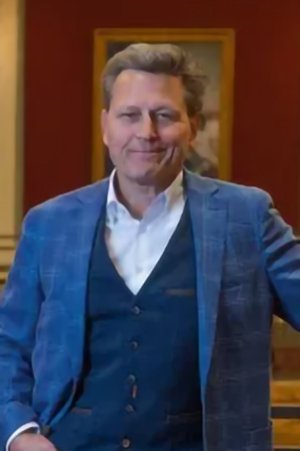
David Baldacci is a global #1 bestselling author with 150 million copies sold worldwide; his newest thriller, SIMPLY LIES, was published April 18, 2023. https://www.davidbaldacci.com/

Submit Your Writing to KN Magazine
Want to have your writing included in Killer Nashville Magazine?
Fill out our submission form and upload your writing here: