Between Pen and Paper: Flaneuring Through a Writer’s Mind – The Month That Almost Became …
By Andi Kopek
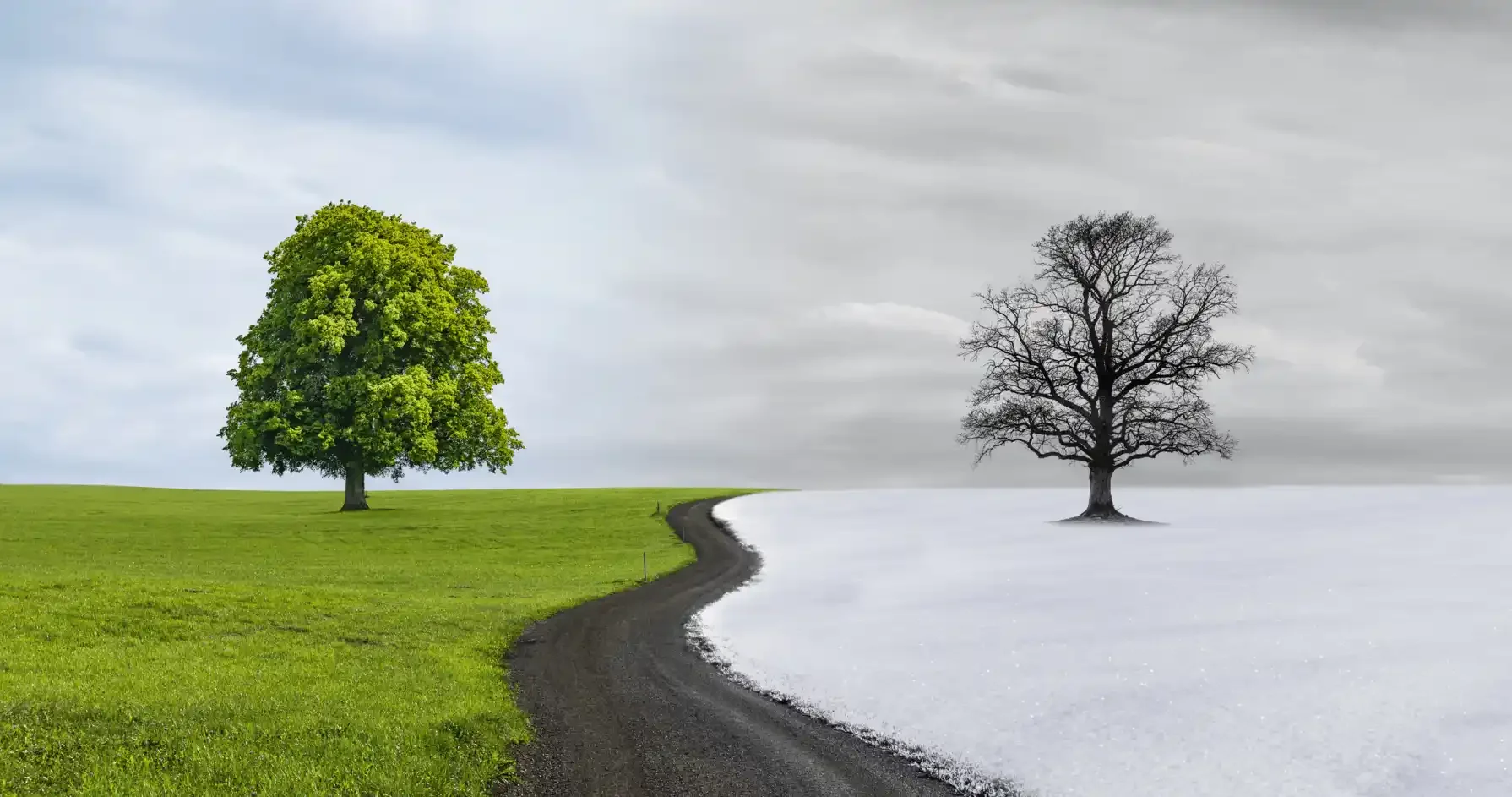
May is a month that refuses to make up its mind.
It wakes up wearing spring and goes to bed thinking about summer. It sends out graduation invitations and job rejections in the same breath. It smells like cut grass and sunscreen, like possibility and mild regret. It is, in every sense, a draft.
We are told to admire decisiveness. We must choose, commit, declare. There is a quiet suspicion toward anything that lingers in between. Are you in or out? Are you staying or going? Are you this or that?
May answers: almost.
Almost frost. Almost heat. Almost done. Almost there. Almost … something else.
It is the month of thresholds. Caps are thrown into the air, but almost no one knows where they will land. Leases expire. New cities hover on the horizon like rumors of a definitely better future. People say things like “we’ll keep in touch” with a sincerity that expires next month (June). Life rearranges itself in pencil.
We do not like pencil.
We like ink. Ink is loyal. Ink stays and says: this happened, this is happening, this will continue to happen. Ink makes promises that reality has no obligation to keep. Pencil, on the other hand, is honest in a way that feels almost rude. It says: this could change. It probably will. It did.
May is written entirely in pencil.
Even the weather refuses to commit. One day opens its windows to birdsong and breeze, the next presses humidity against your skin like an argument you didn’t agree to have. You leave the house carrying both shorts and a light jacket, along with a quiet sense of confusion.
And yet, for all our discomfort, something important happens in this unfinished space. In the absence of certainty, we begin to improvise.
We try on versions of ourselves the way you might try on clothes in a second-hand store with unforgiving lighting. This one almost fits. This one used to. This one will. Maybe. Later. Each of them belongs to someone I haven’t met yet. And likely never will.
We step into conversations without knowing how they will end. We say yes with a question mark attached. We say no and then revisit it three days later while staring at the ceiling.
There is a peculiar vulnerability in almost.
To be almost something is to admit you are not fully formed. Not yet resolved. Not yet decided. It is to exist without the protection of a finished sentence. There is no period to hide behind, only a trailing ellipsis that suggests continuation without guarantee.
…
We rarely celebrate this.
There are no ceremonies for the unfinished. No rituals for the nearly-there. We applaud arrival, not approach. We admire clarity, not confusion. But most of life, if we are being honest, unfolds in this quiet, unstable middle.
The job you almost got.
The person you almost became.
The version of the story that almost made sense.
These are not failures. They are evidence of movement forward. The journey … May understands this better than we do.
It does not rush towards a conclusion. It lingers in possibility. It allows contradiction to coexist without forcing resolution. It lets the future remain slightly out of focus, as if to say: you are not meant to see everything yet.
There is, strangely, a kind of freedom in that.
If nothing is fully decided, then nothing is fully closed. If you are not entirely one thing, you are still permitted to become another. If the story is still being written, then the next sentence remains available to you, even if you have no idea what it will be.
Especially if you have no idea.
So perhaps the task is not to escape May, but to learn how to inhabit it.
To tolerate the unfinished in you. To embrace the unfinished in your writing. To sit inside the almost without rushing to resolve it. To accept that some parts of your life will remain in draft form longer than you would prefer, and that this is not a malfunction but a feature of being human.
We are, all of us, perpetually mid-sentence. Mid journey … May simply makes that harder to ignore.
And if you listen closely, beneath the graduations and the departures, beneath the shifting weather and the tentative plans, you can hear it—the soft graphite scratch of something still being written.
Not yet final. Not yet fixed.
But very much alive.
Because we are always writing…
Andi Kopek is a multidisciplinary artist based in Nashville, TN. With a background in medicine, molecular neuroscience, and behavioral change, he has recently devoted himself entirely to the creative arts. His debut poetry collection, Shmehara, has garnered accolades in both literary and independent film circles for its innovative storytelling.
When you’re in Nashville, you can join Andi at his poetry workshops or catch one of his live performances. When not engaging with the community, he's hard at work on his next creative project or preparing for his monthly art-focused podcast, The Samovar(t) Lounge: Steeping Conversations with Creative Minds, where in a relaxed space, invited artists share tea and the never-told intricacies of their creative journeys.
website: andikopekart.ink
FB: https://www.facebook.com/profile.php?id=100093119557533
IG: https://www.instagram.com/andi.kopek/
X: https://twitter.com/andikopekart
TT: www.tiktok.com/@andi.kopek