
KN Magazine: Articles
Between Pen and Paper: Flaneuring Through a Writer’s Mind – The Manual of Becoming a Tree
In this contemplative installment of Between Pen and Paper, Andi Kopek explores what writers can learn from trees—stillness, patience, interconnectedness, and quiet growth. “The Manual of Becoming a Tree” blends philosophy, nature, and craft to reframe writing not as constant output, but as a process of deep attention, rooted presence, and gradual transformation.
By Andi Kopek
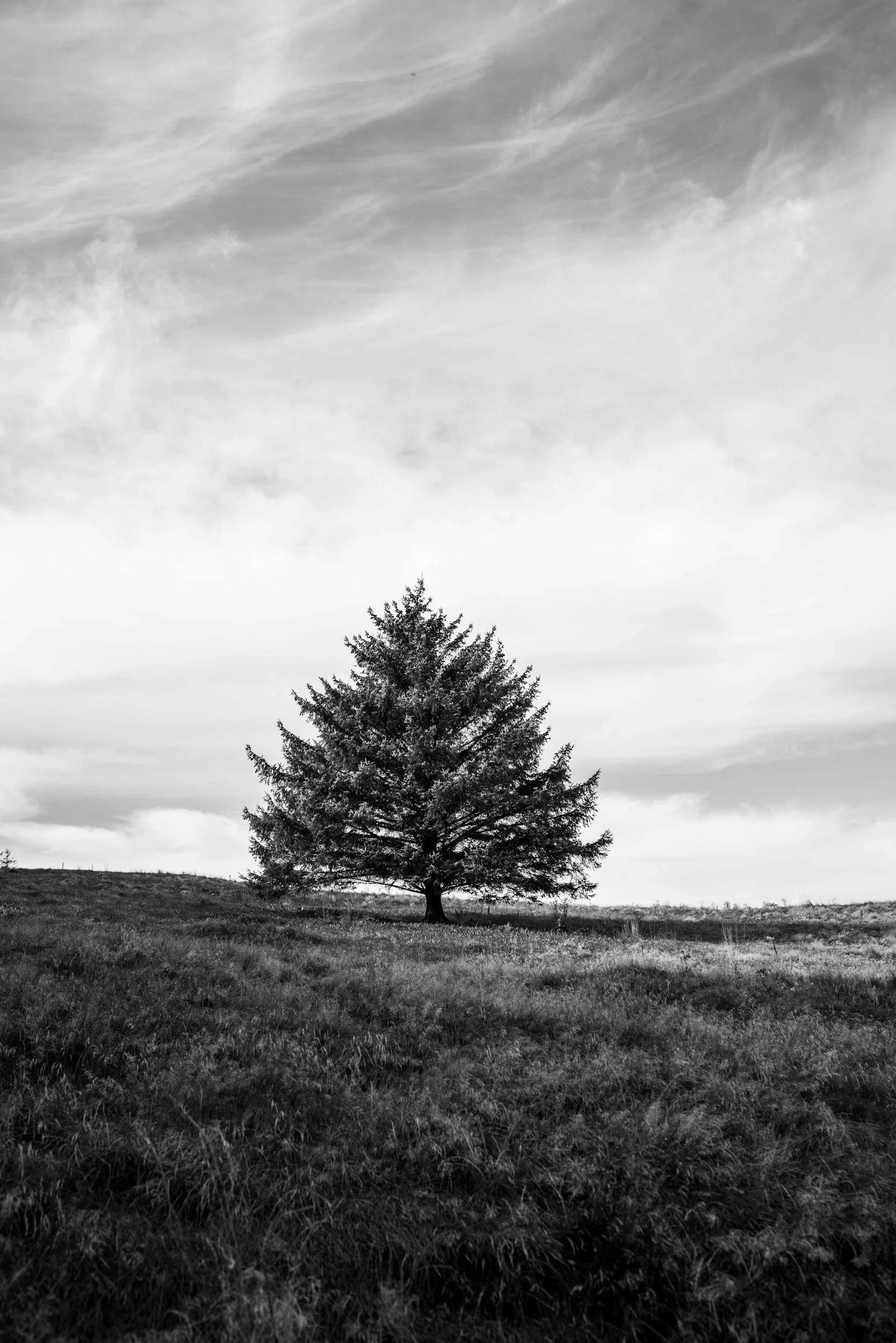
Step 1. Stand still longer than is comfortable.
On the first day of spring, as I am writing these words, even though planets and stars align in their quit geometry, nothing remarkable happens. The grass has been green for weeks. Cardinals and mockingbirds have been rehearsing morning for at least a month. Purple flowers of Eastern Redbud—already confident—have been decorating neighborhoods, our moods and our minds.
The trees… the trees, as always, in their ancient wisdom, ignore the announcement. They proceed according to their own instructions—ones written in rings, in long negotiations with light, in patient agreements with water and soil, in a language that does not translate easily into urgency.
I am trying to follow.
Step 2. Abandon the clock.
I am trying to follow.
A tree does not measure time in hours or deadlines. It keeps record through winters endured, through droughts survived, through fires remembered. What appears to us as stillness is, in fact, accumulation—experience layered and held quietly in place.
There are trees older than most of our stories. Some have lived through empires we forgot existed. And some, like the aspen in Pando, complicate the idea of individuality altogether—a forest that is not a collection of trees, but a single organism repeating itself underground, one root system speaking in many trunks.
We tend to think of time as something we move through. Trees suggest the opposite.
Time moves through them.
Step 3. Grow roots.
Time moves through them.
And because they cannot move, everything must come to them. Light is not pursued, but received. Water is not reached for, but waited for. A tree does not relocate to survive. It negotiates with its conditions.
Roots are not only anchors. They are instruments of communication. They extend into darkness, into soil, into the unseen, mapping the world not by sight but by contact. Through them, the tree senses, exchanges, chats—participating in a network that is both intimate and vast.
I am beginning to understand that to write well is to do something similar. Not to describe a thing from a distance, but to accept its limits as your own. To give up movement. To remain. To feel, as much as one can, what it means to depend on what arrives.
To grow roots is to let the world find you.
Step 4. Be one, be many.
To grow roots is to let the world find you.
No tree grows alone. Beneath the surface, there is an exchange—nutrients, signals, warnings—passed along through roots and fungal threads, a slow conversation without voice. What appears above ground as individuality is, below, a shared system. A forest is not a gathering. It is a continuity.
Identity, here, becomes less certain. The boundaries soften. One tree feeds another. One suffers, and others adjust. The self is no longer a fixed object, but a participant in something larger, something distributed.
I am beginning to suspect that writing asks for a similar surrender. Not expression, at first, but dissolution. The ego—so eager to assert, to define, to be seen—must loosen its grip. To write well is not to place yourself at the center, but to become permeable, translucent. To let the subject move through you, as time moves through trees.
To be one is to discover that one was never singular.
Step 5. Grow toward the light.
To be one is to discover that one was never singular.
A tree does not choose the sun in the way we choose our paths. It turns toward it. Slowly, persistently, without certainty of arrival. This is not ambition as we understand it, but something closer to orientation—a continual adjustment, a patient alignment with what sustains.
They call it phototropism: the quiet intelligence of growth bending toward light. Not in leaps, not in declarations or milestones, but in increments so small they initially escape notice. And yet, over time, the entire form of the tree is shaped by this reaching.
I wonder if our aspirations are meant to function the same way. Not as destinations to conquer, but as directions to guide us. Something we lean toward, even knowing we may never fully arrive.
To write, perhaps, is to practice this leaning. To shape yourself, sentence by sentence, ring by ring, toward a clarity you cannot yet hold.
To grow toward the light.
Step 6. Opening the Canopy: Komorebi
To grow toward the light.
light finds every leaf
voice unfolds into verses
time moves, we become
Andi Kopek is a multidisciplinary artist based in Nashville, TN. With a background in medicine, molecular neuroscience, and behavioral change, he has recently devoted himself entirely to the creative arts. His debut poetry collection, Shmehara, has garnered accolades in both literary and independent film circles for its innovative storytelling.
When you’re in Nashville, you can join Andi at his poetry workshops or catch one of his live performances. When not engaging with the community, he's hard at work on his next creative project or preparing for his monthly art-focused podcast, The Samovar(t) Lounge: Steeping Conversations with Creative Minds, where in a relaxed space, invited artists share tea and the never-told intricacies of their creative journeys.
website: andikopekart.ink
FB: https://www.facebook.com/profile.php?id=100093119557533
IG: https://www.instagram.com/andi.kopek/
X: https://twitter.com/andikopekart
TT: www.tiktok.com/@andi.kopek
Between Pen and Paper: Flaneuring Through a Writer’s Mind – The Pursuit of Happiness with Lemons, Ink, and Fireworks
Andi Kopek reflects on what it means to be a writer in a world of fireworks, freedom, and quiet censorship. Blending personal history with cultural critique, this lyrical essay explores the tension between independence and auto-censorship—and how writers can reclaim their voices through metaphor, subtlety, and truth disguised in lemon juice.
By Andi Kopek
Since I’ve been living in the United States, July has taken on a particular kind of symbolism. It's loud, bright, and laced with bold declarations. Fireworks blossom in the sky like punctuation marks over phrases such as “liberty” and “freedom.”
On July 4th, 1776, the Second Continental Congress ratified the final text of the Declaration of Independence, primarily authored by Thomas Jefferson. It wasn’t the start of the war (that had begun a year earlier), nor was it the end (which would come in 1783). But it was, the ideological birth certificate of a new nation. One that had cut the umbilical cord to the British Empire and declared its intention to govern itself.
A bold move. A fresh myth. A country born, literally, from the sentence. And what a sentence it was:
“We hold these truths to be self-evident, that all men are created equal... endowed with certain unalienable Rights… among these are Life, Liberty, and the pursuit of Happiness.”
It’s hard not to feel something when you hear those words—especially if, like me, you grew up in a country where such phrases would have been edited out of existence by the morning censors.
Fireworks and Ghosts
Growing up in so-called communist Poland, “independence” wasn’t a holiday. It was a hope, whispered between trusted friends, unless you preferred the seclusion of solitary confinement or an endless winter in Siberia. “Freedom” wasn’t declared. It was encoded. We didn’t have parades of liberty—we had a quiet choreography of caution. You learned early to read between the lines, because that’s where the real story lived.
So every year, when July rolls around in my new home, and the sky explodes with stars and stripes, I can’t help but feel... something tangled. Gratitude, yes. Awe, sometimes. But also, a sense of skepticism. A question humming under the national anthem:
Are we truly free? Are we truly independent?
Especially as writers—as creators of meaning, challengers of narratives, recorders of the soul’s strange movements—what do these words actually mean?
Freedom vs. Independence vs. The Editor in Your Head
Let’s make a distinction.
Freedom is a state of possibility.
Independence is a stance—an insistence that you don’t owe your truth to anyone else’s permission.
And auto-censorship? That’s when you stop yourself before anyone else does.
I see more and more of this creeping into American discourse. It’s subtle, often self-imposed. It wears the costume of politeness, professionalism, marketability. Often with an underpinning of fear.
Some examples:
A writer won’t publish a story that’s too dark, too weird, or too political—because they “don’t want to get canceled.”
A teacher won’t assign a novel that shaped them—because it might be challenged at the school board.
A memoirist waters down the truth to make it more palatable, more “brand-friendly.”
These aren’t laws. They’re suggestions. A mandatory appendix. Ingrained mechanisms of survival in a culture of performance scores and surveillance. You stop yourself—not because you were censored, but because you feared the potential consequences.
Sound familiar?
Auto-censorship—the ugly twin of state censorship—is often harder to fight, because the gatekeeper lives inside you.
Lemons and Invisible Ink
But here’s the paradox. Here’s the secret silver lining.
In Poland, under an oppressive regime, some of the most brilliant, impactful writing of the 20th century was created. It wasn’t loud. It wasn’t explicit. It was disguised. Dressed in metaphor.
Hidden behind allegory. Written, in essence, with invisible ink.
(And in case you forgot: invisible ink can be made from lemon juice.)
Poets, playwrights, novelists—they all became alchemists of subtlety. They learned how to camouflage universal truths in narratives that passed the censors. But readers knew. They always knew. Because real truth, even disguised, leaves fingerprints on the soul.
So yes, the world today is full of pressure—external and internal—to conform, to smooth the edges, to silence complexity. But as a writer, you are not helpless in the face of that. In fact, you may be even more powerful. Because restrictions can sharpen clarity, and fear, when transmuted, can become a lens.
Beyond the Pursuit of Happiness
Let me end where the Declaration began—with that shimmering phrase: “the pursuit of happiness.”
What does that mean for a writer? Not much.
I believe that writing isn’t a pursuit of happiness. It’s the embrace of discomfort, the dance with uncertainty, the slow unearthing of truths most people are too polite to mention. And if you do it right—if you do it with courage and cunning—you don’t just entertain. You preserve. You inspire. You leave something behind.
So this July, while the sky narrates independence in bursts of color, I raise a pen—not in pursuit of happiness, but in allegiance to something deeper:
The fulfillment in camouflaging permanent, universal truths for the generations to come.
A legacy not shouted, but planted. A voice not loud, but built to last.
So go collect your lemons. Write between the lines.
Never compromise.
Andi Kopek is a multidisciplinary artist based in Nashville, TN. With a background in medicine, molecular neuroscience, and behavioral change, he has recently devoted himself entirely to the creative arts. His debut poetry collection, Shmehara, has garnered accolades in both literary and independent film circles for its innovative storytelling.
When you’re in Nashville, you can join Andi at his monthly poetry workshop, participate in the Libri Prohibiti book club (both held monthly at the Spine bookstore, Smyrna, TN), or catch one of his live performances. When not engaging with the community, he's hard at work on his next creative project or preparing for his monthly art-focused podcast, The Samovar(t) Lounge: Steeping Conversations with Creative Minds, where in a relaxed space, invited artists share tea and the never-told intricacies of their creative journeys.
website: andikopekart.ink
FB: https://www.facebook.com/profile.php?id=100093119557533
IG: https://www.instagram.com/andi.kopek/
X: https://twitter.com/andikopekart
TT: www.tiktok.com/@andi.kopek
Submit Your Writing to KN Magazine
Want to have your writing included in Killer Nashville Magazine?
Fill out our submission form and upload your writing here: