By Andi Kopek
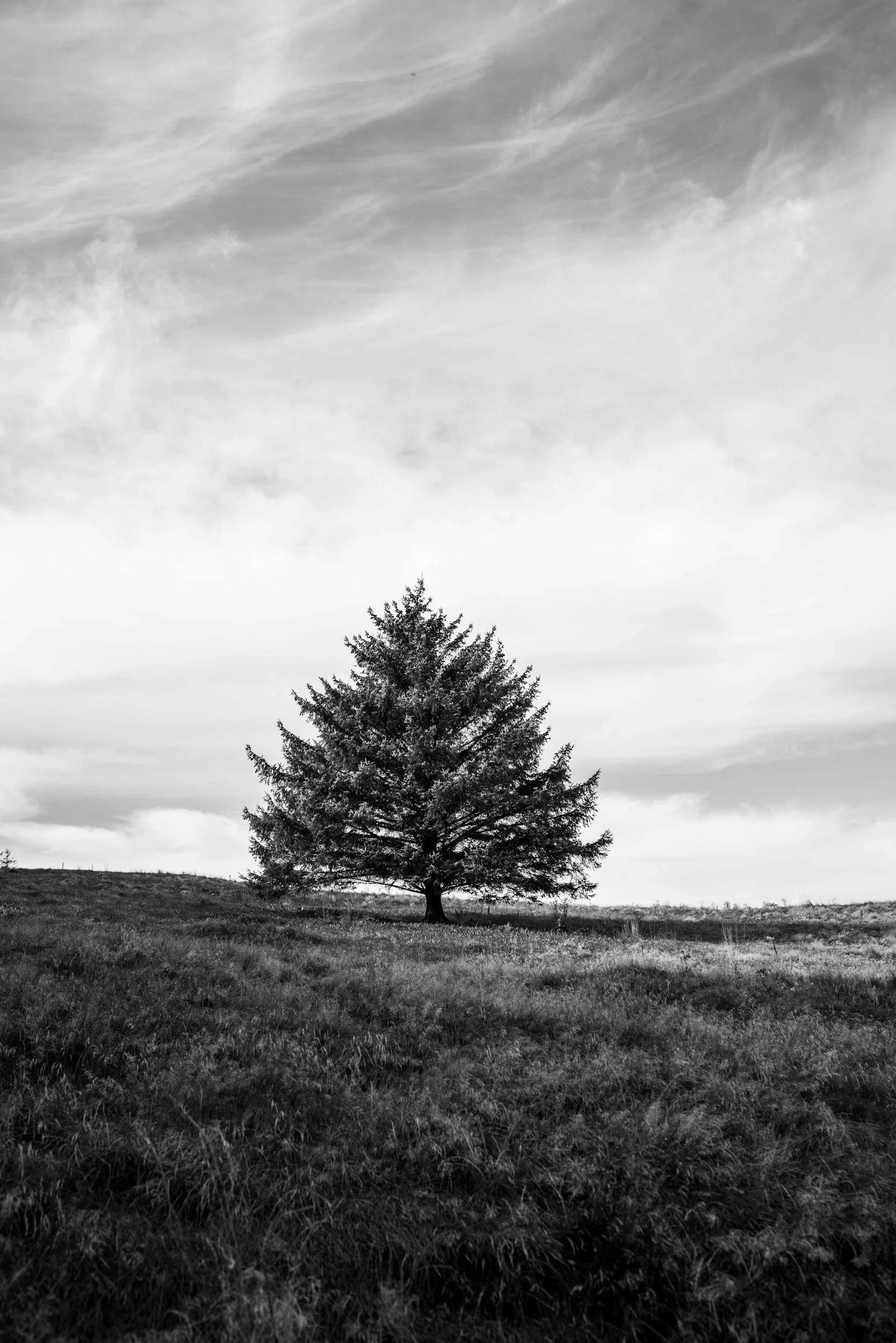
Step 1. Stand still longer than is comfortable.
On the first day of spring, as I am writing these words, even though planets and stars align in their quit geometry, nothing remarkable happens. The grass has been green for weeks. Cardinals and mockingbirds have been rehearsing morning for at least a month. Purple flowers of Eastern Redbud—already confident—have been decorating neighborhoods, our moods and our minds.
The trees… the trees, as always, in their ancient wisdom, ignore the announcement. They proceed according to their own instructions—ones written in rings, in long negotiations with light, in patient agreements with water and soil, in a language that does not translate easily into urgency.
I am trying to follow.
Step 2. Abandon the clock.
I am trying to follow.
A tree does not measure time in hours or deadlines. It keeps record through winters endured, through droughts survived, through fires remembered. What appears to us as stillness is, in fact, accumulation—experience layered and held quietly in place.
There are trees older than most of our stories. Some have lived through empires we forgot existed. And some, like the aspen in Pando, complicate the idea of individuality altogether—a forest that is not a collection of trees, but a single organism repeating itself underground, one root system speaking in many trunks.
We tend to think of time as something we move through. Trees suggest the opposite.
Time moves through them.
Step 3. Grow roots.
Time moves through them.
And because they cannot move, everything must come to them. Light is not pursued, but received. Water is not reached for, but waited for. A tree does not relocate to survive. It negotiates with its conditions.
Roots are not only anchors. They are instruments of communication. They extend into darkness, into soil, into the unseen, mapping the world not by sight but by contact. Through them, the tree senses, exchanges, chats—participating in a network that is both intimate and vast.
I am beginning to understand that to write well is to do something similar. Not to describe a thing from a distance, but to accept its limits as your own. To give up movement. To remain. To feel, as much as one can, what it means to depend on what arrives.
To grow roots is to let the world find you.
Step 4. Be one, be many.
To grow roots is to let the world find you.
No tree grows alone. Beneath the surface, there is an exchange—nutrients, signals, warnings—passed along through roots and fungal threads, a slow conversation without voice. What appears above ground as individuality is, below, a shared system. A forest is not a gathering. It is a continuity.
Identity, here, becomes less certain. The boundaries soften. One tree feeds another. One suffers, and others adjust. The self is no longer a fixed object, but a participant in something larger, something distributed.
I am beginning to suspect that writing asks for a similar surrender. Not expression, at first, but dissolution. The ego—so eager to assert, to define, to be seen—must loosen its grip. To write well is not to place yourself at the center, but to become permeable, translucent. To let the subject move through you, as time moves through trees.
To be one is to discover that one was never singular.
Step 5. Grow toward the light.
To be one is to discover that one was never singular.
A tree does not choose the sun in the way we choose our paths. It turns toward it. Slowly, persistently, without certainty of arrival. This is not ambition as we understand it, but something closer to orientation—a continual adjustment, a patient alignment with what sustains.
They call it phototropism: the quiet intelligence of growth bending toward light. Not in leaps, not in declarations or milestones, but in increments so small they initially escape notice. And yet, over time, the entire form of the tree is shaped by this reaching.
I wonder if our aspirations are meant to function the same way. Not as destinations to conquer, but as directions to guide us. Something we lean toward, even knowing we may never fully arrive.
To write, perhaps, is to practice this leaning. To shape yourself, sentence by sentence, ring by ring, toward a clarity you cannot yet hold.
To grow toward the light.
Step 6. Opening the Canopy: Komorebi
To grow toward the light.
light finds every leaf
voice unfolds into verses
time moves, we become
Andi Kopek is a multidisciplinary artist based in Nashville, TN. With a background in medicine, molecular neuroscience, and behavioral change, he has recently devoted himself entirely to the creative arts. His debut poetry collection, Shmehara, has garnered accolades in both literary and independent film circles for its innovative storytelling.
When you’re in Nashville, you can join Andi at his poetry workshops or catch one of his live performances. When not engaging with the community, he's hard at work on his next creative project or preparing for his monthly art-focused podcast, The Samovar(t) Lounge: Steeping Conversations with Creative Minds, where in a relaxed space, invited artists share tea and the never-told intricacies of their creative journeys.
website: andikopekart.ink
FB: https://www.facebook.com/profile.php?id=100093119557533
IG: https://www.instagram.com/andi.kopek/
X: https://twitter.com/andikopekart
TT: www.tiktok.com/@andi.kopek