

KN Magazine: Articles
Between Pen and Paper: Flaneuring Through a Writer’s Mind – The Manual of Becoming a Tree
In this contemplative installment of Between Pen and Paper, Andi Kopek explores what writers can learn from trees—stillness, patience, interconnectedness, and quiet growth. “The Manual of Becoming a Tree” blends philosophy, nature, and craft to reframe writing not as constant output, but as a process of deep attention, rooted presence, and gradual transformation.
By Andi Kopek
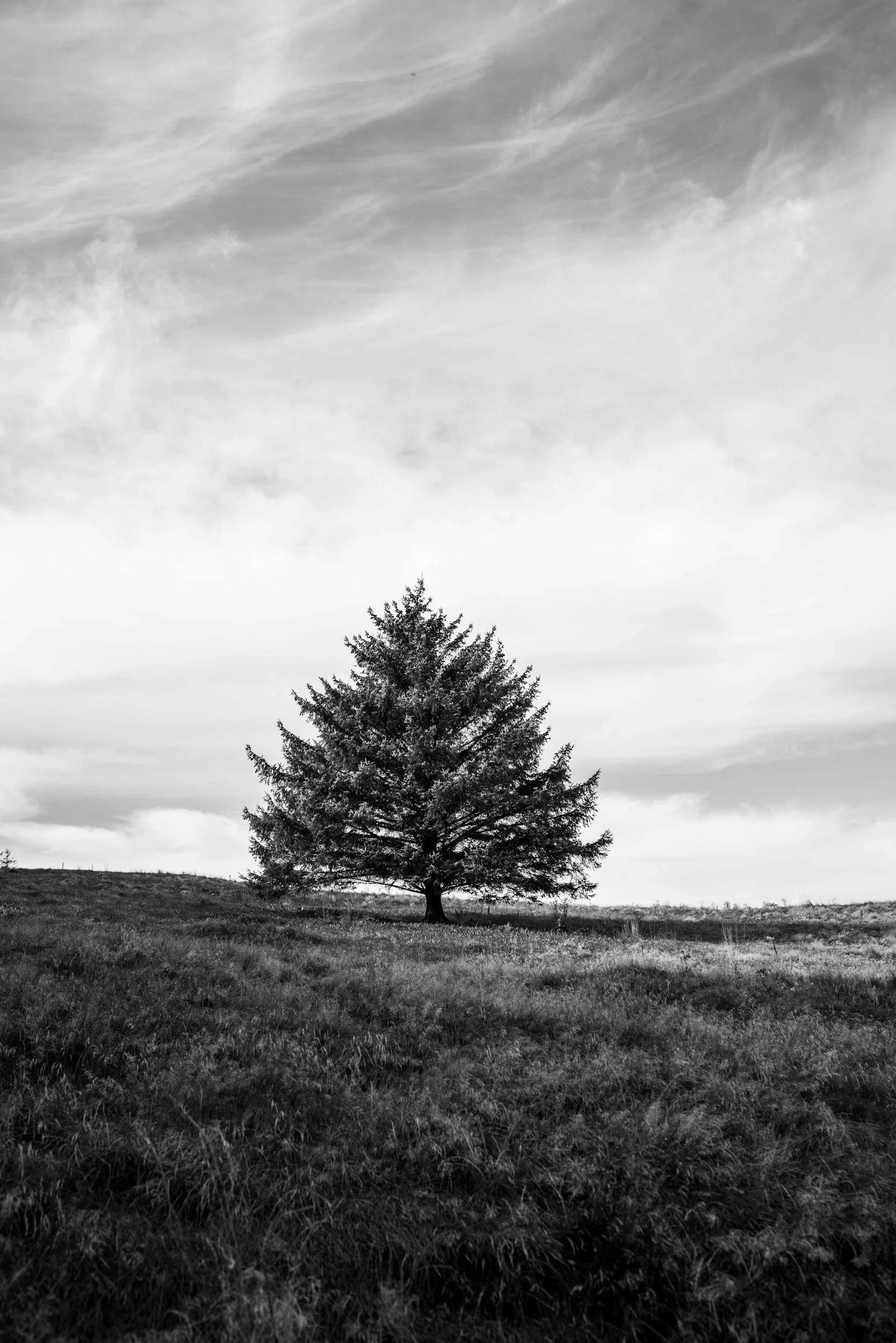
Step 1. Stand still longer than is comfortable.
On the first day of spring, as I am writing these words, even though planets and stars align in their quit geometry, nothing remarkable happens. The grass has been green for weeks. Cardinals and mockingbirds have been rehearsing morning for at least a month. Purple flowers of Eastern Redbud—already confident—have been decorating neighborhoods, our moods and our minds.
The trees… the trees, as always, in their ancient wisdom, ignore the announcement. They proceed according to their own instructions—ones written in rings, in long negotiations with light, in patient agreements with water and soil, in a language that does not translate easily into urgency.
I am trying to follow.
Step 2. Abandon the clock.
I am trying to follow.
A tree does not measure time in hours or deadlines. It keeps record through winters endured, through droughts survived, through fires remembered. What appears to us as stillness is, in fact, accumulation—experience layered and held quietly in place.
There are trees older than most of our stories. Some have lived through empires we forgot existed. And some, like the aspen in Pando, complicate the idea of individuality altogether—a forest that is not a collection of trees, but a single organism repeating itself underground, one root system speaking in many trunks.
We tend to think of time as something we move through. Trees suggest the opposite.
Time moves through them.
Step 3. Grow roots.
Time moves through them.
And because they cannot move, everything must come to them. Light is not pursued, but received. Water is not reached for, but waited for. A tree does not relocate to survive. It negotiates with its conditions.
Roots are not only anchors. They are instruments of communication. They extend into darkness, into soil, into the unseen, mapping the world not by sight but by contact. Through them, the tree senses, exchanges, chats—participating in a network that is both intimate and vast.
I am beginning to understand that to write well is to do something similar. Not to describe a thing from a distance, but to accept its limits as your own. To give up movement. To remain. To feel, as much as one can, what it means to depend on what arrives.
To grow roots is to let the world find you.
Step 4. Be one, be many.
To grow roots is to let the world find you.
No tree grows alone. Beneath the surface, there is an exchange—nutrients, signals, warnings—passed along through roots and fungal threads, a slow conversation without voice. What appears above ground as individuality is, below, a shared system. A forest is not a gathering. It is a continuity.
Identity, here, becomes less certain. The boundaries soften. One tree feeds another. One suffers, and others adjust. The self is no longer a fixed object, but a participant in something larger, something distributed.
I am beginning to suspect that writing asks for a similar surrender. Not expression, at first, but dissolution. The ego—so eager to assert, to define, to be seen—must loosen its grip. To write well is not to place yourself at the center, but to become permeable, translucent. To let the subject move through you, as time moves through trees.
To be one is to discover that one was never singular.
Step 5. Grow toward the light.
To be one is to discover that one was never singular.
A tree does not choose the sun in the way we choose our paths. It turns toward it. Slowly, persistently, without certainty of arrival. This is not ambition as we understand it, but something closer to orientation—a continual adjustment, a patient alignment with what sustains.
They call it phototropism: the quiet intelligence of growth bending toward light. Not in leaps, not in declarations or milestones, but in increments so small they initially escape notice. And yet, over time, the entire form of the tree is shaped by this reaching.
I wonder if our aspirations are meant to function the same way. Not as destinations to conquer, but as directions to guide us. Something we lean toward, even knowing we may never fully arrive.
To write, perhaps, is to practice this leaning. To shape yourself, sentence by sentence, ring by ring, toward a clarity you cannot yet hold.
To grow toward the light.
Step 6. Opening the Canopy: Komorebi
To grow toward the light.
light finds every leaf
voice unfolds into verses
time moves, we become
Andi Kopek is a multidisciplinary artist based in Nashville, TN. With a background in medicine, molecular neuroscience, and behavioral change, he has recently devoted himself entirely to the creative arts. His debut poetry collection, Shmehara, has garnered accolades in both literary and independent film circles for its innovative storytelling.
When you’re in Nashville, you can join Andi at his poetry workshops or catch one of his live performances. When not engaging with the community, he's hard at work on his next creative project or preparing for his monthly art-focused podcast, The Samovar(t) Lounge: Steeping Conversations with Creative Minds, where in a relaxed space, invited artists share tea and the never-told intricacies of their creative journeys.
website: andikopekart.ink
FB: https://www.facebook.com/profile.php?id=100093119557533
IG: https://www.instagram.com/andi.kopek/
X: https://twitter.com/andikopekart
TT: www.tiktok.com/@andi.kopek
Between Pen and Paper: Flaneuring Through a Writer’s Mind – Finding Inspiration
Inspiration is a mysterious force that drives writers. In this column, we explore how to find inspiration in everyday life, personal experiences, and nature, and how these moments fuel our creativity and storytelling.
By Andi Kopek
A few days ago, an email landed in my inbox with an intriguing idea: Contribute to Killer Nashville Magazine! The email encouraged writers to submit single pieces, pitch the entire series, or even become regular columnists. My immediate reaction? “Hell, yes! Go for it!”
I had the privilege of volunteering at the most recent Killer Nashville conference, contributing by reviewing submissions, bringing authors’ work to life through live readings, and assisting the logistics team. It was a rewarding experience in every sense, but what struck me most was the event’s outstanding quality and the immense value it provided to its participants. So, when the opportunity arose to contribute to the magazine—an extension of the conference—I jumped in headfirst.
When I emerged from the pool of excitement, I asked myself, “What do you want to write about?” This reflection led me to the title of my potential column: Between Pen and Paper: Flaneuring Through a Writer’s Mind. Titles are vital; they serve as beacons from a lighthouse of purpose, guiding the writing ship through the tumultuous seas of creativity and storytelling.
Why Between Pen and Paper? Because I believe entire worlds exist in that space. There are foggy worlds of undiscovered desires, passions, and failures hidden in a writer’s mind. Mundane worlds of endless research and labyrinthine directories of folders within sub-folders, within sub-folders holding googol amount of Googled information. And then there are fantasy worlds, where pages transform into smiling green Benjamins, and bank accounts grow fat like grizzly bears before La Niña’s winter.
These are the fascinating worlds I want to explore, and I’d like to invite you to come along.
There are countless ways to explore a world: you can hop on a plane with a packed itinerary and check off every tourist hotspot, or you can stand by the side of the road with a thumb outstretched, waiting for the unpredictable. I’ve traveled the world both ways—and in some others—but my favorite is through flaneuring.
What is flaneuring? Flaneuring, or flânerie, was born in the literary circles of 19th-century Europe. A flâneur—a person who practices flaneuring—wanders the streets of a city, observing and reflecting on its urban landscape. Edgar Allan Poe introduced this concept to literature in 1840 with his short story “The Man of the Crowd.” Charles Baudelaire discussed Poe’s story in his “The Painter of Modern Life”, Victor Fournel dedicated a chapter of his book “Ce qu'On Voit dans les Rues de Paris” (What One Sees in the Streets of Paris) to “the art of flânerie”, Honore de Balzac described flaneuring so poetically as “the gastronomy of the eye” in his The Physiology of Marriage.
Inspired by this contemplative form of exploration, I propose we flaneur through the vast worlds of a writer’s mind. Let’s begin our journey where all stories originate—with inspiration.
Inspiration is a mysterious, almost sacred force. It ignites a writer’s unexplainable desire to tell stories. Suddenly, an event, a thought, or a fleeting moment pierces the thick skin of mundane reality and touches the soul of a writer, compelling us to create something meaningful.
As I wander through the inspirational world, I notice three distinct types of inspiration:
1. Inspiration in Everyday Life
Everyday life is full of untapped creativity. When I go grocery shopping, I’m not just buying food—I’m observing the world around me. I observe what people buy, how shoppers interact with each other, or how couples move through the aisles. To sharpen my focus, I sometimes wear muted earphones to amplify my visual senses. Conversely, in a café, I close my eyes sometimes to heighten my auditory awareness, letting the noise and rhythm of conversations spark ideas. These ordinary moments can inspire characters, dialogue, or the subtleties of a scene.
2. Inspiration from Personal Experiences
Personal experiences are a treasure trove for storytelling. At the end of the day, what we know the best is our lives. While not everything we write is autobiographical, our lives provide rich emotional material to draw upon. Moments of joy, heartbreak, or vulnerability can shape authentic characters and relatable narratives. Think about waiting for a life-altering diagnosis or experiencing the bittersweet ache of nostalgia—these emotions can become the foundation of an interesting story. Ultimately, our personal experiences, whether mundane or monumental, can allow us to explore universal human truths.
3. Inspiration by Nature
Nature offers boundless inspiration. When I’m going for a walk, doesn’t mean I want to write a hiking guide. Nature is full of parables, similes, and metaphors. The way rain reshapes deer hoofprints in mud might inspire a crucial clue in a detective story. The oppressive darkness of a moonless forest could set the tone for a psychological thriller. Even the smell of freshly turned soil might spark the perfect ending to a murder mystery. When we observe nature with a writer’s eye, we uncover stories waiting to be told.
These diverse sources of inspiration—everyday life, personal experiences, and nature—feed our creativity and provide the raw material for storytelling. They can ignite an entire novel, inspire a unique character quirk, or shape a single unforgettable moment in a story. Inspiration doesn’t always arrive fully formed; sometimes, it’s just a fragment—a fleeting image, a snippet of dialogue, or an emotion—that grows as we nurture it. If we keep our minds open, inspirations come constantly in our direction, so we should be prepared to welcome them and, if not used at the moment, have a way of storing them for later.
The word inspiration comes from the Latin inspirare, meaning “to breathe into.” And that’s exactly what inspiration does—it breathes life into our thoughts, transforming them into vivid, imaginative creations.
So, let’s embrace every inspiration we encounter, at every step, at every turn as we flaneur through the intricate worlds of the writer’s mind.

Andi Kopek is a multidisciplinary artist based in Nashville, TN. With a background in medicine, molecular neuroscience, and behavioral change, he has recently devoted himself entirely to the creative arts. His debut poetry collection, Shmehara, has garnered accolades in both literary and independent film circles for its innovative storytelling.
When you’re in Nashville, you can join Andi at his monthly poetry workshop, participate in the Libri Prohibiti book club, or catch one of his live performances. When not engaging with the community, he's hard at work on his next creative project or preparing for his upcoming art-focused podcast, The Samovar(t) Lounge: Steeping Conversations with Creative Minds,where in a relaxed space, invited artists share tea and the never-told intricacies of their creative journeys.

Submit Your Writing to KN Magazine
Want to have your writing included in Killer Nashville Magazine?
Fill out our submission form and upload your writing here: