

KN Magazine: Articles
Between Pen and Paper: Flaneuring Through a Writer’s Mind – The Manual of Becoming a Tree
In this contemplative installment of Between Pen and Paper, Andi Kopek explores what writers can learn from trees—stillness, patience, interconnectedness, and quiet growth. “The Manual of Becoming a Tree” blends philosophy, nature, and craft to reframe writing not as constant output, but as a process of deep attention, rooted presence, and gradual transformation.
By Andi Kopek
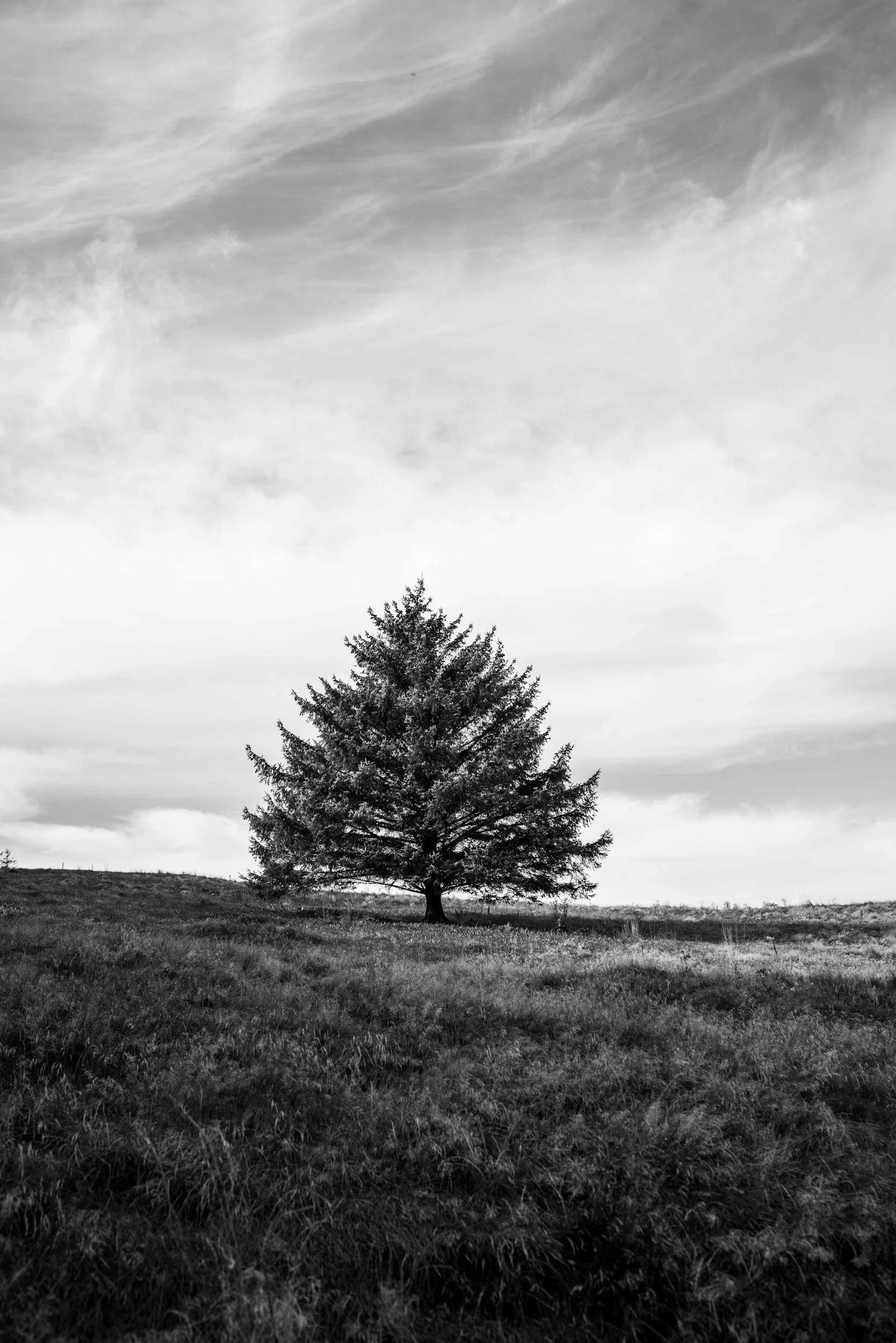
Step 1. Stand still longer than is comfortable.
On the first day of spring, as I am writing these words, even though planets and stars align in their quit geometry, nothing remarkable happens. The grass has been green for weeks. Cardinals and mockingbirds have been rehearsing morning for at least a month. Purple flowers of Eastern Redbud—already confident—have been decorating neighborhoods, our moods and our minds.
The trees… the trees, as always, in their ancient wisdom, ignore the announcement. They proceed according to their own instructions—ones written in rings, in long negotiations with light, in patient agreements with water and soil, in a language that does not translate easily into urgency.
I am trying to follow.
Step 2. Abandon the clock.
I am trying to follow.
A tree does not measure time in hours or deadlines. It keeps record through winters endured, through droughts survived, through fires remembered. What appears to us as stillness is, in fact, accumulation—experience layered and held quietly in place.
There are trees older than most of our stories. Some have lived through empires we forgot existed. And some, like the aspen in Pando, complicate the idea of individuality altogether—a forest that is not a collection of trees, but a single organism repeating itself underground, one root system speaking in many trunks.
We tend to think of time as something we move through. Trees suggest the opposite.
Time moves through them.
Step 3. Grow roots.
Time moves through them.
And because they cannot move, everything must come to them. Light is not pursued, but received. Water is not reached for, but waited for. A tree does not relocate to survive. It negotiates with its conditions.
Roots are not only anchors. They are instruments of communication. They extend into darkness, into soil, into the unseen, mapping the world not by sight but by contact. Through them, the tree senses, exchanges, chats—participating in a network that is both intimate and vast.
I am beginning to understand that to write well is to do something similar. Not to describe a thing from a distance, but to accept its limits as your own. To give up movement. To remain. To feel, as much as one can, what it means to depend on what arrives.
To grow roots is to let the world find you.
Step 4. Be one, be many.
To grow roots is to let the world find you.
No tree grows alone. Beneath the surface, there is an exchange—nutrients, signals, warnings—passed along through roots and fungal threads, a slow conversation without voice. What appears above ground as individuality is, below, a shared system. A forest is not a gathering. It is a continuity.
Identity, here, becomes less certain. The boundaries soften. One tree feeds another. One suffers, and others adjust. The self is no longer a fixed object, but a participant in something larger, something distributed.
I am beginning to suspect that writing asks for a similar surrender. Not expression, at first, but dissolution. The ego—so eager to assert, to define, to be seen—must loosen its grip. To write well is not to place yourself at the center, but to become permeable, translucent. To let the subject move through you, as time moves through trees.
To be one is to discover that one was never singular.
Step 5. Grow toward the light.
To be one is to discover that one was never singular.
A tree does not choose the sun in the way we choose our paths. It turns toward it. Slowly, persistently, without certainty of arrival. This is not ambition as we understand it, but something closer to orientation—a continual adjustment, a patient alignment with what sustains.
They call it phototropism: the quiet intelligence of growth bending toward light. Not in leaps, not in declarations or milestones, but in increments so small they initially escape notice. And yet, over time, the entire form of the tree is shaped by this reaching.
I wonder if our aspirations are meant to function the same way. Not as destinations to conquer, but as directions to guide us. Something we lean toward, even knowing we may never fully arrive.
To write, perhaps, is to practice this leaning. To shape yourself, sentence by sentence, ring by ring, toward a clarity you cannot yet hold.
To grow toward the light.
Step 6. Opening the Canopy: Komorebi
To grow toward the light.
light finds every leaf
voice unfolds into verses
time moves, we become
Andi Kopek is a multidisciplinary artist based in Nashville, TN. With a background in medicine, molecular neuroscience, and behavioral change, he has recently devoted himself entirely to the creative arts. His debut poetry collection, Shmehara, has garnered accolades in both literary and independent film circles for its innovative storytelling.
When you’re in Nashville, you can join Andi at his poetry workshops or catch one of his live performances. When not engaging with the community, he's hard at work on his next creative project or preparing for his monthly art-focused podcast, The Samovar(t) Lounge: Steeping Conversations with Creative Minds, where in a relaxed space, invited artists share tea and the never-told intricacies of their creative journeys.
website: andikopekart.ink
FB: https://www.facebook.com/profile.php?id=100093119557533
IG: https://www.instagram.com/andi.kopek/
X: https://twitter.com/andikopekart
TT: www.tiktok.com/@andi.kopek
THE QUIETNESS BENEATH THE STRIVING
In “The Quietness Beneath the Striving,” Clay Stafford reflects on a life driven by constant motion and ambition, only to discover a profound shift when the striving finally quiets. In that stillness, he confronts the deeper question of identity—who we are without the chase—and explores the peace, clarity, and self-understanding that emerge when we stop pushing and simply listen.
In that quiet moment, I realized I was no longer striving. For most of my life, I chased something I could never quite name. I moved against the ticking of an internal clock only I could hear, always aware that time kept moving forward.
No actual Big Ben was telling the time, but I felt its presence in how I approached work, opportunities, relationships, meals, sleep, and even the ordinary moments of each day. My life carried a quiet urgency that fueled my ambition. I rose early, pushed forward with determination, pursued the next project, the next mountain to climb, the next room, the next possibility, hoping it meant I was moving in the right direction. Movement was always necessary. Ambition was desired. Action was virtuous. I questioned none of these. Movement, always, justified itself.
Although I always felt overwhelmed and behind, those outside my mind admired my life and career, often complimenting me on how much I had achieved with so little sleep. I worked hard. I built things. I wrote. I traveled, spoke, taught, and organized. My days were packed, seven days a week, driven by what I saw as purpose, and I rarely questioned purpose when it showed measurable results. Invitations came. Opportunities followed. Doors opened. I moved through them all with the confidence of someone who has long believed that forward momentum is the key to a well-lived life.
A ghost haunted me. No matter how much I searched within myself, I couldn’t see it clearly, but there were many small, hollow, and lonely moments when I sensed something hidden just beneath my movements. I couldn’t quite grasp it and mistook it for guilt for not working harder. I walked the hotel hallways late at night, stared at the stars after a long day of writing or directing, and always, there was a lingering vibration inside me, something unsettled. My days went well, but it was the quiet of the night that seemed to condemn me. I searched for the source of that restlessness but could not name it. How could I feel so empty when the day had gone so well?
Caring and striving were like twin threads woven together in my mind. I grew up in and intentionally stepped away from circumstances where effort wasn’t optional if you wanted to escape a room with no doors or windows. If something mattered or freedom was vital, I approached it with intensity. “How would you describe me?” I would ask my friends when we sat around reminiscing about our day. “Intense” was the word most often used when describing me. And why shouldn’t it be? If something truly mattered, didn’t it demand intensity? If a dream was worth chasing, didn’t it call for force? The world does not open easily, and I learned early that doors had to be pushed because something on the other side was always pushing back. Over time, through experience and different situations, my mind rewired itself, and my posture hardened into a habit. I became skilled at many things, especially pushing.
The work itself never felt wrong. I loved writing. I loved creating in many forms. I loved teaching. I enjoyed building companies and projects. I cherished the strange and wonderful spaces where ideas moved between people and something unexpected appeared in every room. Those moments of exchange and growth felt like the closest I knew to being true to myself, but the path to them still carried a constant, underlying tension that I rarely examined, even though I always felt it. I assumed it was simply part of the deal. Years passed this way, much of my life.
The shift happened gradually enough that I didn’t notice it at first. Nothing sudden or dramatic took place, no failures, no collapses, no abrupt rejections that forced a change in direction. I kept climbing. The work continued. The invitations kept coming. The doors I pushed so hard against started to open. I kept writing, speaking, and building the things I believed were worth creating, but something began to change within the movement itself.
I started to notice, gradually, that the urgency that had driven me and been inside me for so long was beginning to fade. Projects still mattered, but they no longer felt like evidence of anything. Conversations still energized me, but they didn’t carry the same weight to confirm my place in the world. My focus started to expand beyond work. I didn’t lessen anything; I added my family life to the mix with the same sense of purpose. Professionally, then personally, the invisible clock kept ticking. Yet, something strange happened: the constant ticking somewhere behind my ribs and in my gut began to fade, then grew oddly silent, enough to scare me. At first, I wondered if I had lost my edge, or maybe I had climbed so high that there was nowhere left to climb.
To me, intensity was synonymous with vitality. As intensity faded, it left behind an unfamiliar silence. I lacked the experience to understand or accept it. Sometimes, I would sit down to work in the mornings and notice that the old edge, the one that had propelled me forward for so many years with relentless energy, was no longer there in the same way. It felt unsettling. Shouldn’t I be feeling stressed this morning? The absence of stress felt wrong, as if a hole had opened somewhere. The work was still there. The desire to do everything well persisted. What had disappeared was the feeling that the work needed to justify my existence.
For years, I believed and knew that striving was the driving force of my life. Without it, I thought, the entire structure of who I was and what I had built might fall apart, yet the opposite seemed to be happening. The work continued, but it changed. The writing deepened. The conversations felt less like performances and more like authentic encounters. I found myself listening longer, talking less, pausing before responding, and letting ideas come in their own time instead of forcing them. I began to see my mind shift from rapid change to deep transformation. I wondered if it was age. I questioned whether something essential was fading. But it was something else, still without a name or face. The love of the work was still there exactly as before. What had vanished was the tension that once surrounded it.
I began to realize that much of the effort I had invested wasn’t really about the work itself. It was about what the work might prove. Every project once carried a subtle secondary goal: to confirm that I was moving in the right direction and that the path I chose mattered. When that need was alleviated, writing felt less like arguing with the future and more like engaging with the present. Teaching felt less like displaying knowledge and more like sharing a space with people who were thinking their way through something together. Even the long days of organizing and planning, which once felt like necessary battles against time, began to take on a calmer rhythm. As I loosened, my work shifted as well. The life I loved no longer required the intense striving that once defined it. The realization was both simple and disorienting.
One afternoon, while at my desk, I realized that hours had passed without the usual tightness in my chest that often came with long periods of focus. I had been writing steadily, absorbed in my work, moving smoothly from one idea to the next with a calm attention that felt almost strange. When I got up and went into the kitchen, I noticed that the day had gone by without that old sense of pressure. Nothing had been forced. The work had simply happened.
I reflected on earlier years when every step forward seemed to need a kind of inner strength, as if the next moment might demand more effort than the last. I remembered the determination that carried me through those times, the relentless push that opened doors that might otherwise have stayed closed. The past brought me to where I am today. I don’t regret any of it. The effort served its purpose. It carried me through landscapes where effort was the only language that worked. It built things that mattered. It took me to rooms I had once only dreamed of entering, but somewhere along the way, the reason for that stance quietly faded. The work I love no longer needs to be defended by force. It has become its own justification.
Looking back on the past, I see my younger self moving forward with admirable determination, overcoming obstacles that once seemed impossible. I feel gratitude and tenderness for that version of myself. That younger man believed that intensity was the price of meaning, and in many ways, he was right; however, the life that followed didn’t require the same approach. The projects still mattered. The conversations still mattered. The writing still mattered. My family still mattered. What changed was the environment around those things. The atmosphere felt clearer, the movements lighter, and living no longer carried the burden of proving anything beyond itself. Instead, it demanded attention. When I finally saw it, the fullness of life had always been there.
I still worked. I still built things. I still loved. I still followed the ideas that sparked my curiosity and the conversations that drew me deeper into the strange and beautiful experience of being alive, but the motion felt different. The clock had stopped ticking somewhere beyond my awareness, and when I finally noticed the silence it left behind, I realized that the life I had been chasing had quietly been walking beside me all along.

Clay Stafford is a bestselling writer, filmmaker, and founder of the Killer Nashville International Writers’ Conference, Killer Nashville Magazine, and the Killer Nashville University streaming service. Subscribe to his newsletter at https://claystafford.com/.
LISTENING
In “LISTENING,” Clay Stafford reflects on how stillness, restraint, and quiet attention reshape understanding, relationships, and meaning. Instead of solving, pushing, or fixing, he discovers that discernment and presence — listening without needing to act — can deepen insight and transform how we live, create, and make decisions.
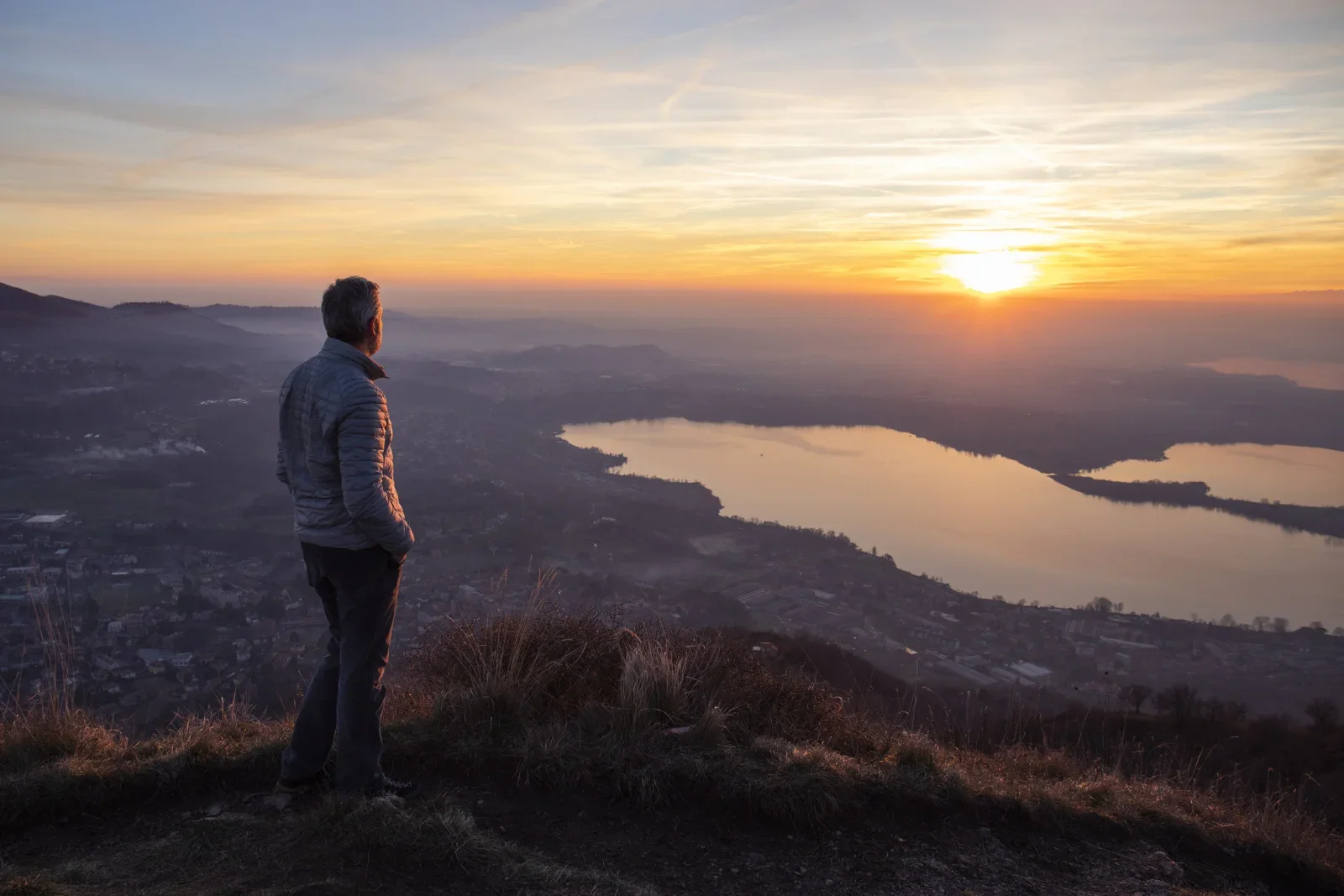
I always believed that human glory and life’s meaning were found in the senses: what I saw, touched, felt, heard, smelled, and tasted as I sped down the passing lane of accomplishment. These things provided the richness of living, complementary to the mountainous regions of sentience, the arcs and trajectories of being, and the hills and valleys of experience, the satisfaction of the present moment, and the excitement of things to come. Moving through those elevations and absorbing the delight of each moment seemed attainable only through effort and discipline, verified by visible signs of progress. Passivity, I believed, would not allow fate to deepen. Nor would acceptance or routine. I was not born intentionally appreciating what surrounded me. It was up to me to seek it out. Without intention or constant effort, something in me dragged me downward, turning me negative, and closed my eyes to the beauty held even as close as a flower in my hand.
For me, work and sacrifice were never separate. I approached my work the same way I approached my love of conduct: as a builder, a creator, someone constructing what I envisioned and leaving nothing to chance, mitigating the risk of even a moment lived without purpose. Committed to experience and beauty and the love of spirit, I lived with the belief and what felt like proof that if I worked hard enough, planned carefully enough, and remained devoted to improvement, the more profound human aspects, such as spirituality, intellectual pleasure, and emotional fulfillment, would arrive on their own. I only needed to lay the tracks. I assumed understanding, timing, and wisdom would naturally follow once the visible work and confirmation to my senses were undeniable. What I did not realize was that the skill that mattered most, the one that would ultimately transform my existence and my relationships, was not something I could see, touch, feel, hear, smell, or taste. It was not visible at all. It belonged to the category of things I assumed would take care of themselves if I were disciplined enough to live an examined, well-lived reality.
Whether innate or shaped through observation as I grew and matured, I came to believe that vitality was shaped entirely by purposeful intention. When something failed to work, maybe a relationship, a decision, or a season of my lifestyle, I tried to fix it the only way I knew how: by adding more effort, more thinking, more explanation, more force, more control. Wasn’t it my responsibility to build an existence I could eventually look back on without regret, one I could reach the end of and say, well done? For me, clarity came from that assertion, from believing meaning could be pressed into place if I pushed hard enough and demanded transformation. It was unsettling to discover that my diligence, the very trait I trusted most, was often working against me.
At one of my lowest points, I realized that one’s lot was more than experience, sensation, and action. Viability, I found, communicates just as clearly when it is encountered quietly, indirectly, and without urgency. Being a fixer revealed its limits in moments that required no solution, situations that asked for no action, and questions that had no immediate answers. I flailed there. I didn’t know how to stand still. I wanted so much more from destiny than what I believed I had been given that I failed to notice what was already present. When this recognition arrived, it did so subtly, yet with quiet unease. The problems that continued to trouble me were not rooted in lack of effort or achievement. They stemmed from failure to listen to things that did not need to be, but were, without asking for my attention.
Hearing and choosing when not to attend was what I had missed. Discernment. Not paying attention for approval or instruction, but being attentive for boundaries, for signals, for the difference between what wanted to be rushed and what needed time. I had to hear the quiet truth that some things were not asking me to act, repair, or improve; they were asking me to stop interfering. And yet, I wasn’t taking heed.
To my surprise, taking into account itself became an act. It was not passive. It required restraint and patience. Concentrating asked me to tolerate uncertainty without rushing to resolve it. It asked me to leave unfinished things unfinished, to resist tidying them up or wrapping them up prematurely. Keeping my ears open meant trusting that clarity sometimes arrived only after I stopped demanding it.
At first, this felt unproductive. From the outside, monitoring resembled hesitation, pausing instead of advancing, waiting instead of fixing. When I stopped pushing, I felt lost. In doing nothing, I wondered what I was doing at all. There were fewer markers of progress, no surge of momentum, no thrill of accomplishment. Slowing down felt uncomfortable in a world and in my own world that rewarded decisiveness and speed. And yet, something began to change.
When I took note instead of forcing outcomes, the quality of my decisions shifted. My perceptions changed. I stopped shaping results that didn’t truly fit. I recognized when something was complete rather than refining it beyond necessity. I learned, often uncomfortably, that others did not always want solutions; they wanted to be heard. Silence, I discovered, could carry weight without being filled, and tuning in altered my understanding of doubt. Uncertainty became information rather than a shortcoming. Things were not broken; they were unresolved, and that distinction mattered. It gave me patience I had never practiced before.
I came to understand that the apparent inactivity of focusing was itself a form of action. It was not instinctive. Like any skill, it was built slowly through humility, repetition, and restraint. It sharpened not through effort, but by stepping back and allowing actuality to reveal itself without interruption. Once perceived, it grew. It became the foundation beneath every visible skill, every tangible accomplishment. Everything I did depended on this quiet test for its truest execution.
The quietness began to permeate my continuation. I found myself longing for it. No amount of effort could replace it. No amount of planning could override it. Without lending an ear, progress dissolved into noise. A new reality had come. And in returning to the full circle, I discovered something unexpected: even stillness had direction. I had not underestimated listening because I considered it unimportant. I underestimated it because it was quiet.
Clay Stafford is a bestselling writer, filmmaker, and founder of the Killer Nashville International Writers’ Conference, Killer Nashville Magazine, and the Killer Nashville University streaming service. Subscribe to his newsletter at https://claystafford.com/.

Submit Your Writing to KN Magazine
Want to have your writing included in Killer Nashville Magazine?
Fill out our submission form and upload your writing here: