
KN Magazine: Articles
Between Pen and Paper: Flaneuring Through a Writer’s Mind – The Manual of Becoming a Tree
In this contemplative installment of Between Pen and Paper, Andi Kopek explores what writers can learn from trees—stillness, patience, interconnectedness, and quiet growth. “The Manual of Becoming a Tree” blends philosophy, nature, and craft to reframe writing not as constant output, but as a process of deep attention, rooted presence, and gradual transformation.
By Andi Kopek
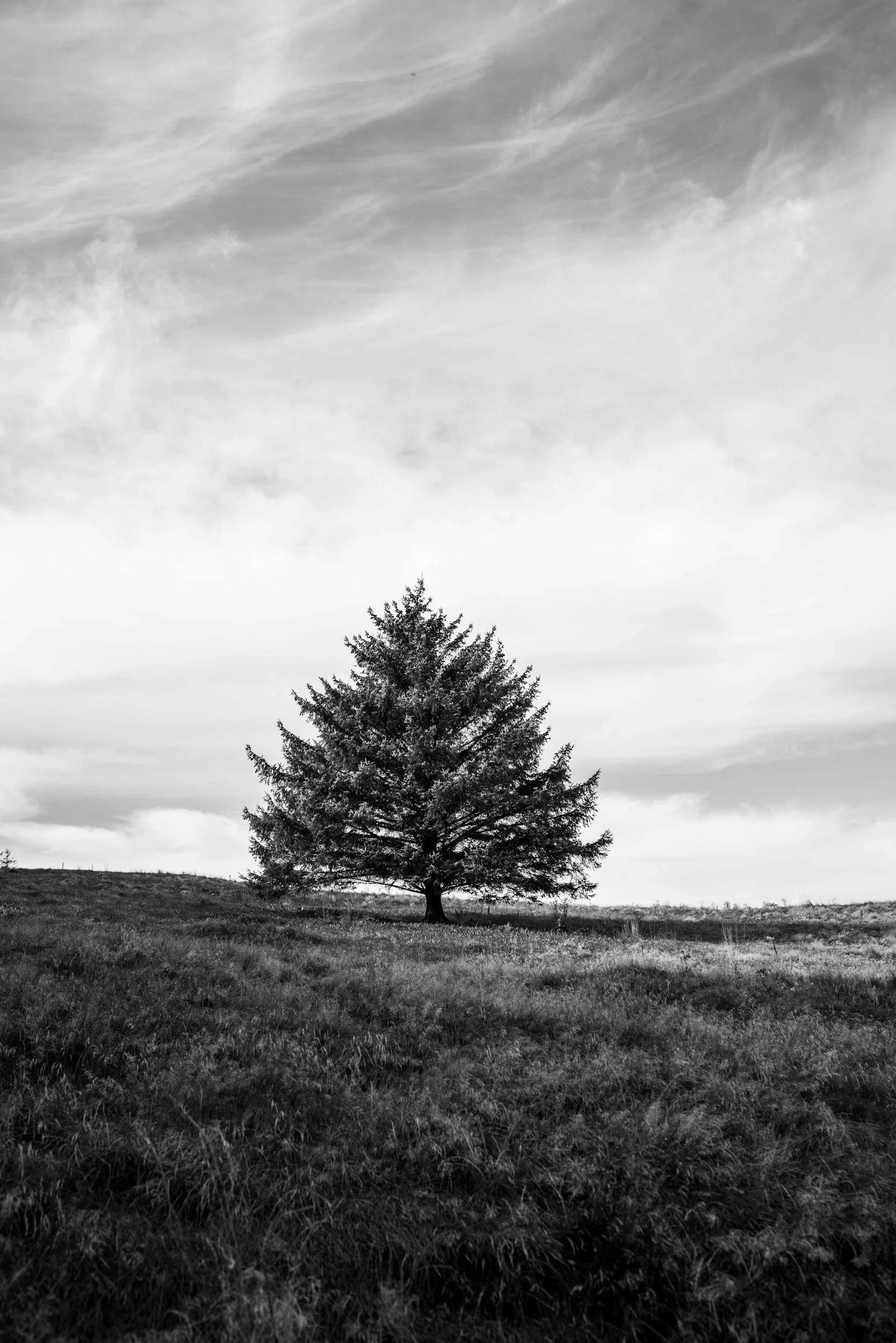
Step 1. Stand still longer than is comfortable.
On the first day of spring, as I am writing these words, even though planets and stars align in their quit geometry, nothing remarkable happens. The grass has been green for weeks. Cardinals and mockingbirds have been rehearsing morning for at least a month. Purple flowers of Eastern Redbud—already confident—have been decorating neighborhoods, our moods and our minds.
The trees… the trees, as always, in their ancient wisdom, ignore the announcement. They proceed according to their own instructions—ones written in rings, in long negotiations with light, in patient agreements with water and soil, in a language that does not translate easily into urgency.
I am trying to follow.
Step 2. Abandon the clock.
I am trying to follow.
A tree does not measure time in hours or deadlines. It keeps record through winters endured, through droughts survived, through fires remembered. What appears to us as stillness is, in fact, accumulation—experience layered and held quietly in place.
There are trees older than most of our stories. Some have lived through empires we forgot existed. And some, like the aspen in Pando, complicate the idea of individuality altogether—a forest that is not a collection of trees, but a single organism repeating itself underground, one root system speaking in many trunks.
We tend to think of time as something we move through. Trees suggest the opposite.
Time moves through them.
Step 3. Grow roots.
Time moves through them.
And because they cannot move, everything must come to them. Light is not pursued, but received. Water is not reached for, but waited for. A tree does not relocate to survive. It negotiates with its conditions.
Roots are not only anchors. They are instruments of communication. They extend into darkness, into soil, into the unseen, mapping the world not by sight but by contact. Through them, the tree senses, exchanges, chats—participating in a network that is both intimate and vast.
I am beginning to understand that to write well is to do something similar. Not to describe a thing from a distance, but to accept its limits as your own. To give up movement. To remain. To feel, as much as one can, what it means to depend on what arrives.
To grow roots is to let the world find you.
Step 4. Be one, be many.
To grow roots is to let the world find you.
No tree grows alone. Beneath the surface, there is an exchange—nutrients, signals, warnings—passed along through roots and fungal threads, a slow conversation without voice. What appears above ground as individuality is, below, a shared system. A forest is not a gathering. It is a continuity.
Identity, here, becomes less certain. The boundaries soften. One tree feeds another. One suffers, and others adjust. The self is no longer a fixed object, but a participant in something larger, something distributed.
I am beginning to suspect that writing asks for a similar surrender. Not expression, at first, but dissolution. The ego—so eager to assert, to define, to be seen—must loosen its grip. To write well is not to place yourself at the center, but to become permeable, translucent. To let the subject move through you, as time moves through trees.
To be one is to discover that one was never singular.
Step 5. Grow toward the light.
To be one is to discover that one was never singular.
A tree does not choose the sun in the way we choose our paths. It turns toward it. Slowly, persistently, without certainty of arrival. This is not ambition as we understand it, but something closer to orientation—a continual adjustment, a patient alignment with what sustains.
They call it phototropism: the quiet intelligence of growth bending toward light. Not in leaps, not in declarations or milestones, but in increments so small they initially escape notice. And yet, over time, the entire form of the tree is shaped by this reaching.
I wonder if our aspirations are meant to function the same way. Not as destinations to conquer, but as directions to guide us. Something we lean toward, even knowing we may never fully arrive.
To write, perhaps, is to practice this leaning. To shape yourself, sentence by sentence, ring by ring, toward a clarity you cannot yet hold.
To grow toward the light.
Step 6. Opening the Canopy: Komorebi
To grow toward the light.
light finds every leaf
voice unfolds into verses
time moves, we become
Andi Kopek is a multidisciplinary artist based in Nashville, TN. With a background in medicine, molecular neuroscience, and behavioral change, he has recently devoted himself entirely to the creative arts. His debut poetry collection, Shmehara, has garnered accolades in both literary and independent film circles for its innovative storytelling.
When you’re in Nashville, you can join Andi at his poetry workshops or catch one of his live performances. When not engaging with the community, he's hard at work on his next creative project or preparing for his monthly art-focused podcast, The Samovar(t) Lounge: Steeping Conversations with Creative Minds, where in a relaxed space, invited artists share tea and the never-told intricacies of their creative journeys.
website: andikopekart.ink
FB: https://www.facebook.com/profile.php?id=100093119557533
IG: https://www.instagram.com/andi.kopek/
X: https://twitter.com/andikopekart
TT: www.tiktok.com/@andi.kopek
Between Pen and Paper: Flaneuring Through a Writer’s Mind – Column 14: The Missing Hour: The Curious Elasticity of Time
In this installment of Between Pen and Paper, Andi Kopek explores the strange, elastic nature of time—from the lost hour of daylight saving to the way memory, storytelling, and even planetary movement reshape how we experience it. Blending science, literature, and personal reflection, “The Missing Hour” invites writers to consider how time bends not only in the universe, but on the page.
By Andi Kopek
Last night was one hour shorter than usual.
My phone said so, my car clock confirmed it, and my coffee maker seemed slightly offended by the sudden schedule change. At two in the morning, we simply moved the clock forward and politely agreed that sixty minutes had vanished.
This annual ritual is called daylight saving time. Yet it rarely makes me think about daylight, and it certainly doesn’t feel like savings.
What it really makes me think about is something much stranger. Time.
Time appears perfectly orderly when we look at a clock. Seconds march forward with mechanical confidence. Minutes stack neatly into hours, hours into days, days into years.
But the moment we pay attention to how time actually feels, the neat machinery begins to wobble.
Five minutes waiting in line for coffee can feel longer than two hours spent sipping it with friends. The last ten minutes before a deadline accelerate with alarming enthusiasm. Meanwhile a “quick check” of the phone somehow lasts forty-seven minutes. And childhood summers, when we were eight or nine years old, somehow lasted forever.
Clocks measure minutes. Humans measure experiences.
Writers know this especially well. Three hours at a desk may produce a single stubborn paragraph. Yet occasionally an idea arrives and five pages appear in twenty minutes as if the words had been patiently waiting somewhere outside ordinary time.
For the reader, of course, the ratio reverses. A page that took three days to prepare may be consumed in thirty seconds.
Writing, in this sense, quietly bends time.
Time becomes even stranger when we start moving across the planet itself.
One of the most delightful examples appears in my all-time favorite book, Around the World in Eighty Days by Jules Verne, a storytelling genius. In the novel, the famously punctual Phileas Fogg travels around the globe to win a wager that he can do it in eighty days. When he returns to London, he believes he has lost the bet by a single day.
But he has forgotten something subtle.
Because he traveled eastward around the Earth, crossing time zones along the way, he quietly gained a day without realizing it. While racing the clock, he had slipped ahead of the calendar itself.
Travel in the right direction around the planet and time behaves differently.
Our modern system of time zones is surprisingly recent. In the 19th century every town in America kept its own local solar time. Noon simply meant when the sun was directly overhead. That worked fine until railroads appeared. Suddenly trains were trying to run on hundreds of slightly different clocks. In 1883 the railroads solved the problem by introducing standardized time zones across North America.
On November 18, what became known as “The Day of Two Noons,” thousands of clocks were reset in a single afternoon. For a brief moment, some cities experienced noon twice.
Modern science fiction has pushed this idea even further. In Interstellar, directed by Christopher Nolan, astronauts visit worlds where gravity stretches time so dramatically that a few hours for them equal years back on Earth.
You do not need black holes, however, to find a planet with a different clock.
I am currently working on a science-fiction novel that takes place partly on Mars.
A Martian day, called a sol, lasts about twenty-four hours and thirty-nine minutes. Each sunrise arrives just a little later than the one before it, as if the planet itself prefers to linger.
Even more striking, however, is the Martian year. While Earth circles the Sun once every 365 days, Mars takes 687 days to complete its orbit. A year there is almost twice as long as ours.
The simple astronomical act of circling the Sun for nearly twice as long as Earth has surprising consequences.
A ten-year-old by the Martian calendar would be roughly the same age as a twenty-year-old on Earth. Education might unfold differently. Careers might develop at another rhythm. What does retirement mean if a year is nearly twice as long? And what exactly is a thirty-year mortgage on a planet where years stretch so far apart?
Birthdays themselves might become rarer and perhaps more meaningful. On Mars, a child might wait nearly two Earth years before blowing out another set of birthday candles.
That reveals something quietly profound.
A year is not a universal measurement of time. Change the planet and you change the calendar. Change the calendar and you change the meaning of life.
Which makes our annual daylight-saving ritual seem almost modest by comparison.
Last night we misplaced an hour when the clocks jumped forward. Jules Verne once showed that a traveler could gain a whole day by circling the Earth. And somewhere on Mars, a twenty-year-old visitor from Earth would discover that, by the local calendar, they are barely eleven.
The more we think about it, the stranger time becomes.
We imagine it as something universal and precise, yet it quietly shifts depending on where we stand, how fast we move, or even which planet we call home.
Einstein showed that time is relative. Perhaps it is more like an ocean, and every world simply drifts through it at its own pace.
Last night was one hour shorter than usual for some inhabitants of the pale blue dot drifting through endless space.
But if that missing hour sparks a moment of reflection about lost hours, gained days, and life on other planets, then perhaps it was not lost at all.
Andi
Andi Kopek is a multidisciplinary artist based in Nashville, TN. With a background in medicine, molecular neuroscience, and behavioral change, he has recently devoted himself entirely to the creative arts. His debut poetry collection, Shmehara, has garnered accolades in both literary and independent film circles for its innovative storytelling.
When you’re in Nashville, feel free catch one of his live performances. When not engaging with the community, he's hard at work on his next creative project or preparing for his monthly art-focused podcast, The Samovar(t) Lounge: Steeping Conversations with Creative Minds, where in a relaxed space, invited artists share tea and the never-told intricacies of their creative journeys.
website: andikopekart.ink
FB: https://www.facebook.com/profile.php?id=100093119557533
IG: https://www.instagram.com/andi.kopek/
This Crazy Writing Life Performs Killer Nashville Post Mortems
In This Crazy Writing Life, Steven Womack reflects on the energy, community, and evolution of the Killer Nashville conference. With humor and honesty, he shares insights into the changing landscape of mystery and crime writing, the importance of connection in a writer’s life, and why building relationships—not just networks—remains at the heart of every successful writing journey.
By Steven Womack
As I write this, it’s been almost three weeks since the 2025 Killer Nashville conference concluded. I intended to sit down and very quickly dash out some thoughts on what has become over the last couple of decades a major international writing conference.
The only problem is I was so overwhelmed by it all that it took me a few days to recover, then another week or so to gather my thoughts and wrap my head around what it all meant. While I’ve been to Killer Nashville many times as a panelist or a guest speaker, this was the first time I’ve ever gone full tilt on the conference (I was supposed to go total immersion last year, but I got an unexpected visit from Mr. Covid).
So this was the year when I went all-in on KN. I was on three panels, plus the wonderful Jaden (Beth) Terrell and the equally wonderful Lisa Wysocky and I did a master class called “Setting, Sidekicks, and Secrets” that took all of Thursday afternoon. I also attended a half-dozen or so panels. It was both intense and simultaneously exhilarating and exhausting.
After all this, what’s the takeaway?
First—and this is not a particularly brilliant observation—Killer Nashville has evolved from a small regional conference first conceived by its founder, Clay Stafford, twenty years ago to a major national mystery conference. I’d go so far as to say its eclipsed just about every other conference of its type. The program booklet alone is 100 pages long. The number of sponsors grows every year, and its two awards—the Silver Falchion and the Claymore Awards—have become major mystery awards, as evidenced by how many winners are now including the award on their websites, social media, and C.V.s. Major figures in the mystery and crime arena—like this year’s Guest of Honor appearance by Sara Paretsky—now show up at KN.
Second observation: Killer Nashville celebrates mystery and crime fiction, but its over-riding focus is on writing crime fiction. Aspiring writers come to Killer Nashville to learn about the craft and business of writing crime fiction. A great deal of the conference concentrates on putting writers together with agents and editors. Panels covered topics like “Steal Like an Artist: Learning from Other Author’s Novels,” “Writers and Taxes,” and “Writing Intimacy: From Fade to Black to Open Door.” These are all craft components and business components of the writing life.
While there’s plenty of stuff at Killer Nashville to interest readers, and readers certainly seem to be welcome, writers and aspiring writers are going to get the most out of the weekend.
This separates it from other conferences like Bouchercon, which remains the largest mystery convention in the world. Bouchercon brings together fans and creators of crime fiction on an equal basis to celebrate the genre. Fans go there to meet their favorite authors, and authors go there to be seen and to maintain a presence in the mystery community. While there are panels on craft (although after attending a number of Bouchercons, I can’t remember any), people mostly go to Bouchercon to either meet their heroes or to network and do business. I was introduced to my longest running literary agent at the Toronto Bouchercon in 1992.
At the 1995 Bouchercon in Nottingham, England, I met Anne Perry, which was a great thrill. We had the same editor at Ballantine Books, and he introduced us. For writers, that’s the great benefit of attending conventions and conferences. Once you’ve been multiply published, you probably don’t need a panel on writing compelling dialogue. But to meet your own literary heroes or make friends with a fellow writer who will introduce you to their editor or agent is a real plus (and obviously, you can do the same thing for other writers as well). I’ve met people at Bouchercon and other conferences who’ve remained lifelong friends.
Third observation: Killer Nashville has grown to the extent that it is, in some ways, busting at the seams. The conference sold out, and it can’t grow any bigger without relocating to a larger venue (you know how those pesky fire marshals are). More importantly, the schedule is jammed from morning ‘til night. I realize that the event schedulers have to try to accommodate every author who wants to be on a panel, and that’s a truly noble objective. But when you’ve got a moderator and five panelists speaking on a panel that only lasts 45 minutes, then by the time everyone’s introduced and you leave ten minutes at the end for Q&A, each person has maybe five-to-seven minutes speaking time. This precludes any kind of really deep dive on any subject.
Final observation: Despite its growth and evolution from a minor regional conference that nobody’s ever heard of to one of the 800-pound gorillas in the mystery world, Killer Nashville remains one of the most cordial, relaxed, friendly conferences out there. There’s very little competition among authors for attention (in fact, I saw none), and the people who run the conference, all the way up to founder Clay Stafford, remain approachable, helpful, and easy to work with.
So what’s the final takeaway?
Writers tend to be introverts. Given our druthers, most of us would probably stay home in our jammies and pound away on a keyboard while our coffee sits there getting cold. Unfortunately, that’s not the way This Crazy Writing Life works. Writers, publishers, editors, proofreaders, everyone who occupies a place on this long journey is a human being and humans need connection. Publishing is an industry built on connections. Sometimes the hardest thing to do is to break out of our shells and comfort zones and get out there in the world, get our work out there into the world. I hate the term networking; it seems so mercenary. I’d prefer to think of it as building relationships based on mutual affection, goals, and aspirations.
And speaking of which, I’m off next week to St. Petersburg Beach to attend the annual Novelists, Inc. conference. I’ve mentioned Novelists, Inc. in previous columns. This is a different kind of conference. It’s all business and lots of hard work, but it also takes place on a gorgeous beachside resort, and the sponsors compete to throw the best dinners, parties, cocktail hours, and other goodies.
I know, I get it. It’s a dirty job but somebody’s gotta do it.
Thanks for playing along. See you next time.

Submit Your Writing to KN Magazine
Want to have your writing included in Killer Nashville Magazine?
Fill out our submission form and upload your writing here: