

KN Magazine: Articles
ACCOUNTABILITY BEGINS WITH INTENTION
In “Accountability Begins with Intention,” Clay Stafford reframes accountability as something that starts long before action. Rather than focusing on deadlines or performance, he emphasizes the importance of setting clear, purposeful intentions that guide consistent behavior—arguing that true accountability is rooted in clarity, commitment, and personal ownership.

Most people think about accountability only after a project begins—such as showing up, meeting deadlines, providing progress reports, and doing check-ins to gauge your status. They consider the consequences if you fail to show up. But true accountability doesn’t start once you begin a project and hope to complete it. It actually starts before taking the first step. Accountability begins in that quiet moment when you decide what you truly want to do. It starts before you ever take any action.
This quiet moment is where intentions reside. So, what is accountability, the motivation that will carry you over a designated finish line? It is establishing clear intentions before you begin working on a project. This step is where many people stumble because it provides the guardrails that guide you along the path to your completed goal. Intentions. It’s that simple. Without clear intentions, accountability can become frustrating, confusing, and often discouraging. With clear intentions, accountability becomes empowering. Let’s explore how to achieve that practically, simply, and in a way you can implement immediately.
Most people start projects by identifying something they want to achieve, which motivates them to work hard to reach it. They feel excited, inspired, and energized. However, the problem is that motivation is emotional, and that’s okay. You need positive feelings and eager anticipation to keep moving forward. Underneath this, whether recognized or not, are intentions. Motivation says: I want to do this. Intentions say: This is what I’m doing, and this is how I will measure my success. Without clear intentions, motivation often fades quickly as other distractions take over. When motivation fades, we often think we have failed. Having clear intentions from the beginning helps avoid confusion. Intentions give your goal direction, even before you start.
Let’s clear up a common misunderstanding. An intention is not a wish; it’s not a vague desire, nor is it just a motivational phrase. An intention is a specific purpose that guides our actions and decisions. It always answers three key questions: What am I trying to accomplish? Why does this matter? What does success look like? If you can’t clearly answer these questions, accountability becomes guesswork because you don’t have measurable goals. Relying only on guesswork leads to burnout, as you have no clear endpoint for success.
There is a cost to starting without clear intentions. Most abandoned projects don’t fail because of a lack of ability; they fail because of a lack of clarity. When clear goals aren’t defined, you begin quickly but veer off course soon after. You will likely lose focus midway because you don’t know your destination or how to recognize when you’ve arrived. You might question whether the effort is worth it because you can’t seem to get to a place you’re not sure you want to reach. You feel overwhelmed by choices because you haven’t set initial guardrails. Without that framework, you struggle to measure progress. Ultimately, the frustration of moving forward without a compass replaces momentum, and the project stalls—not because of a lack of discipline, but because of a lack of direction. Accountability relies on direction, and direction requires intention. I’ve seen this happen more times than I can count. Early in one project with my team, we started moving fast because everyone was excited. We had ideas, energy, and momentum—but we had never clearly defined what success actually looked like. Within weeks, tasks multiplied, priorities shifted, and frustration began to creep in. Once we stopped, wrote down exactly what we intended to accomplish, and defined what success meant, everything changed. Progress became measurable, decisions became easier, and accountability finally had something solid to stand on.
There are several ways I’ve found to make intention work. The first is to clearly define the outcome I want. This means that before starting any project, I should pause and ask myself: what does this finished task actually look like? Not in theory or emotionally, but in practical terms. For example, if you’re writing a book, thinking the goal is to “finish the book” is too vague. You’ll never reach that. A clearer goal would be to “complete a 70,000-word first draft in six months.” That line contains many specifics, and that’s what you want. If you’re launching a new project, “getting started” isn’t an outcome. Instead, “launching a website that offers three core services or highlights my skills by June 1” is detailed. It gives you a concrete target to work toward. Clarity and specifics like these turn dreams into actual plans. Then, plans help create accountability.
The second thing, important not only to me but also to my team, is “why does this matter?” I always try to frame what I want within the idea of “a worthy goal.” I have a definition of “worthy” for our team, but you’ll have your own. Unfortunately, this is a step most people skip, and it’s often why projects lose momentum. You really need to know, and emotionally connect with, why this project matters to you. Not to others, not to your audience, not to social media, but to you, because when obstacles arise—which they will—the emotional and intellectual strength of your reason will determine whether you keep going or give up. So, I always do this: I write out a sentence that says, “This project matters because…” and then finish it honestly. “This project matters because I want to prove to myself I can finish what I start.” “This project matters because it creates new opportunities for my future.” “This project matters because it allows me to share something meaningful.” When the “why” is personal, accountability becomes internal rather than forced.
It’s important to see the end game. What does success in this venture look like? Here’s a truth that often surprises many: success must be measured. You can’t specify everything, but you should have an idea of what the end game will look like. Without measurements, you won’t know if the project is succeeding or how well it’s doing. You also won’t know if you’re on track for success if a timeline is included. You can address this by defining the final result and dividing it by time. For example, here are some specific tasks: write 500 words per day, complete one module per week, send five outreach emails daily. This gives you daily tasks and makes achievement measurable. They create forward momentum, which will strengthen your accountability.
Intentions, like those outlined above, don’t just specify what you will do; they also define what you will not do. You set goals and steps to achieve them, but you also establish boundaries you won’t cross, along with a clear idea of what counts as successful completion. It’s crucial to see the big goal and then plan it out strategically into smaller goals, because without that, unnecessary tasks can sneak in, expectations might shift, and you’ll likely get stressed. Instead, before you start, ask yourself, “What am I committing to? And what am I not committing to?” These boundaries will keep you grounded. Keep it simple. “I will work on this project for one hour each morning.” “I will not add new features until the first version is finished.” “I will not compare this work to others during the drafting phase.” These types of boundaries help protect your focus, which is essential for successfully completing your project.
This next step seems simple, but it is incredibly powerful. Write down your intentions. Not only can you see them, but if you’re working with a team, they can see them as well. Thoughts can disappear, become muddled, slip away, and lead to misunderstandings. Written intentions are concrete; they stay clear. When you write down your intentions, the plan becomes visible to everyone, including yourself. It can be reviewed and, if necessary, amended. Why? Because all the steps are laid out. It’s not a fixed manifesto that can’t change, but rather a working document. It creates clarity. For example, “My intention is to complete the first draft of my novel within six months by writing 500 words each weekday. This matters because I want to build consistency in my creative life. Success means finishing a complete draft, not a perfect one.” There you go—simple enough. Because you do this, you’ll have a better chance of achieving your goal, as this statement serves as your daily anchor. It provides guidance through the challenges that come with any project.
I mentioned team members. Accountability strengthens when documents are shared because the team performs better when they know. However, choose carefully. Share your intentions only with your team, trusted friends, mentors, and collaborators—of course, not with everyone. Public declarations can create pressure. Let the public see the results only after things are accomplished. Private accountability, on the other hand, fosters responsibility and brings the added benefit of encouragement. During this phase of any project, you don’t need applause (skip the public), but you do need guided alignment and support (your private core).
You wrote this down for a reason. Your document and your private declaration to yourself or those closest to you are not fixed goals. They can change over time. Every mountain you climb will help you see further, and then you’ll climb another. This is normal. Your written statement is a living guide. Having it in writing helps you review your intentions regularly and adjust them when needed. I recommend reviewing your written statement at least weekly. Ask yourself, “Am I still working toward the defined outcome?” “Does the purpose still feel meaningful?” “Do the success measures still apply?” If something seems off, make adjustments as needed. But beware of your motives. Don’t abandon a direction you’ve already committed to after deep reflection. Ensure it still connects to your original plan.
People often confuse goals with intentions, but they are not the same. They are related, yes, but they differ. Goals focus on results, while intentions focus on behavior and direction. One is the destination; the other is the journey. A goal is to “Finish the project.” An intention is to “Work consistently on the project for one hour daily.” Goals measure completion. Intentions guide actions. This brings us back to accountability. Accountability depends on action, not just outcomes—actions.
What are some mistakes that weaken accountability? Being too vague. Vague intentions lead to vague results. Be specific. Being unrealistic. Ambition is good, but unrealistic expectations are useless. If your schedule doesn’t allow you to do a task for an hour daily, set it for 30 minutes or whatever you know will work. Just like time, don’t ignore your personal capacity. Energy matters as much as time. To achieve what you hope to, you need to be prepared for the challenge.
When your intentions are clear, you understand what to do, why it matters, how to track your progress, and when you’re succeeding or falling short. That clarity builds confidence, confidence encourages consistency, consistency promotes accountability, and accountability leads to the results you want: results.
If you take nothing else from this article, remember this: there are four steps to every act of intention: 1) My intention is to…, 2) This matters because…, 3) Success will look like…, and 4) I will commit to…. That’s it. Short. Clear. Actionable. Achievable. Use these steps for anything you want to accomplish. You’ll notice a difference.
Whenever we start a project, clarity is essential; we must understand our goals, have direction, and keep momentum. When intentions are clear, accountability feels different. Desperation, stress, and pressure all lessen when intentions are clear. Negative emotions are replaced with purpose because you are no longer guessing. You’ve made your decision beforehand. Once you decide, accountability shifts from pressure to following through on a commitment you made to yourself before taking that first big step. A plan in action is a practical and successful plan. Accountability doesn’t begin with effort; it begins with intention.

Clay Stafford is a bestselling writer, filmmaker, and founder of the Killer Nashville International Writers’ Conference, Killer Nashville Magazine, and the Killer Nashville University streaming service. Subscribe to his newsletter at https://claystafford.com/.
Between Pen and Paper: Flaneuring Through a Writer’s Mind – The Manual of Becoming a Tree
In this contemplative installment of Between Pen and Paper, Andi Kopek explores what writers can learn from trees—stillness, patience, interconnectedness, and quiet growth. “The Manual of Becoming a Tree” blends philosophy, nature, and craft to reframe writing not as constant output, but as a process of deep attention, rooted presence, and gradual transformation.
By Andi Kopek
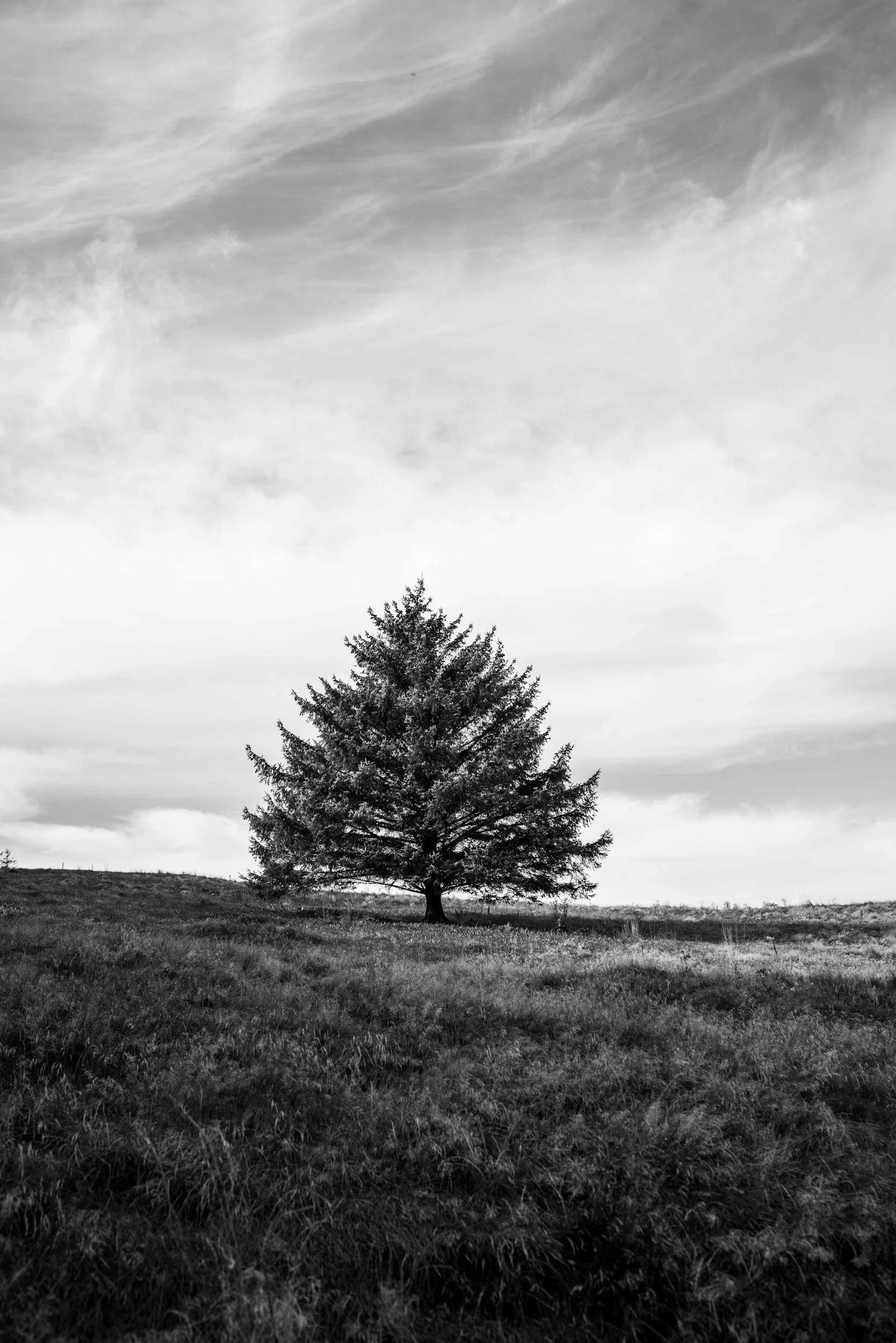
Step 1. Stand still longer than is comfortable.
On the first day of spring, as I am writing these words, even though planets and stars align in their quit geometry, nothing remarkable happens. The grass has been green for weeks. Cardinals and mockingbirds have been rehearsing morning for at least a month. Purple flowers of Eastern Redbud—already confident—have been decorating neighborhoods, our moods and our minds.
The trees… the trees, as always, in their ancient wisdom, ignore the announcement. They proceed according to their own instructions—ones written in rings, in long negotiations with light, in patient agreements with water and soil, in a language that does not translate easily into urgency.
I am trying to follow.
Step 2. Abandon the clock.
I am trying to follow.
A tree does not measure time in hours or deadlines. It keeps record through winters endured, through droughts survived, through fires remembered. What appears to us as stillness is, in fact, accumulation—experience layered and held quietly in place.
There are trees older than most of our stories. Some have lived through empires we forgot existed. And some, like the aspen in Pando, complicate the idea of individuality altogether—a forest that is not a collection of trees, but a single organism repeating itself underground, one root system speaking in many trunks.
We tend to think of time as something we move through. Trees suggest the opposite.
Time moves through them.
Step 3. Grow roots.
Time moves through them.
And because they cannot move, everything must come to them. Light is not pursued, but received. Water is not reached for, but waited for. A tree does not relocate to survive. It negotiates with its conditions.
Roots are not only anchors. They are instruments of communication. They extend into darkness, into soil, into the unseen, mapping the world not by sight but by contact. Through them, the tree senses, exchanges, chats—participating in a network that is both intimate and vast.
I am beginning to understand that to write well is to do something similar. Not to describe a thing from a distance, but to accept its limits as your own. To give up movement. To remain. To feel, as much as one can, what it means to depend on what arrives.
To grow roots is to let the world find you.
Step 4. Be one, be many.
To grow roots is to let the world find you.
No tree grows alone. Beneath the surface, there is an exchange—nutrients, signals, warnings—passed along through roots and fungal threads, a slow conversation without voice. What appears above ground as individuality is, below, a shared system. A forest is not a gathering. It is a continuity.
Identity, here, becomes less certain. The boundaries soften. One tree feeds another. One suffers, and others adjust. The self is no longer a fixed object, but a participant in something larger, something distributed.
I am beginning to suspect that writing asks for a similar surrender. Not expression, at first, but dissolution. The ego—so eager to assert, to define, to be seen—must loosen its grip. To write well is not to place yourself at the center, but to become permeable, translucent. To let the subject move through you, as time moves through trees.
To be one is to discover that one was never singular.
Step 5. Grow toward the light.
To be one is to discover that one was never singular.
A tree does not choose the sun in the way we choose our paths. It turns toward it. Slowly, persistently, without certainty of arrival. This is not ambition as we understand it, but something closer to orientation—a continual adjustment, a patient alignment with what sustains.
They call it phototropism: the quiet intelligence of growth bending toward light. Not in leaps, not in declarations or milestones, but in increments so small they initially escape notice. And yet, over time, the entire form of the tree is shaped by this reaching.
I wonder if our aspirations are meant to function the same way. Not as destinations to conquer, but as directions to guide us. Something we lean toward, even knowing we may never fully arrive.
To write, perhaps, is to practice this leaning. To shape yourself, sentence by sentence, ring by ring, toward a clarity you cannot yet hold.
To grow toward the light.
Step 6. Opening the Canopy: Komorebi
To grow toward the light.
light finds every leaf
voice unfolds into verses
time moves, we become
Andi Kopek is a multidisciplinary artist based in Nashville, TN. With a background in medicine, molecular neuroscience, and behavioral change, he has recently devoted himself entirely to the creative arts. His debut poetry collection, Shmehara, has garnered accolades in both literary and independent film circles for its innovative storytelling.
When you’re in Nashville, you can join Andi at his poetry workshops or catch one of his live performances. When not engaging with the community, he's hard at work on his next creative project or preparing for his monthly art-focused podcast, The Samovar(t) Lounge: Steeping Conversations with Creative Minds, where in a relaxed space, invited artists share tea and the never-told intricacies of their creative journeys.
website: andikopekart.ink
FB: https://www.facebook.com/profile.php?id=100093119557533
IG: https://www.instagram.com/andi.kopek/
X: https://twitter.com/andikopekart
TT: www.tiktok.com/@andi.kopek
THE HABIT OF FORWARD
In “The Habit of Forward,” Clay Stafford explores the quiet discipline of continuing to move ahead—especially when motivation fades or clarity is uncertain. Through reflection and experience, he reveals how progress is less about inspiration and more about consistency, showing that forward motion, no matter how small, is what ultimately shapes both the work and the writer.

I didn’t realize when moving forward stopped being a conscious decision and became an ingrained habit. Initially, forward motion felt like discovery. Each new task I completed, each small success I achieved, fostered the sense that movement was shaping my future. I believed, even if I couldn’t articulate it then, that standing still carried risks I didn’t fully understand, that slowing down meant I was destined to live the life I had been given, even the life that was expected of me, not the one I truly desired. When I paused, my mind became habitually restless, always scanning for the next thing that might propel me further. I started writing and making 8mm movies. I sold a short story at ten. I became a publisher of a tabloid filled with gossip, short stories, and essays in the fourth grade and sold the newspapers to the student body for ten cents a copy. These early successes, though small, on my path to becoming who I would grow into, did not remain isolated. The process, the discipline, the passion, stacked into patterns that laid the foundation of my future self. Selling onions, homemade cinnamon toothpicks, a newspaper, stories, poems, and, later, soda and candy out of my school locker led to saving coins. Saving coins enabled me to buy animals and a farm before I even reached puberty. Buying animals meant watching them grow, multiply, and produce something tangible that had once only existed as a dream in my mind. Each step of creating, selling, reinvesting, and buying built upon the last, until the constant motion began to feel less like a series of actions and more like a compulsive current carrying me forward, whether I fought it or not.
There were mornings when I woke up already thinking about what needed to be done, long before anyone in the house moved. After doing morning exercises while watching Jack LaLanne and his white German Shepherd, Happy, on my small black-and-white TV, I often fixed breakfast myself because my mother liked to sleep until 10:00 and my dad left for work early. The day stretched out before me like a path already laid, formed in my sleep. I didn’t yet know to call it ambition. To me, it was simply a necessity, a compulsion. I felt responsible for actively moving the day forward, as if time itself might slow down or break apart if I didn’t keep it going.
I valued each night lying in the dark, listening to the window air conditioner and humidifier, both of which I had to have because I was a sickly child. I learned to measure days by how much I accomplished, rather than by reflecting on what I had become. A day that moved forward felt successful. Days when money was added to my piggy bank, hidden in the closet, felt successful. A day that didn’t yield the desired results felt wasted, and sometimes I’d struggle to sleep because of guilt and failure. Childhood was a stressful time, filled with disappointment: in myself, in the life I had been given, and in the family that kept me, not as a child to be loved, but as an example to their world that we were a traditional family, and that this was what was expected of parents like mine: to have a child. No one ever mentioned that the child should be nurtured and loved. Lying in the dark, seeking sleep that often didn’t come because of my early insomnia, it became clear to me that, at least in my mind, satisfaction and happiness could only follow successful effort. Finishing a task from the day left quiet proof that I was capable of shaping the world around me, that I didn’t have to accept the world I had been given. I was free, for this was true freedom, to build something beyond where I was, even if, as a child, I couldn’t yet imagine what that might be. To me, the proof and truth of this mattered more than praise. Often stressed, unhappy, and melancholy, the idea that I could design something bigger for myself mattered more than comfort. Somewhere along the way, movement stopped being just something I did and became something I was. It turned into a compulsion, and I was convinced that if I took action, results would follow; therefore, it was up to me to keep going.
I felt compelled to take action, even in the smallest routines: carrying buckets, feeding animals, selling onions and homemade cinnamon toothpicks, smuggling candies and sodas to kids in elementary school, writing stories, selling poems, and counting coins. It became an obsession: planning what might come next. I saw life as something that needed to be lived, something that had to be pushed forward, even forcefully. The idea of moving ahead and taking no prisoners grew stronger each week, leading to years of steady pushing. Every moment seemed to hold the potential for progress and for escape. Even rest started to feel temporary, a brief pause before moving on, a distraction even, so much so that I avoided going to bed and woke up early, getting ready for my day before sunrise. If I woke my parents, I knew I’d get a guaranteed beating, so I stayed in my room reading and writing until Jack LaLanne appeared, and then my day could begin.
There were moments when I sensed the shift but didn’t question it. I felt pride when work filled my hours. In school, I was constantly in trouble for daydreaming, staring out the window, or writing scripts instead of listening to math instruction. No punishment, not even Mrs. Running’s drill-holed paddle, could dampen the pride I felt when I was working. I was beaten at home, so why not at school? It didn’t matter to me as long as I was moving forward. When nothing demanded my attention, I felt uneasy and lost. Movement became essential. Being productive became normal. Stillness always carried a slight uneasiness, as if it revealed something I didn’t want to face. Movement became the only thing that mattered because it masked all of life’s uncertainties, even my own realities, with action. If I kept moving, I believed in my mind and heart that the future felt closer, more reachable, less abstract. One day, I would take the money from my hidden piggy bank and hop a train heading south or west.
The adults around me often talked about hard work, but their actions told a different story; their words seemed to fade into the background noise of their everyday laziness. They were stuck in their lives, living in leaky houses without electricity, running water, or a phone, because they lacked the drive to change. Their laziness taught me a lot, as did the emptiness of their conversations and the lack of effort in their actions. What stayed with me wasn’t what they said, but what I saw. I observed hands that sat still, as well as hands like my Grandmother Stafford’s that never rested for long. I saw bodies that moved despite exhaustion and bodies that never moved at all. I learned that survival depended on persistence, especially for a few in my family who tried to escape the poverty that seemed most natural and expected for most people I knew. These experiences shaped me, even though at my young age, I couldn’t yet put it into words. Consistent and deliberate forward movement became a direction I trusted more than any specific destination.
Throughout those early years, I developed a habit of seeing possibilities where others saw burdens. Chores became opportunities. Small responsibilities became proof that I was capable of more than that. Each task completed, each story, poem, or essay published strengthened the belief that effort drives movement and movement drives change. The cycle quietly fueled itself, without ceremony, bells, or whistles, until motion became a part of me, an understanding that it was the safest way to exist.
There were evenings when the world seemed to slow down after dinner, when the animals were settled and put to bed, and the air grew still. My parents watched television while I retreated to the backyard to lie in the grass and look at the stars, wondering if I would ever reach them. In those moments, I sometimes felt the quiet pressing in from all sides, but it did not feel peaceful. It felt unfamiliar. The absence of activity, the stillness and relaxation, left a hollowness in me that unsettled and even depressed me, as if something had gone missing because I had taken a moment to lie in the grass, listening to cicadas and frogs. I couldn’t stay still for long; I had to return to motion, whatever that might mean. Even in church, I practiced sleight-of-hand magic tricks beneath the back of the pew, sitting in a spot away from everyone and my family so they wouldn’t see what I was doing. I had to keep busy and keep improving, even as the preacher droned on about how much Jesus loved me. I often wondered if Jesus loved me that much and delivered people, when was he going to come and deliver me? I learned to rely on my own ability to do magic tricks. No one, not even Jesus, was coming to save me or heal the stripes on my back from childhood abuse. Everyone made a big deal about the blood flowing from the slices on Jesus’s back, but no one cared about me. I was alone and, if I wanted to escape, I had to do it myself. I always returned to motion.
Before I went to bed each night, I would stare at the ceiling in the darkness and look at the stars outside the windows built above the bookshelves my dad made for me to store my small library. I always planned the next day. I knew what needed to be done to make it successful, and if it wasn’t, I scolded my childhood self for a lack of discipline or for cowardice in letting adults change my plans. I vowed that one day I would not let anyone tell me what to do. In my mind, there was God, then me, then everyone else. I would only answer to God. So each night, I reaffirmed myself and what I hoped to see in the fog of my future. I counted what I had earned that day. I imagined what could be built from what I already possessed. Thinking about the next day’s movements reassured me. It gave shape to the uncertainty of my life. It created the illusion that time could be guided if only I worked hard enough, and working hard was what I intended to do.
What I didn’t realize in these early years was how easily my reputation became my identity. As I advanced in life, school, and ambition, the tasks increased, and the responsibilities expanded. The small successes of my childhood slowly hardened into not just actions and accomplishments but also into expectations. I came to believe that progress was not only desirable but essential. If movement created possibility, then stopping or even slowing down threatened it. This idea quietly settled into my mind, becoming less visible with each passing year. I began to feel most like myself and at peace when I was moving toward something. Not necessarily arriving or celebrating, but just moving. I achieved a lot, but there was rarely a moment to celebrate because, no matter what I accomplished, I always felt I fell short. Even success has its own form of failure.
The act of moving forward itself showed that my life had purpose. At home, feeling unwanted, I made my family my future, just like Jesus saying God could raise his children from rocks, not even from human parents. It became a sign that life was unfolding as it should. I was a rock. Even uncertainty felt tolerable as long as I kept moving. Stagnation, on the other hand, felt dangerous and deadly. It suggested that failure was imminent even before it had a chance to appear.
Looking back now, I see how easily motion disguised itself as identity, and I still struggle with the wiring my childhood brain formed. Each step forward in my brain’s synapses reinforced the belief that progress defined worth, that effort justified existence, and that movement protected against the uncertainty that lingered beneath the stillness. The childhood habits, built on fear, anger, sadness, and depression, formed quietly without notice. One day followed another. One task followed another. One tear followed another. What started as survival slowly became a rhythm as organized and structured as Jack LaLanne’s exercises. That rhythm turned into expectation. I didn’t question any of it because it worked and, to me, that was all that mattered. Movement produced results. Results built confidence. Confidence led to more movement. Together, all of this gradually changed my life.
By the time I reached fourth grade, I had become someone who kept moving forward even when no one was watching. I did it not because I was told to, not because I was beaten into submission or abused to make a point, and not because I was forced to, but because my father told me several times that I disgusted him because it seemed I was trying to “outgrow my raising.” I fell in love with moving forward because it felt like the natural state of being alive and, moreover, about staying alive. Once movement becomes identity, stillness then has no choice but to start to feel like loss.
Clay Stafford is a bestselling writer, filmmaker, and founder of the Killer Nashville International Writers’ Conference, Killer Nashville Magazine, and the Killer Nashville University streaming service. Subscribe to his newsletter at https://claystafford.com/.
THE FIRST MOMENTUM
In “The First Momentum,” Clay Stafford reflects on the subtle but powerful moment when effort begins to shape direction. What starts as a small, almost unnoticed impulse grows into a force that builds confidence, discipline, and forward motion—revealing how even the simplest actions can spark lasting change.

The first time effort changed my world, I felt it before I understood it. It wasn’t a dramatic moment; it was an impulse. We had few neighbors during my boyhood, but as I walked down the road, I saw wild onions growing in their yards. Someone had mowed their spring grass, and the scent of onions was strong. The night before, my mother had cooked beef liver and onions for dinner, which was one of my favorite childhood dishes. Something aligned in my four-year-old mind. We planted onions in our garden, but the onions in the neighbors’ yards required almost no effort at all. Everyone I knew cooked with onions. I saw an opportunity and walked up the Ledford’s driveway. “One cent for five freshly dug, spring onions,” I offered. I didn’t realize the offer was accepted not because they wanted the onions, but because they wanted them gone from their yards. Regardless, I made my first sale. I went home, got a mattock, dug all the onions from the yard, and made a small pile of change. I offered my services to other neighbors.
It all happened quietly in a private corner of my mind, where work first intersected my imagination without witnesses. Even at this age, I wanted to leave my childhood behind and escape for many reasons. Selling wild onions to neighbors from whom I picked them, essentially selling something that was already theirs, caused a shift inside me. A small inner hinge turned, and a life that had once felt mostly imaginary (getting out) started to seem possible for the first time.
Before that moment, effort mainly meant doing what I was told: chores for my parents, helping both sets of grandparents with their farms, working alongside my father as a mason’s assistant, and managing projects when assigned. But with onions, I became self-directed at a very young age. It came from listening to adults talk, especially my father, that if I worked hard, I would achieve what I wanted. Before walking up the Ledford’s driveway, this advice, ingrained from such an early age, felt unfamiliar to my experience. I understood the words, but they didn’t truly resonate with me until I perhaps sensed a hint of opportunity in the smell of fresh-mowed grass.
I had dreams before then, of course. I’d stand between the ties of the L&N railroad tracks and look one way and then the other, knowing that there had to be something at the end of each direction. I dreamed of finding what was at the end of them, like that pot of gold hidden at the bottom of rainbows that my Grandmother Stafford told me about. These were carefree childhood dreams, the kind without experience, simple dreams, the kind that come before the realization that dreams will eventually face obstacles. As a child, I was Superman. I did not yet know my kryptonite. At that age, it’s easy to imagine many futures, even conflicting ones, like a boy imagining a distant city. I had never been to a large city, though I had seen Chattanooga, and that was enough to imagine one. But as I gazed north and south along the tracks, it seemed unlikely that the futures my small, inexperienced mind envisioned could be reached by walking there. It would require the jets I sometimes watched fly overhead.
At that age, I truly had no understanding of how the world worked. Effort felt abstract then, something distant from my everyday life. The outside world seemed vast and complicated as I tried to understand it by looking at pictures from my mother’s National Geographic subscription. Whatever movement or life existed inside it seemed to belong mostly to other people: older individuals, those who knew what they wanted, my older brothers, people who seemed to know things I didn’t and couldn’t grasp. Then, almost by accident, I did something on impulse: I went door to door with a mattock, selling people their own wild onions. Part of me felt I was pulling a fast one on the neighbors, not realizing they were doing the same thing, but I approached this new venture with a seriousness I hadn’t felt before until the wild onions went back into summer hibernation. I know it made me want more, but wild onions only grew so fast, so a second understanding began to develop: patience. Selling wild onions meant returning to the effort more than once, checking the yards to see how fast the onions were growing. This required a stubbornness that even surprised me, even as I felt it taking hold. I didn’t tell my parents what I was doing, nor did I let them see the money I earned. This was mine: my idea and my rewards.
When I was six, something important happened. I had been secretly saving my money in a Mason jar hidden beneath the debris in my closet to prevent anyone in the family from stealing it. My grandfather Parker, Papa, must have known (I guessed the neighbors had talked about what that Stafford kid was doing), and when he appeared, he offered to sell me his eighty-acre farm if I had $10 to buy it. I eagerly accepted, and I now owned a farm, much to the anger of my father and one of my brothers, who believed the farm should have gone to them. This opened a new door. With more money I saved from wild onions and selling vegetables to neighbors from my family’s large gardens, I began buying cattle, then poultry, and then selling cows, poultry, and eggs. I even started breeding and selling mice wholesale to pet stores. The work I started on impulse (selling wild onions) began to open up more opportunities. For a long time afterward, I looked back almost suspiciously at how strange it seemed that a boy like me should own a farm, make money, and plan his own escape.
Although I couldn’t name or verbalize the idea, I realized that my world wasn’t moving randomly. It moved because I kept putting in effort. I understood it not intellectually but physically, the way a body learns something before the mind does.
Once that understanding arrived, even in its smallest form, it changed the atmosphere of everything around me. I got involved in small businesses, using the money I had to generate more money. I opened a bank account by the time I was eight and moved money from my Mason jar to a safer place where it earned the most interest. By fourteen, I started my own production company, which I even registered as a DBA with the state of Tennessee. I didn’t realize it then, but it would change the course of my life and open the door for the escape I had hoped for so long. The world didn’t seem easier through all of this; it felt more demanding, but it was a demand I welcomed. Most importantly, life and effort no longer felt indifferent. My father was right: if I worked hard, the things I wanted would come.
There is a current beneath everything that effort seems to touch. It felt intoxicating to me in a way I didn’t yet recognize, but I sensed the addiction and the rush. Effort carried the promise of movement: the gap between imagination and reality might not be as wide as I thought. I began noticing what effort could do in everything around me. I saw it in the quiet persistence of people working long after anyone was watching. I saw it in the small improvements from consistently returning to the same unfinished task. I saw it in the steady accumulation of results that, from the outside, looked like sudden success. But nothing was truly sudden. Patience played a role once again. Yet what stayed with me most was that initial feeling of discovery: if you knocked on the door, people would buy their own onions. Effort created something, even as simple as a knock and an offer. It wasn’t luck. It had nothing to do with timing. It only existed in the realm of self-chosen and self-directed effort.
I still didn’t realize how complicated the truth would become later in life. I hadn’t yet understood how often my future efforts would face resistance or how many things the world would refuse to move, no matter how patiently I pushed. In my young Appalachian life, things moved more simply and slowly than what would eventually come. But I knew one thing, and I would never forget it: selling onions changed my life. Work could change things, and because I had felt that even in its simplest, smallest form, I could never forget it. Early effort shaped the way I approached everything afterward. Not exactly with confidence; confidence would come much later, but with quiet curiosity about what might happen if effort was applied again, and then again.
Effort as an adult can be unpredictable. Sometimes it yields nothing, and the world remains exactly the same. But at times, in those precious moments, things change. A little progress here, a small breakthrough there, a quick “yes” when it’s most needed, a faint sense that movement has begun where there was once only stillness or even stagnation. Looking back now, I see that what started on the day I walked up the Ledford’s driveway wasn’t success; it was momentum. It was the subtle pull forward that appears when effort and possibility first meet. There was no certainty or clear direction. It simply came as an impulse: the feeling and belief that once motion begins, it can create something new, and perhaps even keep offering its own kind of blessings in response to the effort I put in. That was enough. Once I sensed the world responding to my effort, even once, like when I pulled those first pungent wild onions from the Ledford’s front yard, I would never again believe that standing still was all the world knew how to do.
Clay Stafford is a bestselling writer, filmmaker, and founder of the Killer Nashville International Writers’ Conference, Killer Nashville Magazine, and the Killer Nashville University streaming service. Subscribe to his newsletter at https://claystafford.com/.
THE QUIETNESS BENEATH THE STRIVING
In “The Quietness Beneath the Striving,” Clay Stafford reflects on a life driven by constant motion and ambition, only to discover a profound shift when the striving finally quiets. In that stillness, he confronts the deeper question of identity—who we are without the chase—and explores the peace, clarity, and self-understanding that emerge when we stop pushing and simply listen.
In that quiet moment, I realized I was no longer striving. For most of my life, I chased something I could never quite name. I moved against the ticking of an internal clock only I could hear, always aware that time kept moving forward.
No actual Big Ben was telling the time, but I felt its presence in how I approached work, opportunities, relationships, meals, sleep, and even the ordinary moments of each day. My life carried a quiet urgency that fueled my ambition. I rose early, pushed forward with determination, pursued the next project, the next mountain to climb, the next room, the next possibility, hoping it meant I was moving in the right direction. Movement was always necessary. Ambition was desired. Action was virtuous. I questioned none of these. Movement, always, justified itself.
Although I always felt overwhelmed and behind, those outside my mind admired my life and career, often complimenting me on how much I had achieved with so little sleep. I worked hard. I built things. I wrote. I traveled, spoke, taught, and organized. My days were packed, seven days a week, driven by what I saw as purpose, and I rarely questioned purpose when it showed measurable results. Invitations came. Opportunities followed. Doors opened. I moved through them all with the confidence of someone who has long believed that forward momentum is the key to a well-lived life.
A ghost haunted me. No matter how much I searched within myself, I couldn’t see it clearly, but there were many small, hollow, and lonely moments when I sensed something hidden just beneath my movements. I couldn’t quite grasp it and mistook it for guilt for not working harder. I walked the hotel hallways late at night, stared at the stars after a long day of writing or directing, and always, there was a lingering vibration inside me, something unsettled. My days went well, but it was the quiet of the night that seemed to condemn me. I searched for the source of that restlessness but could not name it. How could I feel so empty when the day had gone so well?
Caring and striving were like twin threads woven together in my mind. I grew up in and intentionally stepped away from circumstances where effort wasn’t optional if you wanted to escape a room with no doors or windows. If something mattered or freedom was vital, I approached it with intensity. “How would you describe me?” I would ask my friends when we sat around reminiscing about our day. “Intense” was the word most often used when describing me. And why shouldn’t it be? If something truly mattered, didn’t it demand intensity? If a dream was worth chasing, didn’t it call for force? The world does not open easily, and I learned early that doors had to be pushed because something on the other side was always pushing back. Over time, through experience and different situations, my mind rewired itself, and my posture hardened into a habit. I became skilled at many things, especially pushing.
The work itself never felt wrong. I loved writing. I loved creating in many forms. I loved teaching. I enjoyed building companies and projects. I cherished the strange and wonderful spaces where ideas moved between people and something unexpected appeared in every room. Those moments of exchange and growth felt like the closest I knew to being true to myself, but the path to them still carried a constant, underlying tension that I rarely examined, even though I always felt it. I assumed it was simply part of the deal. Years passed this way, much of my life.
The shift happened gradually enough that I didn’t notice it at first. Nothing sudden or dramatic took place, no failures, no collapses, no abrupt rejections that forced a change in direction. I kept climbing. The work continued. The invitations kept coming. The doors I pushed so hard against started to open. I kept writing, speaking, and building the things I believed were worth creating, but something began to change within the movement itself.
I started to notice, gradually, that the urgency that had driven me and been inside me for so long was beginning to fade. Projects still mattered, but they no longer felt like evidence of anything. Conversations still energized me, but they didn’t carry the same weight to confirm my place in the world. My focus started to expand beyond work. I didn’t lessen anything; I added my family life to the mix with the same sense of purpose. Professionally, then personally, the invisible clock kept ticking. Yet, something strange happened: the constant ticking somewhere behind my ribs and in my gut began to fade, then grew oddly silent, enough to scare me. At first, I wondered if I had lost my edge, or maybe I had climbed so high that there was nowhere left to climb.
To me, intensity was synonymous with vitality. As intensity faded, it left behind an unfamiliar silence. I lacked the experience to understand or accept it. Sometimes, I would sit down to work in the mornings and notice that the old edge, the one that had propelled me forward for so many years with relentless energy, was no longer there in the same way. It felt unsettling. Shouldn’t I be feeling stressed this morning? The absence of stress felt wrong, as if a hole had opened somewhere. The work was still there. The desire to do everything well persisted. What had disappeared was the feeling that the work needed to justify my existence.
For years, I believed and knew that striving was the driving force of my life. Without it, I thought, the entire structure of who I was and what I had built might fall apart, yet the opposite seemed to be happening. The work continued, but it changed. The writing deepened. The conversations felt less like performances and more like authentic encounters. I found myself listening longer, talking less, pausing before responding, and letting ideas come in their own time instead of forcing them. I began to see my mind shift from rapid change to deep transformation. I wondered if it was age. I questioned whether something essential was fading. But it was something else, still without a name or face. The love of the work was still there exactly as before. What had vanished was the tension that once surrounded it.
I began to realize that much of the effort I had invested wasn’t really about the work itself. It was about what the work might prove. Every project once carried a subtle secondary goal: to confirm that I was moving in the right direction and that the path I chose mattered. When that need was alleviated, writing felt less like arguing with the future and more like engaging with the present. Teaching felt less like displaying knowledge and more like sharing a space with people who were thinking their way through something together. Even the long days of organizing and planning, which once felt like necessary battles against time, began to take on a calmer rhythm. As I loosened, my work shifted as well. The life I loved no longer required the intense striving that once defined it. The realization was both simple and disorienting.
One afternoon, while at my desk, I realized that hours had passed without the usual tightness in my chest that often came with long periods of focus. I had been writing steadily, absorbed in my work, moving smoothly from one idea to the next with a calm attention that felt almost strange. When I got up and went into the kitchen, I noticed that the day had gone by without that old sense of pressure. Nothing had been forced. The work had simply happened.
I reflected on earlier years when every step forward seemed to need a kind of inner strength, as if the next moment might demand more effort than the last. I remembered the determination that carried me through those times, the relentless push that opened doors that might otherwise have stayed closed. The past brought me to where I am today. I don’t regret any of it. The effort served its purpose. It carried me through landscapes where effort was the only language that worked. It built things that mattered. It took me to rooms I had once only dreamed of entering, but somewhere along the way, the reason for that stance quietly faded. The work I love no longer needs to be defended by force. It has become its own justification.
Looking back on the past, I see my younger self moving forward with admirable determination, overcoming obstacles that once seemed impossible. I feel gratitude and tenderness for that version of myself. That younger man believed that intensity was the price of meaning, and in many ways, he was right; however, the life that followed didn’t require the same approach. The projects still mattered. The conversations still mattered. The writing still mattered. My family still mattered. What changed was the environment around those things. The atmosphere felt clearer, the movements lighter, and living no longer carried the burden of proving anything beyond itself. Instead, it demanded attention. When I finally saw it, the fullness of life had always been there.
I still worked. I still built things. I still loved. I still followed the ideas that sparked my curiosity and the conversations that drew me deeper into the strange and beautiful experience of being alive, but the motion felt different. The clock had stopped ticking somewhere beyond my awareness, and when I finally noticed the silence it left behind, I realized that the life I had been chasing had quietly been walking beside me all along.
Clay Stafford is a bestselling writer, filmmaker, and founder of the Killer Nashville International Writers’ Conference, Killer Nashville Magazine, and the Killer Nashville University streaming service. Subscribe to his newsletter at https://claystafford.com/.
WHEN BEING SEEN WAS COSTING ME MY VOICE
In “When Being Seen Was Costing Me My Voice,” Clay Stafford reflects on the hidden cost of visibility—how recognition, success, and constant presence can slowly erode authenticity. As he examines the tension between being seen and truly being heard, he uncovers the quiet realization that reclaiming one’s voice sometimes requires stepping back, setting boundaries, and redefining what it means to show up.
I had been visible for years before I realized I was disappearing. My name appeared on programs. My work circulated in rooms I wasn’t in. I was introduced, quoted, and invited back. People recognized me in hallways and said kind, even effusive, things about my presentations. From the outside, it looked like presence. From the inside, it felt like a faint but steady misalignment I couldn’t put my finger on, as if I were arriving everywhere slightly ahead of myself, leaving something essential behind.
At the time, I did not have the words for it, but I could feel it. I knew only that I could move through a day of being seen, noticed, acknowledged, and included, and still return to my hotel room with the peculiar sensation that nothing of me had truly been encountered. The interactions had been real, the exchanges polite, always warm, encouraging, and welcoming, yet something beneath remained untouched, like a current beneath the visible surface of water that no one had dared to step into. This was when I realized that remaining visible on others’ terms was costing me my own voice.
For a long time, I mistook participation for expression. I spoke when asked, contributed when invited, shaped my words to the room’s tone, adjusted emphasis, softened angles, and translated what I meant into what could be easily received. I had been taught and trained that these were exemplary traits of a professional speaker. It did not feel dishonest; it felt appropriate, even skillful. I believed I was being effective by being flexible and quick on my feet.
There were advantages to this way of moving: doors opened, conversations stayed smooth, I was easy to place and include, and I played the game well. I rarely disrupted the existing architecture of any space I entered. Whatever I carried that did not fit the frame, I held back without quite noticing. I conducted myself as a seasoned professional. It seemed natural to assume that whatever was most central in me would eventually find its way forward once conditions allowed. However, conditions remained remarkably consistent.
I began to notice that the more visible I became, the more carefully I edited myself in real time. It was not overt suppression but a series of small internal calculations: this part later, that part reframed, this angle unnecessary, that thought too sharp for this context. I watched myself adjust mid-sentence, reading the audience, sanding edges before they reached the air. Others responded positively. I was articulate, measured, constructive. I left interactions intact. I also left them unmarked by anything that would have required me to stand fully behind what I knew but had not said. I sought to encourage and entertain, never saying anything that would lessen my audience’s zeal. The cost did not appear as a loss; it was loaded with positives. The audiences were left uplifted, but I was left fatigued without an obvious cause. I still couldn’t put a name to it.
There were evenings spent in those hotel rooms, looking out over whatever new city I was in, when I could not find exactly what had been spent. I had not argued, had not defended, had not even disagreed strongly enough to be memorable, and yet I felt as though I had been slightly erased in my own presence, the way a photograph fades not all at once but in increments too small to notice until a comparison is made, a hollowness that could not be explained.
The recognition came during an ordinary conversation while I was delivering a speech on “Thinking Outside the Box” to a group of high-ranking officers in the U.S. Department of Defense, following the usual pattern. I was asked a question that touched something I cared about deeply. I began to answer, but halfway through, I heard myself shift tone, redirecting toward safer phrasing, aligning with the prevailing view before my own thought had fully formed. The person in the audience who asked the question nodded, satisfied. The exchange moved on. Another question, another sincere but necessarily incomplete answer. No one would have registered anything unusual, but I felt the moment standing there on that stage in front of a couple of thousand intimidating individuals that I had stepped aside from myself.
It was not dramatic, but I felt myself stumble and pause, then kick back in professionally as if nothing had happened. No one interrupted or contradicted me, and nothing external kept me from finishing the thought as it had first formed; I doubt anyone in the audience noticed. The change came entirely from within, so practiced that it barely registered. That was what stopped me: how automatic it had been, how quickly I had chosen to align with the room’s expectations of what they wanted to hear rather than with myself. The presentation and question-and-answer session ended. I left the stage, hearing the echo of applause, but also the echo of what I had almost said.
What startled me was not fear. It was recognition. I had done this many times. I had mistaken being allowed to speak for being willing to say what was true. I had accepted inclusion that required no more than participation. I had equated circulation with expression, and in doing so, I had stayed visible in ways that asked nothing of me that might have cost me acceptance or an invitation to return.
I began, quietly, to track these moments in future speaking engagements, not correcting them yet, only noticing. The sentence softened before release, the point abandoned mid-formation, the thought translated into something adjacent yet less precise. Each instance was minor, but together they outlined a pattern I would later reflect on in my hotel: I had learned to remain seen without risking being fully heard.
There were reasons. Early experiences in which speaking or writing directly carried penalties, contexts in which smoothness ensured safety, and environments where standing apart invited correction or withdrawal. Adaptation had been intelligent. It had worked, and professionally, it had worked well. It had also lingered long past the conditions that required it, operating now in rooms that might have held what I actually meant, had I placed it there. What I confronted was not silence imposed from the outside but a self-maintained narrowing of what I allowed to be revealed.
The loss revealed itself in the absence of resonance. Interactions ended cleanly but did not land. My contributions were acknowledged, yet others shifted only within their comfort zones, including mine. I left exchanges intact yet untouched, as if I had hovered at the edge of my participation. The visibility remained, but I realized the genuine encounter had not.
Sitting alone in the hotel room, I felt grief in that quiet realization, not for opportunities missed or recognition withheld, but for the accumulated distance between what I carried and what I allowed into the conversation with those around me, those who had trusted me and looked to me for sincerity. I had not been prevented; I had remained within boundaries that required only parts of me.
I did not change abruptly. I could not, because I had been developing my style and presentation for decades, but I did begin to allow one thought to finish before editing, then another. Sometimes the room shifted slightly; sometimes it did not. But I could feel myself shifting. Occasionally, there was friction, but more often there was simply a different quality of attention, one that met what I allowed myself to say rather than what I had made acceptable to the room. I felt exposed in unfamiliar ways, yet exhilaratingly present, and, to my surprise, audiences engaged more, not less. New boundaries were approached by all of us.
What I noticed most was internal: a reduction in that unexplained fatigue, a sense of having stayed intact through an exchange, and the absence of that faint afterimage of self-erasure. Being heard did not happen everywhere, but it did not need to. What mattered was that I had remained audible to myself.
Visibility continued, and speaking engagements increased. Invitations continued, and nothing outward collapsed, but the terms shifted, first privately, then publicly. I no longer assumed that inclusion required dilution. Some spaces held what I brought, while others did not. I began to recognize the difference not by response but by whether I had departed from myself to remain.
Looking back, I do not see deception in my earlier ways of speaking. I saw that the way I had learned to present myself no longer matched what I knew. I saw habits that had outlasted the conditions that formed them. I saw a skill settle into habit without being questioned. I saw how easily I had stayed visible in versions of myself that asked little of me. The moment I realized hiding was costing me came not when anyone refused to hear me; it came when I heard myself step aside and recognized that no one else had asked me to.
Since then, visibility has felt different, less like light falling on a surface and more like space in which something either stands or does not. I still speak carefully and consider context, but I no longer edit the core before it reaches my speech, writing, and life and relationships. What remains unsaid now is unsaid by choice, not by reflex. I am still seen in many of the same places, but now, when I leave, I am there too, and I leave whole.
Clay Stafford is a bestselling writer, filmmaker, and founder of the Killer Nashville International Writers’ Conference, Killer Nashville Magazine, and the Killer Nashville University streaming service. Subscribe to his newsletter at https://claystafford.com/.
Between Pen and Paper: Flaneuring Through a Writer’s Mind – Column 14: The Missing Hour: The Curious Elasticity of Time
In this installment of Between Pen and Paper, Andi Kopek explores the strange, elastic nature of time—from the lost hour of daylight saving to the way memory, storytelling, and even planetary movement reshape how we experience it. Blending science, literature, and personal reflection, “The Missing Hour” invites writers to consider how time bends not only in the universe, but on the page.
By Andi Kopek
Last night was one hour shorter than usual.
My phone said so, my car clock confirmed it, and my coffee maker seemed slightly offended by the sudden schedule change. At two in the morning, we simply moved the clock forward and politely agreed that sixty minutes had vanished.
This annual ritual is called daylight saving time. Yet it rarely makes me think about daylight, and it certainly doesn’t feel like savings.
What it really makes me think about is something much stranger. Time.
Time appears perfectly orderly when we look at a clock. Seconds march forward with mechanical confidence. Minutes stack neatly into hours, hours into days, days into years.
But the moment we pay attention to how time actually feels, the neat machinery begins to wobble.
Five minutes waiting in line for coffee can feel longer than two hours spent sipping it with friends. The last ten minutes before a deadline accelerate with alarming enthusiasm. Meanwhile a “quick check” of the phone somehow lasts forty-seven minutes. And childhood summers, when we were eight or nine years old, somehow lasted forever.
Clocks measure minutes. Humans measure experiences.
Writers know this especially well. Three hours at a desk may produce a single stubborn paragraph. Yet occasionally an idea arrives and five pages appear in twenty minutes as if the words had been patiently waiting somewhere outside ordinary time.
For the reader, of course, the ratio reverses. A page that took three days to prepare may be consumed in thirty seconds.
Writing, in this sense, quietly bends time.
Time becomes even stranger when we start moving across the planet itself.
One of the most delightful examples appears in my all-time favorite book, Around the World in Eighty Days by Jules Verne, a storytelling genius. In the novel, the famously punctual Phileas Fogg travels around the globe to win a wager that he can do it in eighty days. When he returns to London, he believes he has lost the bet by a single day.
But he has forgotten something subtle.
Because he traveled eastward around the Earth, crossing time zones along the way, he quietly gained a day without realizing it. While racing the clock, he had slipped ahead of the calendar itself.
Travel in the right direction around the planet and time behaves differently.
Our modern system of time zones is surprisingly recent. In the 19th century every town in America kept its own local solar time. Noon simply meant when the sun was directly overhead. That worked fine until railroads appeared. Suddenly trains were trying to run on hundreds of slightly different clocks. In 1883 the railroads solved the problem by introducing standardized time zones across North America.
On November 18, what became known as “The Day of Two Noons,” thousands of clocks were reset in a single afternoon. For a brief moment, some cities experienced noon twice.
Modern science fiction has pushed this idea even further. In Interstellar, directed by Christopher Nolan, astronauts visit worlds where gravity stretches time so dramatically that a few hours for them equal years back on Earth.
You do not need black holes, however, to find a planet with a different clock.
I am currently working on a science-fiction novel that takes place partly on Mars.
A Martian day, called a sol, lasts about twenty-four hours and thirty-nine minutes. Each sunrise arrives just a little later than the one before it, as if the planet itself prefers to linger.
Even more striking, however, is the Martian year. While Earth circles the Sun once every 365 days, Mars takes 687 days to complete its orbit. A year there is almost twice as long as ours.
The simple astronomical act of circling the Sun for nearly twice as long as Earth has surprising consequences.
A ten-year-old by the Martian calendar would be roughly the same age as a twenty-year-old on Earth. Education might unfold differently. Careers might develop at another rhythm. What does retirement mean if a year is nearly twice as long? And what exactly is a thirty-year mortgage on a planet where years stretch so far apart?
Birthdays themselves might become rarer and perhaps more meaningful. On Mars, a child might wait nearly two Earth years before blowing out another set of birthday candles.
That reveals something quietly profound.
A year is not a universal measurement of time. Change the planet and you change the calendar. Change the calendar and you change the meaning of life.
Which makes our annual daylight-saving ritual seem almost modest by comparison.
Last night we misplaced an hour when the clocks jumped forward. Jules Verne once showed that a traveler could gain a whole day by circling the Earth. And somewhere on Mars, a twenty-year-old visitor from Earth would discover that, by the local calendar, they are barely eleven.
The more we think about it, the stranger time becomes.
We imagine it as something universal and precise, yet it quietly shifts depending on where we stand, how fast we move, or even which planet we call home.
Einstein showed that time is relative. Perhaps it is more like an ocean, and every world simply drifts through it at its own pace.
Last night was one hour shorter than usual for some inhabitants of the pale blue dot drifting through endless space.
But if that missing hour sparks a moment of reflection about lost hours, gained days, and life on other planets, then perhaps it was not lost at all.
Andi
Andi Kopek is a multidisciplinary artist based in Nashville, TN. With a background in medicine, molecular neuroscience, and behavioral change, he has recently devoted himself entirely to the creative arts. His debut poetry collection, Shmehara, has garnered accolades in both literary and independent film circles for its innovative storytelling.
When you’re in Nashville, feel free catch one of his live performances. When not engaging with the community, he's hard at work on his next creative project or preparing for his monthly art-focused podcast, The Samovar(t) Lounge: Steeping Conversations with Creative Minds, where in a relaxed space, invited artists share tea and the never-told intricacies of their creative journeys.
website: andikopekart.ink
FB: https://www.facebook.com/profile.php?id=100093119557533
IG: https://www.instagram.com/andi.kopek/
MEETING MYSELF LATER THAN EXPECTED
In “Meeting Myself Later Than Expected,” Clay Stafford reflects on a quiet but profound personal transformation—one that arrived without announcement or ceremony. As he observes subtle changes in how he responds to others, sets boundaries, and values his own time and energy, he realizes he has outgrown an earlier version of himself. The essay explores identity, self-awareness, and the gradual shedding of roles that no longer serve us.
I realized I had become someone I didn’t recognize. It didn’t come with an announcement. It was a transformation unfolding in the most ordinary circumstances. I was standing in a doorway, of all places, listening to someone speak harshly to me about a matter that, at one time, would have sent adrenaline through my ears, tightened my chest, and flushed my face.
I remembered, even as it was happening, the version of me who would have rushed to repair the moment, to blow it up, to soften the other person’s discomfort, to slam them verbally against the wall, to explain myself more fully than was asked, to restore ease as quickly as possible, or to press the plunger that would blow the whole bridge. The reflex for all of these seemed to live benignly in memory, and I could almost anticipate them waiting behind my ribs. But they did not arrive. I observed them, and they sat there, like old bottles on a dusty shelf.
I stood there, leaning on the doorframe, hearing the words, feeling nothing but a strange steadiness I had never known before. It wasn’t disrespect or defiance. It wasn’t withdrawal or cowardice. It was nothing, really. I can’t say I felt nothing, because I did; it just wasn’t anything that prodded me to act. It was simply an absence of the urgency that had plagued me my whole life, one I had always called care.
I answered the reprimand briefly. I didn’t elaborate. I didn’t feel the energy to defend. When the exchange was over, I felt surprisingly nothing. I didn’t replay it. I went back to my work, got back into my Zone, and went on with what I had been doing as if what the person had said, or even the person themselves, weren’t important enough to acknowledge. It wasn’t the conversation, but the fact that I was nonplussed that unsettled me.
This was a small moment, a brief encounter with another person known for being a jerk (we always encounter these people), someone I had previously tried to appease in an old pattern. I don’t think the moment was big enough for anyone else to notice anything unusual, except the other person, who probably took my single answer, “Okay,” as a dismissive “Whatever.” But the exchange stayed with me for days, the way I might turn a stone over in my pocket, testing its shape, or fiddle with a cuticle that really should have been trimmed a few days ago. The incongruity of my own reaction was what bothered me. Something inside me had changed without announcement. There were no trumpets. There was only “Okay” and “Whatever.” The person (me) I had watched do this, as though standing outside myself, did not match the person I still assumed myself to be, and I wondered where this new person was coming from.
I spent days overthinking this disorienting experience of discovering someone I quietly did not yet know. For decades, I had measured myself against an internal image formed years earlier, full of traits I believed defined me: accommodating, responsive, eager to smooth edges before they hardened, mixed with indignation when misunderstood, and a tendency to shut someone else down quickly by whatever means necessary when I felt they had crossed the line. Here, I did not care. I did not care in the way I once had. And what had been discussed was a big deal, but for the life of me, I could not make it one in my head or heart. “Whatever.” Over the following days, I remembered how quickly I had once moved toward tension, how readily I had assumed responsibility for the emotional weather around me, calming the storms when I wished and bringing cyclones when I thought that appropriate. That self felt not only familiar but moral, as if vigilance and universal alignment were a form of kindness to both myself, those around me, and the world. Yet here I was, answering “Okay” without haste, leaving without rumination on the incident (only on its aftermath), and, frankly, feeling no corresponding loss of care other than the puzzlement over my own odd behavior and changed emotional center. I truly didn’t care if I was right or wrong; I frankly didn’t care when I thought I should.
The new quietness could have been mistaken for several things: lack of caring, retreat, indifference, fatigue, insubordination, or bravado, but it was none of these. The urgency was gone, not the concern. It was just “Okay, whatever.” What I found was a narrower channel of attention, a more focused self, as if energy that had once scattered outward now gathered close and stayed.
The change continued in other conversations and altercations. I didn’t give a flip. I listened, then went back to what I was doing. “Okay, whatever.” There had been no decision on my part. Whatever had transformed within me was not the result of one inciting incident but, as I look back, years of smaller negotiations, responsibilities accepted without spectacle, disappointments without rehearsal, and choices made under pressure when no ideal option presented itself. Each instance, each small thing, had asked something of me, and I had given it, without declaring or even noticing that anything fundamental was shifting until that one cumulative moment when I stood in my overcontrolling, micromanaging boss’s doorway.
Again, none of this was planned. I did not react the way I had to anything before. I was more concerned about my work and the quality of my life than about others’ opinions and their dramas. I noticed other small deviations from the earlier version of myself. I paused longer before answering questions that once would have prompted immediate reassurance or a firm confrontation of the other person’s subjective opinions. I began declining invitations I would previously have rearranged my life to accommodate. I gained time and emotional and mental energy by explaining myself less, not because I was trying not to rock the boat or out of secrecy, but because I knew that what I thought and felt needed no explanation unless I felt inclined to give one. None of these felt like personality shifts. I was trying on the new coat, and it seemed to fit well, but it certainly wasn’t the same cut. All of this felt like an efficiency of time, space, emotion, and thought, adjustments made in passing. Yet taken together, they described, if I looked at myself in the mirror, someone I had not consciously intended to become, but one I did like the reflection of.
I think what troubled me most was the lack of ceremony. There had been no threshold, no announcement, no prior thought, no acknowledgment, no moment when I had declared that I was leaving one part of myself behind, a mask I realized, and entering another that wore none at all. The transition, gradual as it was, had gone unmarked, which meant I continued to describe my masked self in ways that no longer fit. I kept expecting reactions that never came, anticipating moments that should have been sprinkled with more than “Okay” or “Whatever,” but those impulses had faded. Those motivations, whatever they were, had lost their force, yet I felt bad because I didn’t feel bad.
After weeks of observing my changed interactions with others, I recognized how partial my earlier understanding of my true self had been. I had believed I was defined by responsiveness and good manners, by the ability to read and accommodate others’ needs, even by the absence of my own sanity. But that trait, that mask, had carried costs I had once accepted without question. When those costs became less bearable, the change began, not by declaration but by attrition. Some habits fell away like dead skin. Some roles loosened. “Okay.” “Whatever.”
My newer self felt quieter, less big, less explosive, less performative, less pleasing, and less eager to be legible in every exchange. The absence of my old turbulence could be mistaken, even by me, for diminishment rather than strength. I no longer required intensity or tangled emotions to feel present. I no longer organized my responses around anticipating others’ reactions. I stated the truth, and when others received it, no matter how they took it, it was once again “Okay, whatever.” Certain parts of myself that had once seemed in constant need of defense now rested unguarded. I no longer needed a fortress; I no longer needed to play that game.
Recognizing this new self took time. I had to revise the internal map I had used to orient myself. I had to release descriptions that once felt accurate but now constrained my true perception of who I was, how I saw the world, and what I expected of myself, rather than what others expected of me. I saw the mask clearly. It had been given early, by upbringing, by conditional love, by shunning. The new or rediscovered me felt unfamiliar. What bothered me most was the lag between change and recognition. It was longer than I expected. One would think I was a smart guy and could have figured this out earlier. I was not that smart. Even after the change and the realization, I continued to live as someone new while still believing in the old.
What I had taken in youth to be identity turned out to be provisional, assembled from early circumstances, early fears, and early approvals. As these conditions shifted, my identity changed not by addition, as one might expect, but by an odd subtraction. I relinquished the need to be seen in a certain way, the reflex to repair every discomfort within reach, and the roles that once organized my behavior because they kept me safe and others happy at my expense. Each relinquishment felt minor at the time. Normalcy is an incredible liar. Together, being told who I should be and accepting others’ definitions left me with no plan. Sloughing off the deadness of it all revealed someone I never foresaw.
When I look back on my earlier self, I feel neither rejection nor nostalgia. I feel recognition of continuity, the same attention and care, now expressed with less urgency and less diffusion. The difference lies not in substance but in boundary. I never lost what mattered, but I shed what no longer served.
Meeting my new self, this new person, later than expected, carried a peculiar strangeness. I moved through familiar settings with altered reflexes, speaking in tones that once would have surprised me, letting moments pass without intervention, whereas I once would have stepped in, and letting encounters fall away before I reached the end of the hallway. I watched myself do things with a mild astonishment that gradually softened into acceptance of this new self. Accuracy replaced familiarity as a measure of self-recognition.
In this transformation, I did not become someone else. I arrived at myself, slowly enough that when I finally noticed, I had to meet myself for the first time and say goodbye to an old friend I thought I knew. The mask went in the trash. “Okay, whatever.”
Clay Stafford is a bestselling writer, filmmaker, and founder of the Killer Nashville International Writers’ Conference, Killer Nashville Magazine, and the Killer Nashville University streaming service. Subscribe to his newsletter at https://claystafford.com/.
Headcase: How To Avoid Eye Strain, Headaches, and Pulling Your Hair Out
Writers spend countless hours at desks, often ignoring the physical and mental toll that sustained focus can take on the body. In “Headcase,” Mary Lynn Cloghesy and Jason Schembri explore how eye strain, tension headaches, and “Tech Neck” are connected through the body’s fascial system, while also addressing the emotional pressures writers face from rejection, criticism, and creative blocks. The article offers practical strategies to protect both body and mind so writers can sustain a healthy creative life.
By Mary Lynn Cloghesy and Jason Schembri
While most of our healthy living articles are divided between the physical conditions and mental or emotional challenges that can affect a writer, this one addresses both. Why? Let’s try a little experiment. Go and stand in front of a mirror. What do you see? Most people will say “myself” or “me,” which suggests that we identify most closely with our faces.
If we asked you to look at your arm or knee, your answer would likely have been different. Because the neck, head, and face are so intimate to our understanding of ourselves, it’s important to take a more holistic approach. As bestselling, nonfiction author Bessel van der Kolk, M.D., has said in his titular book, “The body keeps the score: if the mind is traumatized, the body bears it.” Let’s explore this further.
First, we’ll consider three afflictions that can cause pain or discomfort from the neck up, namely eye strain, tension headaches, and Upper Cross Syndrome (UCS)—sound familiar? At the beginning of this series, we wrote an article on UCS, so in this one, we’ll focus specifically on “Tech Neck.” After that, we’ll take a look at the self-care practices that a writer must develop to deal with rejections, criticism, and creative blocks.
Three Conditions, One Root Cause
The three pathologies mentioned above share one root cause: musculoskeletal dysfunction based on prolonged periods of sitting and/or focused attention. We consider this to be the number one occupational hazard for writers. A lack of movement signals the body to compensate or create patterns that hold you in place but impair your overall health. In order to understand how this works, we’ll give you a primer on the new science of fascia.
Fascia: What Is it? Why Does It Matter?
Fascia is the biological fabric that knits you together, meaning the soft connective tissue throughout your body. You are composed of about 70 trillion cells—neurons, muscle cells, epithelia, and others—all working in conjunction to keep you healthy. Fascia is the three-dimensional, “spider web” that binds structural units together and secures them in place. Think tendons, ligaments, bursae, and the tissue in and around your muscles, as well as the “bags” containing your organs.
Here’s what it does for you:
Provides Structural Support: It pins every muscle, bone, nerve, and blood vessel in place, serving as an inner “invisible body suit."
Enables Smooth Movement: Fascia allows tissues to glide fluidly as a substance between its layers called hyaluronan acts as a lubricant.
Transmits Force: Its webbing transmits the force generated by muscular activity to the bones and joints. This tissue is highly innervated and responds to injury first.
Detects Sensation (Proprioception): Because it is densely packed with nerve endings—even more so than your skin—it helps the body understand its position, movement, and internal state.
Acts as a Protective Barrier: It separates muscles and shields all your organs.
When fascia becomes unhealthy—meaning dehydrated, tight, sticky, and/or clumpy—it loses its ability to glide, leading to widespread structural and functional issues. Unhealthy fascia essentially transforms from a slick, lubricating web into a stiff, tangled, painful, and knotted structure. Impaired fascia is referred to as having adhesions.
Unhealthy Fascia = Eye Strain, Headaches, and “Tech Neck”
Eye strain can be characterized as an overuse “injury,” associated with heavy, tired, aching, or burning eyes. Tension headaches often accompany eye strain, as the eyes orient the head and neck position. Here’s another quick experiment: try to balance on one foot with your eyes open. Now, close your eyes. You’ll quickly appreciate the role your vision plays in aligning the body. “Tech Neck” refers to chronic pain or stiffness in the neck, shoulders, and upper back caused by repeated forward-bending while using smartphones, tablets, or computers.
Imagine sitting down to write and having to think about holding your head up. . . Impossible, right? The good news is fascia does it for you based on mechanoreceptors (Ruffini and Pacini receptors) that detect the speed, direction, and intensity of your movement—or the absence of it. Here’s the ironic part, even if you use pen-and-paper to write, you can still suffer from “Tech Neck.” Fascia doesn’t care why you’re immobile. It responds the same way.
Fascia and Stress
For a writer, rejection and criticism not only land on the page, but also in the nervous system. Emotional resilience, defined by the American Psychological Association as “the process of adapting well in the face of adversity, trauma, tragedy, threats, or significant sources of stress,” is dependent upon self-care and awareness. Some research scientists and holistic therapists believe that fascia actually “stores” emotional energy.
An article by the Somerset Osteopathic Clinic lists these potential reasons:
Neurological Pathways: During times of stress, the sympathetic nervous system (the body’s fight-or-flight mechanism) can signal your fascia to tighten as a protective response. Tight fascia in the scalp, temples, jaw, and upper neck can create that band-around-the-head feeling.
Biochemical Changes: Stress hormones like cortisol and adrenaline can influence the elasticity and hydration of the fascia. Chronic stress reduces the fascia’s flexibility, creating adhesions and restrictions.
Memory and Somatic Imprints: Negative emotions, such as grief, anger, or anxiety, can leave somatic imprints in the fascial system, much like a scar left by physical trauma.
Whether you agree or not, it’s indisputable that the body contains biochemical and biomechanical markers of stress. For the sake of argument, let’s consider the three issues of rejection, criticism, and creative blocks to be traumatic for a writer. Referring back to The Body Keeps Score, author van der Kolk claims, “We have learned that trauma is not just an event that took place sometime in the past; it is also the imprint left by that experience on mind, brain, and body. . . It changes not only how we think and what we think about, but also our very capacity to think.”
Clearly, writers require a multipronged solution. We’ll start with some physical remedies, then move on to more “heady” matters.
What You Need to Do to Stay Healthy. . .
Move More Often Than You Think: Fascia responds to biomechanical signals. Sitting for hours at the keyboard (or writing by hand) causes it to lay down layers that reinforce your seated position that thicken over time. Frequent movement breaks matter more than ideal posture. Short breaks = more glide + flexibility + ease. For every hour you write, move for fifteen minutes.
Hydrate Well: Fascia is a water-dependent tissue. Dehydration can cause stickiness and pain. As a writer, think of yourself as an endurance athlete. The longer you sit, the more you need to restore your tissues. Drink water regularly. Check-in as to your balance of coffee or tea and water. Water wins every time. (Avoid sugary drinks like sodas)
Use Slow, Varied Movements: Pulling or tugging on tight tissues won’t help, whereas gentle twists and stretches keep fascia elastic and responsive. Remember, support = release. Use the floor, a chair, or other supports when you move or stretch to maximize the benefit and minimize any latent injuries.
Manage Stress and Emotional Load: Mental, emotional, and physical tension is evident in shallow breathing and tight fascia, especially around the neck and shoulders. Pause, breathe deeply, and check in with your body and mind before returning to writing. Short mindfulness breaks and/or practices like meditation can reset your nervous system.
Prioritize Sleep and Recovery: Fascia repairs and remodels during deep rest, as does your mind. Ensure you stop writing when your body tells you to. Hint: if your eyes ache, or you find yourself rubbing your neck, it’s time to stop. Your muse can wait, but your tissues can’t.
Feed Your Mind with Perspective: Treat rejection, criticism, and creative blocks as normal. Learn from other writers and discuss your journey with trusted peers or mentors. Meet any feedback with curiosity not self-doubt. As van der Kolk has said, “Being able to feel safe with other people is probably the single most important aspect of mental health; safe connections are fundamental to meaningful and satisfying lives.”
Top Tip: Your body can deal with almost any situation you throw at it related to daily living, but only for a period of time. There are three key factors that will cause your system to thrive or fall apart: fuel, movement, and rest.
Give your body the energy it needs to meet the challenges of each day by fueling it with “real food.” Real food is unprocessed (with ingredients you can pronounce). Movement, even something as simple as a daily walk, can be tremendously beneficial, especially for your fascia. You won’t regret committing to your health, but if you overdo it, you can move on to the final element: rest. Circadian rhythm studies show that your body was designed to work during the day and repair at night. Writing a manuscript late into the evening will prevent you from recovering properly. So, to keep it simple, fuel early in the morning, move throughout the day, and get yourself to bed at a reasonable hour to maximize your deep sleep cycle.
We’ll finish with reassuring words from The Body Keeps Score, where van der Kolk states, “Until recently, this bidirectional communication between body and mind was largely ignored by Western science, even as it had long been central to traditional healing practices in many other parts of the world, notably in India and China. Today it is transforming our understanding of trauma and recovery.”
LIMITS
In “Limits,” Clay Stafford reflects on the lifelong belief that success requires pushing through every obstacle and never admitting weakness. Over time, however, he realized that ignoring personal limits can lead to exhaustion, frustration, and a narrowing of curiosity and creativity. Rather than being barriers, limits can act as guides—helping us focus our energy on what truly matters and preserving the clarity, purpose, and depth that meaningful work requires.

I was raised to believe that when I came to an obstacle, it was a personal shortcoming if I did not push through, a personal failure if I did not succeed, and a personal cowardice if I gave up. Those beliefs inhabited the marrow of my bones and festered in the recesses of my brain. I had no natural limits, none of us did, or so I thought and was bred to believe. Even giving credence to such an absurd suggestion felt irresponsible. I knew I and everyone else could overcome anything if we only pushed hard enough. There was no skill we couldn’t learn, no talent we couldn’t expand, no mountain we could not climb. I not only judged myself; I judged everyone. I taught it to my students and in my lectures. We all needed to be responsible for the optimal performance of our lives. It was called being dependable, being responsible, rising to the challenge, working harder and smarter, and pushing through. The push was always highly emotional, causing stress and conflict not only in me but in all my relationships, where others’ performances fell short, but I knew it was worth it. It brought out the best in all of us. Like a winning coach, I pushed myself and those around me. And when they pushed back, I viewed their lack of participation as denial and even laziness. Emotionally wrought, I could never see the mental clarity lost in this thinking. From the dejected faces of those I lived and worked with, it seemed I failed in the very presence that I thought I was being, the one I thought I was protecting. Even in that, I strove to do better.
The satisfaction of control brought me peace, or so I thought. I put myself in charge of my destiny. I oversaw my own future, and nothing could get in the way of that, and very little did. I offered every problem and relationship a doorway that could make things easier for me and everyone around me, but if it was blocked, I had no qualms about going through the wall. Pushing longer, harder, and stronger was, to me, a form of commitment. Staying with a problem until the end of the day, even if that day ran into the night, or even several days without sleep, was applaudable devotion and intention. Accepting limits or growing tired meant one had no self-respect. This was how a meaningful life was to be built; the lives of the great men and women I read in biographies exemplified that. They pushed through because they had something all of us could acquire: character. They built meaningful lives; I would, too. Endurance, discipline, and refusal to quit were the framework of success. Refusal to quit meant refusal to retreat, like cowards, like those who were weak. Even rest itself, I told myself, could wait. “I can sleep when I’m dead” was not uncommon coming out of my mouth in reply to those who were close to me and cared, as I popped my trucker’s caffeine pills, drank my ten Cuban coffees, and my gallon of daily tea.
The cost of this thinking and living with such force didn’t show up immediately. It took decades. That’s the deception we take to heart when we believe the deceitfulness chocked at us by the sycophants of the famous. The famous lied to the watching world, the obsequious flatterers lied to readers of books about great men and women, and then I took those as truths and lied to myself. Sure, the lies gave me extra waking time, or something that resembled it anyway. I learned how to stretch the day thinner, how to draw more from myself than I thought I could. The point that activity didn’t always equal accomplishment, though, was often lost on me. What I gained in hours, I lost, though I didn’t realize it, in life and relational clarity. After decades of this rat race, my attention to the important things, not just the walls to burst through, began to dull. My decisions about where to focus slowed. Simple things began to take longer, though I attributed that to age. Regardless, the very life I had always believed I was protecting by defining my own fate began to resist me.
I began to see, or rather I began to feel, that the very wall that I could not seem to push through was myself. Nothing dramatic happened to show me this. Fatigue didn’t announce itself to me publicly. Nothing in my life collapsed. Feeling tired all the time wasn’t bad; it was my baseline. Yet, focus began to take on the persona of irritation toward my work, myself, and the people around me. I no longer set out to tackle only the big things; small problems now carried more weight than they should have, and small mistakes by others began to irritate me. Life began to feel painful, even at times undesirable. Everything became such a big deal. I found that where I used to slam through walls, I began to make choices not out of intention, but out of relief. I became drawn to whatever would end the discomfort the fastest.
Being successful, I began to wonder, why did I feel at rock bottom? Being high in my profession, having relationships others would envy, having built the life I envisioned, something had to change, though I didn’t know how to give it a name. My choices began to become ill-guided, not from indifference, but from dullness. The part of me that once noticed nuance grew silent. Subtle distinctions in life, work, and people disappeared. I lost my sense of when effort was required and when time was the truer answer. I could still function, but I was compensating, now relying totally on force on everything where attention and inspiration once worked cleanly.
Then came denial, and the emotional cost that followed. Each time I overrode the yokes, big and small, that pulled me down, I taught myself not to listen. Signals that I used to welcome began to annoy me. They were inconveniences to my peace. Discomfort became something to suppress, to submit to silently rather than with understanding. Gradually, all trust eroded, not just in my body, mind, emotions, or energy, but in myself in general. A faint impatience began to settle in, yet flat, a sense that I was now pushing through life, all parts of it, still accomplishing, but rather than moving with it, things were no longer flowing.
As a result of shutting out the world and the world within my own head, my world narrowed. Limits began to change perspective. Everything became about getting through the day. Curiosity, my lifeblood, even began to fade. I knew something needed to be done, but that was the problem. I had everything I could ever want. Recovery from that seemed crazy and certainly ungratefully indulgent. Surprise began to have no place or excitement. My world was perfect. I was not in crisis, yet I was living as though I were. Survival mode replaced presence without my consent. Everyone around me felt it or felt the brunt of what I would not share.
I think the most dangerous part was how ordinary it all felt. Nothing told me to stop. Nothing told me to slow down. Nothing hinted at any type of collapse. Nothing told me I needed to stop bashing walls. No one told me I had a problem, or if they did, I didn’t hear. What I was doing, though, was operating below capacity, and I’d been doing it for way too long. I focused on my limitations to the point of obsession, at the expense of seriousness and gratitude about what I could control. There were limitations that I could not power through, I realized after too many years. And because I didn’t realize this earlier, all limitations, even challenges, began to operate out of the same intensity. Out of the blue, it hit me that if I couldn’t power through certain things that didn’t erase who I was or what I could become despite them. I realized that maybe those walls were there for a reason, that maybe I was meant to be something I didn’t consciously see myself as. The realization was slow and painful, but my life began to change. Centering took the place of warfare.
My limits took on a new light. They were never obstacles; they were misconceptions on my part. They were even guardians of who I was meant to be. The sad thing is, I had been deluded and deluded myself for a lifetime. I recognized the pundits of the super life were frauds. I began to respect those limits. At first, I didn’t respect limits dramatically or perfectly, but rather honestly, and, when I did, something softened inside me like the Grinch’s frozen heart. Efforts on things that were within my limits became cleaner. Decisions within my framework grew quieter and more precise. Life began to deepen again, rather than merely expanding. I began to do less because I stopped slamming into walls and instead spent my time doing more. That was the paradox. In fact, I did better at everything I did. The cost of refusing to stop at natural limitations had been the gradual loss of the very capacities that made my efforts meaningful in the first place. Limits and walls became not challenges to defeat, but invitations to stop long enough to acknowledge, honor, and preserve those things that did matter within the sphere of life I’d been given in which to live. Limits became no more than a beautiful river in my life, a life without a boat, that asked me to choose the path to the left or to the right when it told me in so many ways I could not cross but promised adventure no matter which direction I chose.
Clay Stafford is a bestselling writer, filmmaker, and founder of the Killer Nashville International Writers’ Conference, Killer Nashville Magazine, and the Killer Nashville University streaming service. Subscribe to his newsletter at https://claystafford.com/.
LISTENING
In “LISTENING,” Clay Stafford reflects on how stillness, restraint, and quiet attention reshape understanding, relationships, and meaning. Instead of solving, pushing, or fixing, he discovers that discernment and presence — listening without needing to act — can deepen insight and transform how we live, create, and make decisions.

I always believed that human glory and life’s meaning were found in the senses: what I saw, touched, felt, heard, smelled, and tasted as I sped down the passing lane of accomplishment. These things provided the richness of living, complementary to the mountainous regions of sentience, the arcs and trajectories of being, and the hills and valleys of experience, the satisfaction of the present moment, and the excitement of things to come. Moving through those elevations and absorbing the delight of each moment seemed attainable only through effort and discipline, verified by visible signs of progress. Passivity, I believed, would not allow fate to deepen. Nor would acceptance or routine. I was not born intentionally appreciating what surrounded me. It was up to me to seek it out. Without intention or constant effort, something in me dragged me downward, turning me negative, and closed my eyes to the beauty held even as close as a flower in my hand.
For me, work and sacrifice were never separate. I approached my work the same way I approached my love of conduct: as a builder, a creator, someone constructing what I envisioned and leaving nothing to chance, mitigating the risk of even a moment lived without purpose. Committed to experience and beauty and the love of spirit, I lived with the belief and what felt like proof that if I worked hard enough, planned carefully enough, and remained devoted to improvement, the more profound human aspects, such as spirituality, intellectual pleasure, and emotional fulfillment, would arrive on their own. I only needed to lay the tracks. I assumed understanding, timing, and wisdom would naturally follow once the visible work and confirmation to my senses were undeniable. What I did not realize was that the skill that mattered most, the one that would ultimately transform my existence and my relationships, was not something I could see, touch, feel, hear, smell, or taste. It was not visible at all. It belonged to the category of things I assumed would take care of themselves if I were disciplined enough to live an examined, well-lived reality.
Whether innate or shaped through observation as I grew and matured, I came to believe that vitality was shaped entirely by purposeful intention. When something failed to work, maybe a relationship, a decision, or a season of my lifestyle, I tried to fix it the only way I knew how: by adding more effort, more thinking, more explanation, more force, more control. Wasn’t it my responsibility to build an existence I could eventually look back on without regret, one I could reach the end of and say, well done? For me, clarity came from that assertion, from believing meaning could be pressed into place if I pushed hard enough and demanded transformation. It was unsettling to discover that my diligence, the very trait I trusted most, was often working against me.
At one of my lowest points, I realized that one’s lot was more than experience, sensation, and action. Viability, I found, communicates just as clearly when it is encountered quietly, indirectly, and without urgency. Being a fixer revealed its limits in moments that required no solution, situations that asked for no action, and questions that had no immediate answers. I flailed there. I didn’t know how to stand still. I wanted so much more from destiny than what I believed I had been given that I failed to notice what was already present. When this recognition arrived, it did so subtly, yet with quiet unease. The problems that continued to trouble me were not rooted in lack of effort or achievement. They stemmed from failure to listen to things that did not need to be, but were, without asking for my attention.
Hearing and choosing when not to attend was what I had missed. Discernment. Not paying attention for approval or instruction, but being attentive for boundaries, for signals, for the difference between what wanted to be rushed and what needed time. I had to hear the quiet truth that some things were not asking me to act, repair, or improve; they were asking me to stop interfering. And yet, I wasn’t taking heed.
To my surprise, taking into account itself became an act. It was not passive. It required restraint and patience. Concentrating asked me to tolerate uncertainty without rushing to resolve it. It asked me to leave unfinished things unfinished, to resist tidying them up or wrapping them up prematurely. Keeping my ears open meant trusting that clarity sometimes arrived only after I stopped demanding it.
At first, this felt unproductive. From the outside, monitoring resembled hesitation, pausing instead of advancing, waiting instead of fixing. When I stopped pushing, I felt lost. In doing nothing, I wondered what I was doing at all. There were fewer markers of progress, no surge of momentum, no thrill of accomplishment. Slowing down felt uncomfortable in a world and in my own world that rewarded decisiveness and speed. And yet, something began to change.
When I took note instead of forcing outcomes, the quality of my decisions shifted. My perceptions changed. I stopped shaping results that didn’t truly fit. I recognized when something was complete rather than refining it beyond necessity. I learned, often uncomfortably, that others did not always want solutions; they wanted to be heard. Silence, I discovered, could carry weight without being filled, and tuning in altered my understanding of doubt. Uncertainty became information rather than a shortcoming. Things were not broken; they were unresolved, and that distinction mattered. It gave me patience I had never practiced before.
I came to understand that the apparent inactivity of focusing was itself a form of action. It was not instinctive. Like any skill, it was built slowly through humility, repetition, and restraint. It sharpened not through effort, but by stepping back and allowing actuality to reveal itself without interruption. Once perceived, it grew. It became the foundation beneath every visible skill, every tangible accomplishment. Everything I did depended on this quiet test for its truest execution.
The quietness began to permeate my continuation. I found myself longing for it. No amount of effort could replace it. No amount of planning could override it. Without lending an ear, progress dissolved into noise. A new reality had come. And in returning to the full circle, I discovered something unexpected: even stillness had direction. I had not underestimated listening because I considered it unimportant. I underestimated it because it was quiet.
Clay Stafford is a bestselling writer, filmmaker, and founder of the Killer Nashville International Writers’ Conference, Killer Nashville Magazine, and the Killer Nashville University streaming service. Subscribe to his newsletter at https://claystafford.com/.
THE CHAIR IS STILL THERE
On mornings when creativity feels hollow and momentum seems absent, Clay Stafford learned a crucial lesson: the work of a life isn’t built on inspiration or certainty. In “The Chair Is Still There,” he reflects on how discipline, presence, and the simple act of returning to his chair—cup of coffee in hand—reframe his creative life, strengthen his relationship to his art, and allow meaning to emerge without fanfare.
By Clay Stafford

Mostly working from home for the majority of my life, there was no boss to meet, no comptroller checking my clock-in for work, no meetings I had to be on time for, only me, waking up and stretching in bed, thinking of how I envisioned my day to play out.
Most days were and are filled with excitement. I knew what I was going to do. I loved what I did. I was blessed to be able to do it. Most mornings were filled with ambition and excitement, so I couldn’t wait to get to work and get started. But there were those dreaded mornings when I awoke, stared at the ceiling, and realized there was no fuel in the creative engine for the day. On those mornings, there was no urgency to get out of bed, no spark inspiring me to begin. There wasn’t even resistance. In the dim light of the morning sun coming through the cracks of the closed plantation shutters, there was simply a hollow quiet where momentum typically was and should have been. Those moments felt empty, nothing resembling the welcomed heaviness of life, just a distant void, as though everything that normally mattered had somehow, during the night while I was dreaming, slipped down the hallway to another bedroom and closed the door, sometimes even locking it behind it, climbing into the bed and pulling the covers over its head.
Those were days that felt like failures even before they began, and because I predetermined them while lying in bed, they usually turned out as I expected. I used to think I could only show up for my life when my inner world was in agreement, when want and purpose matched, when I knew why I was doing something, and when the effort made sense. I could only do things when I felt like it or when the meaning was clear. When that alignment was absent, I assumed the day was already lost and a wasted day of failure lay ahead. I felt it in my heart and even in my bones. I hadn’t yet learned that the real discipline of my life wasn’t built on feeling ready, but on returning.
It wasn’t until later in my life, when maybe maturity or practice, or even serendipitous events, proved me wrong, that I realized these mornings were simply a different kind of threshold, their own unique entry into a day that, at first glance, felt formless and uninspired. Somewhere along the way, I learned that discipline, what I needed to create the perfect day, was less about preplanning, force, or even intention, but more about presence.
I don’t know when my thinking started to shift. I certainly didn’t make it happen. I didn’t will it. It certainly wasn’t some trite self-help or productivity hack. It didn’t even arrive with some revelation. It came oddly and unplanned, as a habit. Whether I had the vision for the day or not, I got my coffee as usual, set up my desk, and sat down in my chair to work, even when I didn’t know what I wanted to work on or, if I did, even when I wasn’t inspired. Motivation didn’t earn me a spot at my desk. Routine did. On those days, I kept the bar low. I didn’t promise much to those hours except the assurance to my computer that I’ll be close by if needed. No plans were negotiated, no meaning defined, and rarely was any enthusiasm offered to the Muse as tribute. Sometimes on those days, I thought my purpose in life was to drink a cup of coffee, watch my birdfeeder, and ponder, in the world of evolution, what crazy lizard found itself jumping out of a tree and realizing it could fly, thus creating a new species of birds. In other words, with no plans or inspiration, I sat there because I didn’t know what else to do.
It surprised me at some point how little was required to sit there. It was freeing. Even on those hollow mornings, the chair was still there, waiting. I didn’t need conviction. I didn’t need direction. I didn’t need to believe that anything I was doing mattered. I only needed not to leave. I needed to sit with whatever drifted through my mind. The common thread behind it all was my chair, on productive days and on days of nothing. It was always sitting there, consistent, no matter where my head was. So, I returned to it, some days with more fervor than others, but always with a refusal to hand over control to the weather outside (I write outside on my porch) or even the weather, no matter how calm or turbulent, going on inside of me.
Those neutral days of nothingness were not heroic. They were days that neither lifted nor dragged, days that offered no motivational or dramatic reason or inspiration to move forward, but at the same time, no compelling reason not to be there. It seemed on those days that the world asked nothing of me other than attendance in that chair, across the lawn from the birdfeeder, pondering the processes of the past few million years.
When I think back on my own evolution now, what strikes me is not how much time I wasted sitting there, but rather how honest those hours were. Out of boredom, I did begin to tinker, but without the need or motivation to impress, accelerate, or aim beyond the moment, I moved straight to the essentials as they popped into my head. It was all rather casual. There was no adornment, no performance, no word count, no chasing of superiority. Just small, impulsive, inner-driven activities, whether rain or shine, just some sort of private continuity with days more productive, but with no invisible audience or ego applauding, but at the same time nothing left undone. When inspired, sitting in the chair, I did what I felt inspired to do, letting direction come from the nothingness.
Over time, something shifted. Those neutral (I wouldn’t call them wasted) days, those unremarkable returns to the chair each morning, began to alter the way I understood myself in the same way that I could envision lizards growing wings millions of years ago. I don’t think I ever patted myself on my back for my consistency of sitting in a chair (that hardly seems a heroic act), but I did begin to trust it as an inkling of something I couldn’t put my finger on began to take form in my consciousness, in my being. Showing up and sitting down, I began to sense that I did not need to feel aligned with my work or even with myself to remain connected. Just drink coffee and watch the birds, and occasionally look at my computer screen. I didn’t need the weather, inside or out, to give me permission. Before I stepped into the day, I needed to go to my chair and sit. And, surprise to me, somewhere along the way, my fingers would find their way to the keyboard, and I would start to type. Somewhere by the end of the day, I would pause and look back on all that I had accomplished, even though I had had no preplanned direction.
Trust accumulated in ways I couldn’t have articulated then, but it did soften the drama around the difficulty of being aimless. It quieted the argument between desire and duty. It reframed commitment as identity rather than effort. I began to see that most of what endures in life is built not on bursts of certainty but on the steady, unimpressive, evolutionary cadence of return.
The curious, but also understandable, thing is that the work of my life didn’t constantly improve in those days, but my relationship with my work, and even myself, did. Sitting down in my chair became less conditional, less dependent on mood or inspiration, or the unpredictable tides of self-belief or raw motivation. Sitting down in my chair became, instead, something like a morning welcome, a companionship, coming with the predictability and comfort of knowing that the sun will rise each day and I will sit: steady, imperfect, patient.
Looking back, I never found the dramatic clarity I once believed I needed to move forward. I saw something quieter. I discovered that life continues, like birds in flight, even when eagerness does not. I found that meaning doesn’t always come hand in hand with willingness. I discovered that neutrality is fertile in its own way. We don’t need a parade; we only need a chair.
I once thought that discipline was a loud, cinematic declaration, something founded in great ambition or proven with relentless, knock-the-walls-down drive, but the truth, for me, instead lived in a place outside on the back porch, an ordinary chair, waiting without fanfare, and asking for nothing other than my presence. “Come as you are,” it called. “If nothing else,” it said in its Southern way, “just sit a spell.”
Perhaps the unexpected lesson for me is this: the parts of life that endure are not always those born from passion, certainty, or predetermination while lying in the bed in the morning and staring at the ceiling with the morning light coming in through the shutters, but instead it is from the steady, unremarkable decision to get my coffee, in my routine, and sit in my chair long enough for meaning to find its way back. The chair is always waiting.
Clay Stafford is a bestselling writer, filmmaker, and founder of the Killer Nashville International Writers’ Conference, Killer Nashville Magazine, and the Killer Nashville University streaming service. Subscribe to his newsletter at https://claystafford.com/.
This Crazy Writing Life: When Publishing Throws You A Curve Ball—Again—And The Scammers Circle Above
Publishing is a people business—until it isn’t. In this installment of This Crazy Writing Life, Steven Womack shares the rollercoaster saga of his novel Pearson Place, from near-acquisition heartbreak to unexpected second chances. But just as hope resurfaces, scammers swoop in with AI-generated flattery and too-good-to-be-true offers. This candid, sharp-edged craft essay offers hard-won wisdom about perseverance, publishing politics, and protecting yourself in a predatory literary landscape.
By Steven Womack
We plan; God laughs.
In last month’s episode of This Crazy Writing Life, I told you the long, epic saga of a novel that my writing partner, Wayne McDaniel, and I wrote nearly a decade ago; a book called Pearson Place. The novel is based on/inspired by a true-life fact: Pearson Place is real.
Located in Queens, it’s a four-story warehouse that takes up an entire city block. This massive warehouse in the middle of one of Queens’s most industrial areas is the repository of every piece of evidence collected in every investigation of every crime by the New York City Police Department going back decades.
The stuff in there gobsmacks the imagination. Every illegal drug ever synthesized or grown; every weapon you could ever imagine using in a crime, ranging from the most modern high-tech anti-tank weapons to medieval maces and lances… Stolen electronics, illegal pornography. High profile crimes like evidence from the Central Park Jogger case. If it’s evidence associated with a crime, it wound up in Pearson Place.
In 1992, Donald Trump’s then-girlfriend Marla Maples’s publicist stole over two hundred pairs of Marla’s very expensive heels and had sex with them. He was charged with theft, found guilty, and his conviction overturned in 1994. He was retried and found guilty again in 1999. Needless to say, Marla—by then Mrs. Donald Trump—didn’t wanted the abused shoes back and they’re still in an evidence locker at Pearson Place. Wayne’s seen them and described them as icky.
Or as Wayne referred to them in the manuscript to Pearson Place: Mrs. Trump’s Humped Pumps…
Anyway, Pearson Place is the story of a single mother who’s an NYPD cop with a special needs toddler. She’s broke, desperate, looking for any way to make an extra buck. She takes on extra shifts guarding Pearson Place. Then she discovers she’s terminally ill. Even more desperate now to leave a legacy for her kid, she decides to pull off the heist of the century by ripping off the NYPD warehouse she’s supposed to be guarding.
Chaos ensues…
Last month, I described how after years of passes, rejections, and radio silence in response to our queries, we found an editor at an established prestigious house who loved the book and wanted to buy it. Everything’s done by committee, though, and there was one holdout on the acquisition team. She tried everything, including having Wayne and me do a rewrite, before finally giving up.
This took just over a year to resolve itself.
Frustrated beyond belief, Wayne and I decided to serialize the novel on Substack. We broke the manuscript up into digestible hunks, created a Substack account, and were writing supplemental material to go with it.
Then, out of nowhere (as happens so often in publishing), I got an email from a very successful writer and close friend whom I’ve known for decades, literally since she published her first novel in 1987. She read my column, said the book sounded interesting. Were we sure we wanted to go the Substack route?
It may be the only route left, I answered.
Let me talk to my editor, she said. Maybe she’ll take a look at it.
A couple of days later, an email from my friend’s editor landed in my inbox. She would love to read Pearson Place. Send it on.
So the Substack project is, for the time being, on hold. I’ve been in this business too long to be anything but cautiously hopeful. But this book’s going to see the light of day, one way or another, even if—as Major Kong said in Dr. Strangelove—it harelips everybody on Bear Creek.
There are two publishing life lessons to be taken away here: 1) in publishing, you never know when the next curve ball’s gonna come at you, and sometimes it’s a good curveball; and 2) more than anything else, publishing is a people business.
***
Speaking of people, there’s some real bad guys out there these days. Take Sherry J. Valentine, for instance. She sent me the following email on January 27th:
Hi Steven,
Blood Plot is deliciously dangerous, the kind of thriller that blurs the line between ambition and obsession until the distinction disappears entirely.
The premise alone is irresistible: a critically praised novelist no one reads decides to give audiences exactly what they crave, only to discover that authenticity has a terrifying cost. Watching Michael Schiftmann cross from observation into participation, and then into addiction, creates a chilling psychological descent that feels both satirical and deeply unsettling. It’s smart, twisted, and disturbingly plausible.
At Book and Banter Book Club, our readers are drawn to suspense that interrogates creativity, morality, and fame, stories that ask uncomfortable questions about what success demands and how far someone might go to achieve it. Blood Plot is exactly the kind of novel that sparks intense discussion, ethical debate, and “just one more chapter” nights.
We’d love to feature Blood Plot as an upcoming spotlight read, purchasing copies for our members and centering a full month of conversation around its themes and characters. A spotlight feature includes:
- A dedicated month-long focus, exploring Michael’s transformation, the cost of ambition, and the novel’s sharp commentary on the publishing world
- Organic reader buzz, with reactions, quotes, and insights shared across our club discussions and social spaces
- Author discovery, introducing readers to your broader body of work and award-winning career
Book and Banter exists to turn bold thrillers into shared experiences, stories readers don’t just finish, but dissect, debate, and recommend.
If you’re open to collaborating, we’d love to talk about bringing Blood Plot to our readers and giving it the thoughtful spotlight it deserves.
Warm regards,
Book and Banter Book Club
Now what, you might ask, is so objectionable about such a flattering email and an offer to help promote a book that, God knows, could use every little bit of help it can get?
Well, friends, let me tell you…
It’s a scam, a complete AI-generated con designed to lure unsuspecting, desperate-for-attention writers (which includes all of us) into a scheme to separate us from as much cash as possible. Once you’ve been around a while and have found enough of these missives in your inbox (I get them several times a week), you begin to develop your very own Spidey sense. The flattering text about my novel is clearly AI-generated. No one really writes like that, even if they’re real and really do love your stuff. There’s something about it that’s too slick, like a TV preacher or something.
And the emails are always from some generic mass-market server. In Ms. Valentine’s case, the incoming came from a Gmail box.
To make this even slicker and more insidious, there actually is an organization of readers and book clubs that share and discuss their favorite reads. Only it’s not the Book and Banter Book Club; it’s the Books and Banter Book Club.
Pretty clever, huh? Almost got that one past me.
A couple of Google searches revealed all this. Plus, I searched for Sherry J. Valentine and while there are lots of Sherry J. Valentines out there, not one of them had any association with the fake Book and Banter Book Club or the real Books and Banter Book Club. There’s also no mention of her on the real book club’s website.
So what’s the takeaway here? As I mentioned in the very first episode of This Crazy Writing Life nearly two years ago, writers have been prey for centuries. In our desperate longing for validation, affirmation, and the inevitable fame and fortune we all deserve, we’re often blind to those whose motives may not be as noble as ours. From the Famous Writers School of the Sixties and Seventies to the contemporary companies who will “publish” your novel and distribute it for a mere thirty-five grand, writers are seen by many as sheep to be sheared.
How do we protect ourselves? As Matty Walker said in Larry Kasdan’s magnificent Body Heat: Knowledge is power. Read the trades, scour the websites, especially SFWA’s fabulous website Writer Beware. It highlights specific scammers and con artists, exposing them by name.
And always remember the adage that’s as true in life as well as publishing: if it seems too good to be true, it probably is. A little dose of cynicism never hurt anybody.
That’s enough for now. As always, thanks for playing along. See you next month.
Oh, and Ms. Valentine? Just for S&Gs, I answered her email.
So far, crickets…
MAKING IT BEFORE IT HAS A NAME
Some of life’s most meaningful beginnings don’t come with a blueprint or a clear explanation—they arrive before they have a name. In this reflective essay, Clay Stafford explores how the most authentic parts of his life emerged long before he understood them, teaching him to stay open to unnamed possibilities and to let meaning grow at its own pace.
By Clay Stafford

There were periods when I began something simply out of interest, long before I understood why, and, oddly, the not-knowing at times unsettled me more than the effort itself. I am, by nature, a planner and a builder, and to be the best at that, one needs to know from the start what they are constructing. It’s a little irresponsible to build a skyscraper without planning and realize, too late, that you didn’t put the right foundation under the building. The longer I lived, the more I noticed a pattern that didn’t quite make sense to me: some of the most authentic things in my life began before they could be explained, and naming them too early seemed to shrink what they were trying to become, as if definition became a filter or a cell. I didn’t have that concept at the time, but the truth of it lingered as something I wouldn’t understand for years, something that existed long before I found the words to recognize it. I began to realize that some of the most important things in my life only revealed their meaning after I was already living them.
I can think of decisions, relationships, detours, and changes I made in my life that began without language, without an expressed idea, what a writer might call a “thesis statement.” Without a plan, I found myself moving toward people, places, projects, and experiences that couldn’t really be justified. Beginnings were always small, sometimes even unnoticed, like quiet shifts that pointed me away from what was familiar to something new and unknown without offering any clarity or expectations of what might come next. As it expanded into my life, my days, my consciousness, the absence of explanation began to feel like a kind of unnameable negligence, as though I owed myself, if not the world, some sort of rationale before I took the next step. The interesting thing about life, though, and especially adventure, is that nothing meaningful arrives with instructions.
Some beginnings took the form of restlessness, sometimes bordering on boredom. Others came from a pull I couldn’t seem to ignore. I didn’t think or plan my way into those moments as much as I moved my way into them by some magnetic, yet unnamed, attraction. Whatever meaning they carried waited there and didn’t announce itself at the start, like a wrapped birthday present asking to be eagerly opened with childhood innocence, but only when the birthday came. Meaning surfaced only after the momentum of action, movement, or interest, unexplained, but happening, after I gave up wanting certainty that my time or emotions were not wasted. I wanted assurance before I pulled the paper away from the birthday box, wanted to see what was inside before I undid the ribbon.
For much of my life, I resisted this uncertain stage. Maybe it was the way I was raised as a child, but it always felt safer to have clarity before action, certainty before motion. It was inherent in me to want to know the ending, what it meant, whether it was safe, and how I could justify myself if anyone should ask. Without clarity and the words, always the words, which may be why I am a writer, I always felt exposed, awkward in a way that left me sometimes rehearsing the answer, the justification, before I had completely made the choice, even as I was already traveling down an unknown path through a forest dappled with light, leaves flickering with moving brightness, the smell of wet earth rising, without the faintest hint of what it boded.
Being someone who plays chess rather than checkers, beginning something, anything, without clarity required a different posture than I was used to. Those moments asked that I enter them without strategy, even without ambition, but only presence. Being foreign to me, I didn’t have a name for what was happening then other than those moments, things, people, or ideas embraced something that kept me returning to those half-formed beginnings, unidentifiable hopes, and curious opportunities, and that returning to them by some magnetic, unexplainable pull mattered even, at times, if none of it made any sense.
In the worlds I circled, I looked to efficiency and expediency, even in relationships, and from the outside, this way of moving probably looked highly inefficient. In those unnamed spaces, false starts, reversals, and in-between states that didn’t add up clouded the clarity. I collected experiences that didn’t seem connected, yet over time, they began to mark the edges of something that appeared to form out of the mist. They revealed what stayed and what fell away. They traced a shape I did not realize I had been drawing, yet had been seemingly unconsciously engineering from the start.
It was later in life, after I had been married and even after I had a son, that I stopped using the phrases “happy accidents” and “bumbling through life.” Something began to shift when I stopped asking these innocuous beginnings to declare themselves too early. I let them happen. I felt less urgency to start justifying each step. I think part of it was because I had put myself into a world that didn’t require an explanation, a happy place of unconditional love and acceptance, something that came with marrying the right person. Because of this foundation, I didn’t rush decisions simply to escape uncertainty. I let things “percolate,” as my son coined, when he was near an adult. I noticed the quiet gravity of what I kept returning to when those things called to me from the fog, and how nothing real in those voices demanded immediate clarity or even a call back from me in return. Understanding, when it came at all, arrived later, subtle, without fanfare, and I began to let it happen in its own natural way.
The real tension wasn’t in not knowing; it was in the impulse to decide too quickly what something was supposed to be. I saw clearly that each time I started something that seemed to fall into my lap with questions, to name it, to give it a beginning point before it lived, shrank it to match my description of it, rather than allowing it to slowly manifest itself, like the bloom of a flower, into its own possibilities, shape, form, and even my relationship with or appreciation of it. Slowly, through life practice and observation, I learned to wait a little longer. An egg is an egg, but if you wait, to one’s ultimate surprise, a chick may emerge. “Wait a little longer” became my mantra. I needed to allow experience to accumulate before drawing conclusions or judging. Even without my “input,” refinement happened, though it may not have been there in the start, as the Old Me would have desired. In contrast, when meaning did arrive, it arrived as something real, something that could be refined, the “happy accident” seeming predestined on its own. That is how the subconscious works. It is a land hidden, but a calculating world in its own right.
Many of the meaningful shifts in my life didn’t arrive as predetermined or mapped plans. I didn’t select them from a menu of options or make deliberate choices. They appeared first at the periphery while I was occupied with living and paying attention, and they continued even when I couldn’t articulate what they were, what I was feeling, or the purpose or endpoint. I guess what I got out of all this, so many years later, is that life isn’t always the execution of a strategy. Sometimes it is the slow uncovering of one. Venturing into the unknown before I understood the “meaning of it all” wasn’t carelessness or irresponsibility. It was a way, and continues to be a way, of staying open long enough for meaning to emerge on its own through movement and unveiling rather than planning and anticipation. Some of the truest parts of my life found their names only after I let them exist as long as needed without one, and I suspect that might be the only way I would have ever recognized them at all.
Clay Stafford is a bestselling writer, filmmaker, and founder of the Killer Nashville International Writers’ Conference, Killer Nashville Magazine, and the Killer Nashville University streaming service. Subscribe to his newsletter at https://claystafford.com/.
WORKING WITHOUT AN ECHO
In the quiet that follows when affirmation disappears, work takes on a different weight. This reflective essay explores what happens when creative effort continues without feedback, applause, or visible response—and how meaning, purpose, and identity can deepen when the work no longer asks to be witnessed in order to matter.
By Clay Stafford

There are stretches when work and life carry on, yet the world goes strangely muffled, and I’m left facing a reflection I don’t repetitively acknowledge. The first time I became aware of this was after years of working in the collaborative arts of television, film, and theater, when, without those lively moments, without the noise, silence itself became its own uncanny yet welcoming mirror. To this day, the likeness I see unnerves me.
The experience I’m thinking of wasn’t dramatic. Nothing collapsed. Nothing extraordinary happened. I changed where I wrote. I was living in Los Angeles then, surrounded by the hum of other people’s stories. That was all. I was young. I switched employment and went from the noise of collaborative rooms to the hush of a rented space on my own. Nothing refashioned in my profession except the location and the environment. I kept doing what I promised, tending the responsibilities I chose, still delivering work, but without the usual affirmations. Where daily life had once been bustling, there were now no replies in hallways, no nods in breakrooms, no signs in studios that anything I was offering was reaching beyond my own effort. In the absence of feedback, I learned that the material I was writing and the life I was living were now without endorsement, and the meaning of things changed when nothing echoed back.
Without response, the work felt different beneath my hands. I still had the discipline to continue, but without reflection or resonance, I began to feel the dull ache of questions rising from somewhere older than ambition, closer to the ribcage: What is this for? Does any of this matter? Had I mistaken movement or activity for direction? It surprised me how much the small, ordinary reassurances had once steadied me. A single thank-you, a simple hurrah, being noticed in passing, none of it had seemed important at the time, but when it disappeared, I felt the floor shift a little. I realized how soundlessly I had leaned upon them.
What steadied me again wasn’t a surge of motivation or a sudden breakthrough. It was a kind of returning, almost like walking back to the trailhead after getting lost. I noticed that the reasons I began hadn’t dissolved just because no one was nodding along. The values underneath the effort remained, unchanged and unmoved. The silence hadn’t drained them of meaning; it had only stripped away the applause I didn’t know I’d been listening for.
Working without affirmation brought me face to face with a question I hadn’t needed to ask before: did the work matter only when it was witnessed, or did it matter even here, in secret, when there was no audience to gather the story? It was an uncomfortable distinction. There was no performance in that space, no cleverness, just me and the truth of what I cared about.
Staying with the work in that lonely townhouse on Bedford Drive, where jacaranda petals stuck to the windshield, wasn’t about mettle. It wasn’t about proving anything, not even to myself. It felt smaller than that, more silent. I continued because continuing felt more honest than stopping. The pull didn’t come from momentum or reward; it came from alignment, as if turning away would have been a small betrayal of something I couldn’t name.
In that hush, something shifted. It wasn’t confidence or inspiration. It was a steadier posture, days spent without waiting for an echo, returning without asking to be met halfway. There was nothing heroic or cinematic about it. I certainly didn’t feel that. I simply stayed.
Affirmation did come back eventually, and the validity of the choice I had made did come, though in indirect ways I couldn’t have predicted. By then, the ground beneath the work had already changed. It no longer asked to be seen to matter. The meaning of what I did through my work had moved inward, even to a place where applause, even though it later came, couldn’t reach it.
I once believed that meaning required an audience. Now I suspect that the audience only revealed what was true long before anyone clapped. When the echo disappeared, and I kept going anyway, the work stopped asking who was watching and started quietly telling me who I was. It was from there that I became.
Clay Stafford is a bestselling writer, filmmaker, and founder of the Killer Nashville International Writers’ Conference, Killer Nashville Magazine, and the Killer Nashville University streaming service. Subscribe to his newsletter at https://claystafford.com/.
THE WORLD GOT WIDER
For years, Clay Stafford believed that meaningful work required external confirmation—applause, validation, or visible momentum—but that belief quietly narrowed his life and creative choices. In this reflective craft essay, he explores how releasing the need for approval transformed uncertainty from a warning into a companion, allowing courage, creative freedom, and authentic purpose to take the lead in both writing and life.
By Clay Stafford

For a long time, I believed that anything worth pursuing should come with a clear signal, some sign, momentum, or external confirmation that I was moving in the right direction. I think I was waiting for the circus to come to town. Looking for that exterior confirmation, though, quietly narrowed my world without me even noticing.
I didn’t really understand this belief, this idea that I was essentially performing for others. I didn’t think about it. It wasn’t something I put into words. It just showed up, thoughtlessly, like the morning sun. Unlike the mark of a new day, however, this subconscious belief or need for validation manifested as hesitation, maybe doubt. When no one clapped, no one replied to my desperate phone calls, letters, or emails, or no one offered a word of encouragement or support, I found I slowed down. I started to wait. “Give me a sign,” my needy heart exclaimed. I started second-guessing my map. I equated uncertainty with fear, that I was about to make a mistake.
I don’t know when this thinking began; it may have started in childhood, perhaps reflecting a need for parental approval in a conditionally loved world. The shame is that it shaped my life more than I realized. It made me cautious, even timid, in moments that required courage. Wherever it began and however it grew, this subconscious belief that I needed that validation trained me to seek approval from others rather than to seek direction from within. I couldn’t help but think that when progress was slow, and especially when it stalled, it was proof that I was off track. When I felt something mattered, but yet it demanded so much unapplauded effort, I wondered if I wasn’t forcing something that should not be rather than earning something that should not have to be affirmed.
Somewhere along the way, it hit me. Why? Maturity? God-given insight? Not sure. I know nothing external changed. There were no circus clowns. No breakthrough arrived. But inside me, the moment that my life began to change, the moment that I began to change, was a shift in the limiting belief itself.
Somewhere in my Los Angeles days, I began to notice that the work that mattered most, not only to me, but to others, oddly rarely announced itself. In its inception, in its call to adventure, it made no promises. I didn’t have to wait for the green light to proceed. I didn’t need any person in power to give me some grand confirmation that I had finally found the path. Instead, my life and work began to show up, not with fireworks, but in small, unglamorous ways.
I found I was passionately involved in my work and life when previously I would have told myself to quit. Problems or roadblocks? Instead of avoiding or dismissing them and walking away, I found I started returning to them day after day, living and loving life regardless of who, if anyone, ever noticed. The silence, the fact that no one was even noticing, stopped coming across to me as a warning. The silence became the mental space where my life and work began to live and grow. And from the silence, to my surprise, others began to notice.
“Reassurance” is the key word. I no longer needed it. And when I began to accept this, to believe and live it, subtly, my attention changed. Without needing approval, I began to notice the quiet pull toward specific ideas or desires that were intrinsically my own, not someone else’s to validate. Life started at that moment to be an adventure, even if it was nothing more than showing up, even when nothing was resolved. It didn’t matter. I was living me. I accepted that sometimes understanding comes only after effort, not before. Looking back, I realized that my strongest decisions, the ones that actually changed and transformed my life, were rarely made in moments of confidence. They were made in moments of scared commitment.
With regret, but also with thankfulness for the experience, I realized how much life-energy and opportunity I had wasted, misreading what were, in fact, neutral conditions and neutral exterior feedback. No response didn’t mean that anyone was rejecting me. Resistance didn’t mean I was going in the wrong direction. Slow progress didn’t mean I was a failure or ill-equipped.
Letting go of the belief that I didn’t need external validation for how I wanted to live my life didn’t erase doubt. Don’t get the wrong impression. But what it did was to strip doubt of its authority. Uncertainty stopped being a verdict and became something I could walk alongside. I could live in the present, not the past or the future, and though it might feel uncomfortable to take risks others dared not, doubt was no longer in charge. Living the life I wanted to live became the mantra.
Letting go of that belief, that need for affirmation, didn’t suddenly make my progress in the world easier, but it did make it wider. Possibilities that had always been there came into view, and I was able to accept them without any need for anyone else’s approval. These possibilities that I dared not dream of didn’t change. They were there all the time. I simply stopped requiring permission to see them. Or honor them. Or rather, I realized the only permission I needed to live the life of my dreams on my own terms was mine.
I realized the world doesn’t widen because circumstances change. It widened when I stopped asking permission to dream big dreams. I wasn’t walking with the consent or acceptance of others anymore. I was walking with uncertainty, and noticing I still belonged, not to the whims of others, but to myself. I began writing my life, telling the story I knew should be told, even when I walked alone.
Clay Stafford is a bestselling writer, filmmaker, and founder of the Killer Nashville International Writers’ Conference, Killer Nashville Magazine, and the Killer Nashville University streaming service. Subscribe to his newsletter at https://claystafford.com/.
Flying Solo: On Finding Success As a Writer Without the Help of an Agent
Anna Scotti offers an honest, witty, and motivating look at what it means to build a career as a writer without an agent. From realistic expectations about advances to insider strategies for publishing with indie presses, entering contests, managing submissions, and promoting your own work, she shows how many authors thrive while “flying solo”—and how you can, too.
By Anna Scotti
When a writer lets slip that there's a novel in the works—or a story, or a collection of stories—the first thing people want to know is whether you have an agent. And from there, we writers start to dream.
Agents do all the hard work of submitting material. They hook you up with advances, royalties, movie deals, foreign rights, video game rights, maybe a TV or streaming deal. Along with their first cousin, the book publicist, agents are the key to success, fame, and fortune. Right?
One of the biggest book deals on record is Michelle and Barack Obama's mega-deal with Penguin - 65 million bucks for four books. Okay, you say, but that's a former president and a first lady. Let's be pragmatic. What can we, as mystery writers, expect? Well, Lisa Scottoline has a net worth upwards of 25 million dollars following a fat deal with Grand Central a couple of years back. Dean Koontz is worth 150 million, and James Patterson is halfway to a billion, having landed what is arguably the most lucrative multi-book deal in history. These deals were brokered by agents. But we're being pragmatic, remember, so you might expect your first book deal to net you well less than a million bucks. Fifty grand sounds about right. Not enough for a condo in Hollywood, but more than enough for a low-end beemer with cash left over for gas. Sure, fifty grand.
Well, no.
The average traditionally-published mystery novel nets its author five to ten thousand dollars. And that's of the books that find traditional publishers, which is a slim percentage of the books that are actually completed and shopped around. And that percentage is itself a slim fraction of the books that are begun, tapped out on laptops before school or after work, dreamed up over lattes in coffee houses and hashed out in writers' groups, paragraph by sweaty paragraph. It's hard to write a book. It's really hard to finish, edit, revise, and polish a book. And it's near impossible to land an agent.
Sure, writers do find agents. Depending upon the source you consult, there are between 300 and 1000 agents currently active in the United States. That's maybe six to twenty per state - not a lot. Each agent has 20, maybe thirty, writers currently signed to their roster, so they are able to be extremely selective about whom they sign. Agents exist because it's extremely difficult to get your work in front of major publishers without one. But it's also extremely difficult to get your work in front of an agent to begin with! Conferences definitely help—quite a few writers have found representation after meeting an agent at Killer Nashville, for example, or at various "pitch conferences." Networking and persistence help, too. But there are hundreds of articles available about how to find an agent, and most of them are accurate, realistic…and discouraging. It's like a game of musical chairs where instead of one person getting left out, everybody but one person gets left out. Somebody is going to catch that agent's eye—but this time around, it might not be you.
So what about getting your work in front of publishers without an agent? Is it possible? Absolutely! In fact, I can tell you exactly how to get your work seen by Gina Centello at Random House, or Ben Sevier at Grand Central. It's simple—just invent a time machine, go back several decades, and get born into their families. Or save their dog from getting run over and create a life-long debt, something along those lines. But what if your scientific and metaphysical skills are not as strong as your mystery-writing prowess? You will probably not be publishing your first book with Harper Collins, but it is entirely possible to land a contract with a reputable house.
The first step is to be realistic. You may end up as big as Lisa Scottoline or James Patterson someday, but you are not there yet. You may end up sipping Stellas at the White Horse Tavern with Gina or Ben someday, but you're not there yet. You've got a book, and it's good. It's been polished to high shine, and you want to see it between two covers. You've made the decision to seek a traditional publishing house, rather than to self-publish, or you wouldn't be reading this craft article. And here's the good news—a trade paperback published by a reputable indie or a university press is eligible for all of the same awards, honors, prizes and reviews as a hardcover book published with a lot of hoopla by any of the Big Five.
Really?
Really. The most prestigious honor in the mystery world is probably the Edgar Allan Poe Award, familiarly known as the Edgar, and you can submit your own book to the Mystery Writers of America! Longing for an Anthony Award, or perhaps a Claymore? You don't need the publisher or an agent for that—you can submit your own work. You can even submit your own book for the Pulitzer Prize! Books released by university presses and small independent publishing houses—"indies"—routinely nab prizes, awards, honors and the press that leads to sales and builds a writer's reputation.
But it's not always easy to get your book in front of those smaller, less prestigious publishing houses, either. They can be just as selective as Simon & Schuster or MacMillan. Maybe, under some circumstances, even more so. The big dogs can trust that a book by a bestselling author will move copies, even if it's not particularly riveting or well-reviewed. A book released by a brave little indie relies on word of mouth, professional reviews—usually in small publications and regional newspapers—and reader reviews on Goodreads and Amazon to spark interest and rack up sales. True, an indie house doesn't need to move 10 to 25 thousand copies to avoid Monday-morning regrets. A thousand copies may be considered a success, indeed—and may turn a tidy profit for the house. But because it's expensive to acquire, edit, copy edit, design, register, and distribute a book, small houses have to be careful; they can't afford a lot of misfires.
So as you prepare your novel or collection to make its way into the world, be meticulous. There are a million free sources at your fingertips to show you how to format your manuscript, but the basics are pretty simple. Use a 12-point serif font (Times New Roman will never let you down). Double space and use one-inch margins. Paginate. Put your name, address, phone, email and website addy (if any) on page one. Read any special instructions the publisher may have noted on their website. Then proofread, edit, copyedit, spell check, set the manuscript aside for two weeks, and go back and do it again.
Many publishing houses read year-round. Others have reading periods—just check their websites. But don't be too quick to go over the transom or through the portal. I've had more than a few editors respond to an email letting them know I'm regularly published in Ellery Queen Mystery Magazine. That credit opens doors in the mystery world. Even if they then ask you to submit through their portal, they may remember your name or keep an eye out for the manuscript. If you don't have a significant, impressive credit in the genre in which you are submitting, don't bother with the personal email. But if you do—a book previously published by a traditional publisher, stories in prestigious markets like EQMM or Alfred Hitchcock, or a well-known prize on your CV—send a brief, friendly email and ask for "permission" to send the manuscript. If you're directed to the plebian portal everyone has to use, nothing's lost. But you might get that much-coveted "please send your manuscript to my attention" email!
Competitions are another way to get your book read by a publishing house. There are a kazillion contests out there, some legitimate, and some not. The good news is, it's pretty easy to tell the difference between the two. First, consider the sponsor. Most book competitions are sponsored by small publishing houses, so check the site. Does it look attractive and well-maintained? Are winners from previous years listed? Google a few of them. Are their winning books in print? How do they look? Where can readers obtain the books? Distribution is the bugaboo of indie publishing—love it or not, many readers want to purchase their books online at Amazon or Barnes & Noble. If your book is available only through the publisher's site, is it easy to use? Actually log on and look. All the self-promotion in the world won't help your thriller if the publisher makes it hard to find or hard to buy—and some, inexplicably, do.
Most competitions charge an entry fee, and that really seems to bother some writers, but the fact is that entry fees help small presses pay the cost of publishing and distributing their winning manuscripts. The same is true of contests that run without a book contract attached. You may get a juicy credit for your resume, a banquet, a plaque, a sticker for your book cover, or even a cash prize, and the sponsors use entry fees to pay for those goodies. However, if you are truly hard up, there is often a fee waiver available—if you don't see one offered, ask.
If you do place a book with a small publisher, whether through a contest or simply through open submissions, you may need to do a significant amount of marketing and publicity yourself. That sounds daunting, but it's not, really. You'll make a press kit of digital ARCs (advanced reading copies), a bio, a synopsis, and other materials the publisher will provide - things like an ISBN number, a link to pre-purchase, and some kind of announcement on the publisher's site and social media. Where will you send this press kit? Everywhere you can think of, from local and regional newspapers, to magazines that publish reviews, to your alumni association and neighborhood groups, and to local bookstores and libraries. There are a lot of resources available that will show you ways to promote your own book, and if you have a good publisher, they will welcome your efforts and do all possible to help you.
What about short stories? Even well-known writers usually submit their own work to magazines and anthologies. There simply isn't enough of a cut available to interest an agent (though an agent may perform this service as a courtesy to a big-name writer on their roster). The top magazines in our field—Ellery Queen, Alfred Hitchcock, The Strand, Sherlock Holmes Mystery Magazine, and Black Cat Weekly, all pay—and all accept submissions without a "reading fee." And don't forget big-money fiction markets like The New Yorker and The Atlantic. Publishing in one of those can kickstart a career. It's a long shot, sure—but submitting to these and others of their ilk is free, and miracles do happen. (Really! Your girl here had her first New Yorker poem pulled out of the slush pile nearly ten years ago and has published five times with them since.)
Literary journals are great in one regard—not so hot in another. They tend to be beautifully produced, carefully edited, and packed with notable work. Whether in paper copy or online, you'll be proud to show off your work in a lit journal. However, their circulation rates are generally low. Further, a few literary prizes are open only to work that has received payment from the publisher. That's why some markets offer a token payment. For example, if you place a story with The Saturday Evening Post's "New Fiction Fridays" you'll receive a check for twenty-five bucks. Why bother, you ask? Because The Post produces your story beautifully, it's accessible online without a paywall, and the magazine is widely recognized and well-respected. Publishing in the Post online is a reputation-builder, not a money-maker. And it may give you a step up into the hard-copy magazine, which pays significantly more. Plus, that token payment will allow you entree to contests that would not otherwise be open to you. Less commercial journals have smaller circulations than The Post, but their stories make their way to various contents and "best of,"s too. One of my favorites of my own stories, What Anyone Would Think, was published in The New Guard Literary Review and made barely a ripple in the pond—but it is the centerpiece of a collection that was a finalist for the Claymore Prize, and is currently under consideration by several publishers—and agents!
That's right, I'm presently un-agented! Sure, I'd like to find someone great to handle my next book, but I can't say I regret flying solo for the collection from Down&Out Books in June, It's Not Even Past. Working closely with the publisher on layout, book cover copy, cover design, editing and copyediting, and publicity has been an incredible learning experience; I know how to get a book into the hands of reviewers, how to post social media announcements strategically, and how to set up cover reveals, interviews, guest spots on blogs, readings, and signings. Being sans agent has never held me back. It's Not Even Past is a compilation of "librarian on the run" stories from Ellery Queen and includes ten of the twenty-two stories I've sold to the magazine since 2018 without an agent. You can also find my work—a good amount of it—in Black Cat Weekly. In the past few years, I've been a finalist for the Macavity, the Derringer, the Thriller, and twice for the Claymore Prize! I've been in the running for an Ellery Queen Reader's Choice Award a number of times, I've had work selected for various podcasts and reprints, and my stories have been selected three times for Best Mystery Stories of the Year (Mysterious Press). I've lost count of the readings and signings I've done, and—oh, yeah. Did I mention that I'm also a poet and young adult author? My poetry collection, Bewildered by All This Broken Sky, won the inaugural Lightscatter Prize in 2020, and my young adult novel, Big and Bad, was awarded the Paterson Prize for Books for Young People the same year. Many of these honors and awards came with nice checks attached, and every single one was achieved without the help of an agent. Now, that's quite a brag fest, but boasting isn't my purpose here. I want you to understand that many working writers are flying solo and finding success, and you can, too—if you're good enough, persistent enough, creative enough, and willing to put in the hours. Good luck!
Learn more about Anna Scotti - and about publishing books and stories without an agent, garnering publicity, and teaching as a side career - at Anna K Scotti. It's Not Even Past is available now from the publisher, from Amazon or Barnes and Noble, and by order from your local bookstore.
This Crazy Writing Life Performs Killer Nashville Post Mortems
In This Crazy Writing Life, Steven Womack reflects on the energy, community, and evolution of the Killer Nashville conference. With humor and honesty, he shares insights into the changing landscape of mystery and crime writing, the importance of connection in a writer’s life, and why building relationships—not just networks—remains at the heart of every successful writing journey.
By Steven Womack
As I write this, it’s been almost three weeks since the 2025 Killer Nashville conference concluded. I intended to sit down and very quickly dash out some thoughts on what has become over the last couple of decades a major international writing conference.
The only problem is I was so overwhelmed by it all that it took me a few days to recover, then another week or so to gather my thoughts and wrap my head around what it all meant. While I’ve been to Killer Nashville many times as a panelist or a guest speaker, this was the first time I’ve ever gone full tilt on the conference (I was supposed to go total immersion last year, but I got an unexpected visit from Mr. Covid).
So this was the year when I went all-in on KN. I was on three panels, plus the wonderful Jaden (Beth) Terrell and the equally wonderful Lisa Wysocky and I did a master class called “Setting, Sidekicks, and Secrets” that took all of Thursday afternoon. I also attended a half-dozen or so panels. It was both intense and simultaneously exhilarating and exhausting.
After all this, what’s the takeaway?
First—and this is not a particularly brilliant observation—Killer Nashville has evolved from a small regional conference first conceived by its founder, Clay Stafford, twenty years ago to a major national mystery conference. I’d go so far as to say its eclipsed just about every other conference of its type. The program booklet alone is 100 pages long. The number of sponsors grows every year, and its two awards—the Silver Falchion and the Claymore Awards—have become major mystery awards, as evidenced by how many winners are now including the award on their websites, social media, and C.V.s. Major figures in the mystery and crime arena—like this year’s Guest of Honor appearance by Sara Paretsky—now show up at KN.
Second observation: Killer Nashville celebrates mystery and crime fiction, but its over-riding focus is on writing crime fiction. Aspiring writers come to Killer Nashville to learn about the craft and business of writing crime fiction. A great deal of the conference concentrates on putting writers together with agents and editors. Panels covered topics like “Steal Like an Artist: Learning from Other Author’s Novels,” “Writers and Taxes,” and “Writing Intimacy: From Fade to Black to Open Door.” These are all craft components and business components of the writing life.
While there’s plenty of stuff at Killer Nashville to interest readers, and readers certainly seem to be welcome, writers and aspiring writers are going to get the most out of the weekend.
This separates it from other conferences like Bouchercon, which remains the largest mystery convention in the world. Bouchercon brings together fans and creators of crime fiction on an equal basis to celebrate the genre. Fans go there to meet their favorite authors, and authors go there to be seen and to maintain a presence in the mystery community. While there are panels on craft (although after attending a number of Bouchercons, I can’t remember any), people mostly go to Bouchercon to either meet their heroes or to network and do business. I was introduced to my longest running literary agent at the Toronto Bouchercon in 1992.
At the 1995 Bouchercon in Nottingham, England, I met Anne Perry, which was a great thrill. We had the same editor at Ballantine Books, and he introduced us. For writers, that’s the great benefit of attending conventions and conferences. Once you’ve been multiply published, you probably don’t need a panel on writing compelling dialogue. But to meet your own literary heroes or make friends with a fellow writer who will introduce you to their editor or agent is a real plus (and obviously, you can do the same thing for other writers as well). I’ve met people at Bouchercon and other conferences who’ve remained lifelong friends.
Third observation: Killer Nashville has grown to the extent that it is, in some ways, busting at the seams. The conference sold out, and it can’t grow any bigger without relocating to a larger venue (you know how those pesky fire marshals are). More importantly, the schedule is jammed from morning ‘til night. I realize that the event schedulers have to try to accommodate every author who wants to be on a panel, and that’s a truly noble objective. But when you’ve got a moderator and five panelists speaking on a panel that only lasts 45 minutes, then by the time everyone’s introduced and you leave ten minutes at the end for Q&A, each person has maybe five-to-seven minutes speaking time. This precludes any kind of really deep dive on any subject.
Final observation: Despite its growth and evolution from a minor regional conference that nobody’s ever heard of to one of the 800-pound gorillas in the mystery world, Killer Nashville remains one of the most cordial, relaxed, friendly conferences out there. There’s very little competition among authors for attention (in fact, I saw none), and the people who run the conference, all the way up to founder Clay Stafford, remain approachable, helpful, and easy to work with.
So what’s the final takeaway?
Writers tend to be introverts. Given our druthers, most of us would probably stay home in our jammies and pound away on a keyboard while our coffee sits there getting cold. Unfortunately, that’s not the way This Crazy Writing Life works. Writers, publishers, editors, proofreaders, everyone who occupies a place on this long journey is a human being and humans need connection. Publishing is an industry built on connections. Sometimes the hardest thing to do is to break out of our shells and comfort zones and get out there in the world, get our work out there into the world. I hate the term networking; it seems so mercenary. I’d prefer to think of it as building relationships based on mutual affection, goals, and aspirations.
And speaking of which, I’m off next week to St. Petersburg Beach to attend the annual Novelists, Inc. conference. I’ve mentioned Novelists, Inc. in previous columns. This is a different kind of conference. It’s all business and lots of hard work, but it also takes place on a gorgeous beachside resort, and the sponsors compete to throw the best dinners, parties, cocktail hours, and other goodies.
I know, I get it. It’s a dirty job but somebody’s gotta do it.
Thanks for playing along. See you next time.
Between Pen and Paper: Flaneuring Through a Writer’s Mind – Writing at the Speed of a Melting Popsicle
Stream-of-consciousness writing captures thoughts in their raw, unfiltered form. In this essay, Andi Kopek reflects on memory, history, morality, and creativity—beginning with something as simple as a melting popsicle.
By Andi Kopek
A popsicle.
A little girl is holding a popsicle in her hand. The color is red.
It’s so hot—so steaming hot—that the popsicle is dripping on her fingers, but she doesn’t mind. She doesn’t even notice it. She licks it innocently. The popsicle drips through one finger, then the next, down her little pinky, onto her clothes, and finally, the ground. She doesn’t mind.
Why are popsicles called popsicles? Pop-sicle. From icicle? But why POP-sicle? Why not sun- sicle? Or sweet-sickle? Or slash-sickle?
When I was a little boy, I didn’t eat popsicles. Maybe ice cream on a stick—but I didn’t like them. They dripped too quickly. Dripping again. It was unpleasant. Nasty. I don’t like mess.
When I was a child I liked eating brine cucumbers instead—from a big barrel with herbs. From a local store with vegetables. Zielona Budka it was called. The Green Hut. I forgot the name of the herb. The name of the herb. The herb. But the smell was so distinct. Summers weren’t this hot or humid then. Definitely not this humid. They were bearable.
But I couldn’t step into the stream that flowed near our house. A sign nailed to a small pine tree said “Do Not Enter.” There was always this thin black line on the banks—pollution. So strange, isn’t it? That rivers are polluted? Dill. It was dill.
Same with the Baltic Sea. You’d walk along the shore and see a thin line of oil—leaking from tankers, maybe. How much oil needs to spill to leave a line like that? Shorelines stretch endlessly. So it must be a massive amount. And yet it’s just… normal. There was no way to talk about it. No one raised it as a question. No one wanted to listen.
It seemed hopeless to raise this issue. Hopelessness was everywhere. And it’s what made me move. Made me search for something else—some place where hope exists.
Because a hopeless man can’t make a difference. That’s unbearable. And passion? You couldn’t express passion. If you had feelings, you had to bury them. And you’d be dead. Had no feelings? How can you live without feelings? Also dead. Either way—passion or apathy—you were dead. So I looked for a place where you might feel alive. Really alive. And I moved.
And when I found it—disappointment. Because people are the same. Buildings are, pretty much, the same. At least similar. Some things differ, but at the core, no real changes. It was rather surprising. And disappointing.
No matter where you live, this side of the pond, or the other, this continent or that—people behave the same. Systems differ, sure. Maybe there’s more of one thing here, less of another there. But manipulation is the same. The desire to control others, the masses? The same.
Maybe there once were tribes, cultures, societies driven by different values. Not just different beliefs—different internal forces. Not focused on profit, progress, goals. But they’re gone.
Crushed. At least, they’re no longer the dominant force.
Put a peaceful person in a room with someone okay with killing… Guess who survives? The second one doesn’t blink and pulls the trigger. No hesitation. And no guilt afterward. No guilt afterward is terrifying. Can give me nightmares. That’s how people with high morality die.
That’s how reflective people disappear. That’s how good people don’t survive. Because the ones willing to negotiate, to coexist, to cooperate… by definition, they are always at a disadvantage. The ones who don’t care about destroying them? They win.
That’s how the world is skewed. And that balance? It will never be restored. Never existed. The imbalance repeats itself. One generation to the next. Until the skew becomes so extreme that people go mad and destroy each other. And justify it, of course. And then the remaining few start the cycle again.
That’s the story of human life on this planet. It’s so short. And so cyclic. We pride ourselves on our “progress.” We love talking about how our societies have “evolved.” But if you study history carefully, you’ll see, nothing is new.
We just forgot. We forget. We forget. We forget and repeat. Amnesia is built into the system. Everything from the past returns—distorted. A ghost, shifting form, always changing. We think we know it. But we don’t. We think we learn from history. But we don’t. And even if we do—it means nothing. We can’t or don’t want to act on it. Well, the ones who want, usually don’t have enough power. And if they make a change, it is rather short lived. Because of the nature of man.
So how do you enjoy life, knowing this? Knowing that we don’t learn? Knowing that goodness is always at a disadvantage? How do you live like that?
Maybe…
Maybe we just start with a popsicle. On a hot, humid, sunny August day.
At a brewery where kids run around and play…
Author’s Note
This piece was created using a stream-of-consciousness technique, beginning with a real observation of a child holding a melting popsicle at a local brewery during this summer’s extreme heat. Because my writing speed lags substantially behind the pace of my thoughts, I decided to record them instead—capturing this internal monologue as it unfolded. It was recorded on an iPhone 13Pro Max using the Voice Memos app, transcribed via Otter.ai, and lightly edited for readability.
As both a neuroscientist and writer, I’m fascinated by stream-of-consciousness as a way of capturing thought in its raw, unfiltered form—before logic and language shape it. Writers like Virginia Woolf, James Joyce, and Clarice Lispector explored this terrain, but the tone and emotional cadence of this piece are perhaps closest to the style of Thomas Bernhard. The process felt amazing, like creating in a fascinating, improvisational way, as if the thoughts were composing themselves in real time.
Final thought: One of my previous columns explored writer’s block. The stream-of- consciousness approach can be a powerful antidote for the block, allowing creativity to freeflow.
Andi Kopek is a multidisciplinary artist based in Nashville, TN. With a background in medicine, molecular neuroscience, and behavioral change, he has recently devoted himself entirely to the creative arts. His debut poetry collection, Shmehara, has garnered accolades in both literary and independent film circles for its innovative storytelling.
When you’re in Nashville, you can join Andi at his monthly poetry workshop, participate in the Libri Prohibiti book club (both held monthly at the Spine bookstore, Smyrna, TN), or catch one of his live performances. When not engaging with the community, he's hard at work on his next creative project or preparing for his monthly art-focused podcast, The Samovar(t) Lounge: Steeping Conversations with Creative Minds, where in a relaxed space, invited artists share tea and the never-told intricacies of their creative journeys.
This Crazy Writing Life: Binge Writing In This Crazy Writing Life
In This Crazy Writing Life, Steven Womack reflects on binge writing, distractions, and the challenges of balancing creativity with the chaos of everyday life. From clickbait breakthroughs to Whac-A-Mole metaphors, he explores the unpredictable rhythms of a writer’s world.
By Steven Womack
I recently watched a YouTube interview with John Grisham in which he described his writing “ritual.” Grisham writes a book a year, like clockwork, and he starts at seven o’clock each morning. He begins a new novel every January first, and he’s finished in six months. His writing studio is a separate building with no phones, internet or any other distractions. He’s focused, his writing time is rigidly structured, and it rarely varies.
I’ve read interviews with other writers who have similar routines or rituals. Most of them involve getting up at the butt-crack of dawn, never letting anything disturb them or their focus, and incorporating a certain approach to the work that can best be described by the term laser-locked.
I wish I could do that but, dang it, I just can’t. For one thing, if I’m up at 7 o’clock in the morning, it’s because I haven’t been to bed yet. Grisham says he writes five days a week. I’ve heard other writers say they write every day, seven days a week, and if they happen to finish one manuscript in the middle of their writing day, then they just open a new file on the computer and start the next book.
This baffles me.
All this can’t help but remind me of the old Richard Pryor joke about the friend whose wife was in labor for two days straight. “I don’t want to do anything that feels good for two days straight!”
It’s not that I’m lazy, although lately—for a lot of reasons—I haven’t been very productive. I actually work quite hard and am reasonably organized and structured. But I’m not by any stretch of the imagination laser-locked. I find that writing works best when the mind and the imagination are allowed to wander about for awhile, to roam around and look in corners and see what’s there. I even find distractions useful, especially if I’ve written myself in a corner. I’m in the middle of a scene or a chapter and suddenly I don’t know which way to go next.
So I pull up the old web browser and find some clickbait to explore. I’m a sucker for clickbait. Throw a box up on my screen with a lead like Ten Forgotten One Hit Wonders From 1966 and it’s a pretty good bet I’m gonna click that sucker. And if I don’t recognize one of the one-hit wonders, I’m going to pop over to YouTube and watch some old black-and-white kinescope of the band performing it on Shindig.
Strangely enough, when I’ve finished watching the YouTube video and go back to the screen where the manuscript is perched, something magical will have happened and I know where to go next. This happens to me a lot. Does this mean that while I’m watching some obscure video that my subconscious is churning around trying to solve the problem? Or is just that clearing the mind for a few minutes allows you to look at the scene differently than when you were creatively deep in the weeds and saw no way out?
I don’t know. Truthfully, I don’t really analyze it very much. Overthinking these things is not a good policy either.
Many years ago, in the early days of my teaching career at Watkins Film School, the writer/director/producer Coke Sams visited the school and spoke to our students. Sams, whose credits include Ernest Scared Stupid and Existo, among many others, described his process and it gave me great comfort. He said that when he’s working on a project—whether it be a script or a film or anything else—when he’s on it, he’s totally on it. He’s completely absorbed, swallowed up by it, or to coin a Tarentino-ism, he gets medieval on it.
Then when he’s done, he needs some serious time off.
“I’m a binge-writer,” he told our students.
That’s it. Somebody finally nailed it. When I’m in the middle of a project, I’m on it like white on rice. I once finished the first draft of a novel in seven weeks. Usually, it takes a lot longer, but when I’m done, I’m spent. The well is dry.
And I need to allow time for it to fill up again.
Then, there’s life. Life can really get in the way of the important stuff like writing.
On the surface, 2025 has been a productive year so far. I finished writing, editing and indie-pubbing an eBook memoir of my twenty-five years as a film school professor, Death Of A College. After at least five years, I finally won the battle with Harper Collins to get the rights back to my standalone thriller By Blood Written, revised it, and indie-pubbed it with its new title, Blood Plot.
Two books in six months; not too shabby.
Dig a little deeper, though, and the lipstick rubs off this pig pretty easily. After a solid year of writing a proposal for a three-book historical series for an editor at a medium-sized publisher, I was thrilled to get an offer. This would be the best book deal I’ve had in a long time and one of the best ever. This project could turn my struggling career around. Only problem is this medium-sized traditional publisher is the process of being acquired by a larger, multi-media, deep-pockets company (this is why the editor was able to offer me a more lucrative deal than one usually sees these days). Until the acquisition is complete, contracts can’t be signed and, obviously, advances will not be forthcoming.
The acquisition process is coming up on two years now.
If I were as focused and disciplined as some other writers, I’d have gotten to work on this project so that when the contracts came through, I’d have the three books finished. But for some reason or other, I just can’t seem to muster the bandwidth. For one thing, while I trust the people involved and do believe this will eventually happen, there’s that voice inside my head that constantly reminds me that when something sounds too good to be true, it usually is.
Then there’s the outside world. I don’t know how you guys feel, but I and many of my friends feel like the world’s becoming a little more unhinged every day. Politics, the economy, wars raging, floods flooding, people starving… I’m reminded of the song by Paul Thorn, one of my favorite artists, who wrote and sang a wonderful song called What The Hell Is Going On?
That sums it up for me, or as Yeats wrote: Things fall apart; the centre cannot hold.
So far this year, I’ve had two friends pass away in a ten-day stretch. We’ve had to throw several thousand dollars at my wife’s old car to keep it running because, candidly, I can’t afford to replace it. We discovered hidden water damage that caused the siding on the front of our house to decide it wanted to be set free from the rest of it. That was a quick wheelbarrow full of cash down the drain (and you can only imagine how helpful our insurance company was).
Life seems to be one problem after another, one shock after another, one hassle after another. Life is full of conflict and complications. Makes it very hard to focus on that chapter you need to get out today…
Years ago, we were in San Francisco and went to Musée Mécanique, the museum of coin-operated machines and arcade games. It’s a real hoot; if you’re ever in San Francisco, it’s a must-see. While there, I encountered an arcade game that took me back fondly to my younger days: Whac-A-Mole.
For the uninitiated, Whac-A-Mole is an arcade game with a bunch of holes on the top. At random intervals and speeds, small fake-furry plastic moles pop out of the holes and the player whacks them with a soft, spongy mallet. You knock one mole back into its hole and another one pops up, rapid-fire.
My only question is when did a silly arcade game become a metaphor for life?
My wife took a photo. For five years, a framed copy of the photo hung outside my office door for the five years I was Chair of the Watkins Film School. It perfectly encapsulated my job description.
Here it is and I hope you get a chuckle out of it. That’s it for this month’s episode of This Crazy Writing Life. As always, thanks for playing along.

P.S. I don’t know whether this column will be published in Killer Nashville Magazine before or after this year’s Killer Nashville conference begins on August 21st. For the first time in a couple of years, I’m going to be able to attend the whole conference (last year I had to cancel because of Covid). I’m doing a Master Class with Jaden Terrell and Lisa Wysocky and appearing on two other panels. I’m looking forward to meeting as many folks as possible.
And if this column appears after the conference, I hope you all had a great time.

Submit Your Writing to KN Magazine
Want to have your writing included in Killer Nashville Magazine?
Fill out our submission form and upload your writing here: