Clay Stafford talks with Charles Todd on “Character, Psychology, and the Craft of Story”
Charles Todd interviewed by Clay Stafford
Few crime series balance psychological depth, historical authenticity, and narrative restraint as gracefully as Charles Todd’s Inspector Ian Rutledge and Bess Crawford novels. Over decades, Charles has built characters who evolve, crimes rooted in emotional truth, and historical worlds that feel lived rather than researched. Charles and I spoke about detail, psychology, silence, and the moral core that sustains long-running characters. “Charles, what kind of details do you find most effective for pulling readers in? If you’re trying to stay spare, how do you decide what to include?”
“I choose details that reveal character, not decoration. For instance, in 1919, pub hours changed after the war, and the beer was weaker: ‘government beer.’ Two men might grumble about it, and in that exchange, you learn the time period, the mood, and a bit of social history without any lecture. A few well-chosen words can carry an era. I’ll describe a setting only long enough for readers to see what Rutledge sees. After that, it’s the people and the story that matter. If you linger too long, attention drifts.”
“Do you ever worry that writing inside a defined historical period will eventually limit your stories?”
“Not at all. Limits actually create invention. When we’d written several Rutledge books, we realized some stories didn’t fit his Scotland Yard life. That’s where Bess Crawford came from. We wanted the female perspective of the war years, someone who could move more freely and see the human side. A Duty to the Dead began with a dying soldier asking Bess to deliver a message to his family. When she does, their indifference puzzles her, and that puzzle becomes the plot. Constraints don’t stifle story; they shape it. With Rutledge, he’s bound by duty and rank, so each case challenges both his intellect and his conscience. In The Gate Keeper, he isn’t even assigned a case; he simply comes upon a murder after his sister’s wedding. A man in a tuxedo dead in the road, a woman in an evening gown beside him. That single moment opened an entire story. Curiosity fuels everything.”
“At Killer Nashville, I meet writers who spend years researching the same historical novel because they’re afraid of getting something wrong. What would you tell them?”
“Finish the book. The difference between a writer and an author is that an author finishes. Research is important, but it’s also a wonderful excuse for never typing ‘The End.’ You learn more by writing a complete novel than by gathering another year of notes. Even if it’s the worst book ever written, you’ll come out knowing how to make the next one better. Don’t chase perfection, chase completion. A career is built on progress, not polishing one manuscript forever.”
“Your characters are psychologically rich. How do you build that inner life so readers don’t just observe it, they feel it?”
“We began by knowing exactly who these people were. With Rutledge, we explored the consequences of war trauma long before it was fashionable. Each case leaves a mark, and he evolves with every book. That growth keeps him real. Readers need a reason to care. When your character faces danger, they should worry. Conan Doyle achieved that with Sherlock Holmes. Holmes is eccentric to the edge of madness, yet there’s a moral core you root for. That’s what I want for Rutledge and Bess. They’re flawed, but their integrity holds.”
“How did you and your mother, Caroline, your co-author, shape Bess Crawford when you began?”
“We asked, ‘Who is she before the first page?’ We didn’t want a fainting heroine or a flapper stereotype. We wanted a capable young woman raised in the military world. Her father became a retired regimental colonel stationed in India. That background gave her discipline and familiarity with rank she’d need as a nurse in Queen Alexandra’s Imperial Nursing Corps. She’s athletic, self-reliant, compassionate, a bridge between the old world and the modern one. We built her piece by piece until she could stand on her own.”
“Readers connect deeply with both Bess and Rutledge. They feel almost like family.”
“They are to me. After all these years, I can’t imagine walking away from them. Each still has more story to tell. That’s what you hope for, that characters become real not only for readers, but for you.”
“When you create the crimes themselves, which comes first, the act or the emotion behind it?”
“Usually, the emotion. Every murderer has a reason. The crime springs from that wound. Often, the killer and the detective are reflections of each other, two sides of the same question. Rutledge understands guilt and grief intimately, so when he confronts someone driven by those forces, he understands them too well. That tension drives the story.”
“I think of A Cold Treachery, where a family is found murdered in a blizzard, and one child is missing. The horror comes from what’s implied rather than shown.”
“Exactly. We didn’t need gore. The police officers refuse to enter the house because it’s so terrible; that says everything. Then we add the moral tension: what if the killer joins the search party? What if he finds the boy first? Suspense often lies in what you withhold.”
“When you write scenes like that, how do you decide where to stop the camera, so to speak?”
“You stop at the line where imagination takes over. Let readers participate. If you describe every drop of blood, they recoil. If you show them the aftermath and the silence around it, they feel it more deeply. Suggestion is stronger than display.”
“Rutledge often says less than he knows. His quiet carries meaning. How do you write silence that communicates?”
“Silence depends on context. Think of snowfall. It muffles the world and absorbs sound. That’s why I ended one book during snowfall. You feel the hush. The same is true emotionally. When a character doesn’t speak, the reader fills the space with understanding. In dialogue, a pause can be more powerful than a speech. But you have to earn it.”
“Many of your scenes use weather or landscape almost as emotional mirrors.”
“Weather is mood. A storm can’t solve a plot problem, but it can echo one. In A Cold Treachery, the blizzard closes in until everyone is trapped, physically and morally. The setting becomes conscience made visible.”
“After so many books, how do you keep discovering new sides of Rutledge and Bess?”
“By remembering that people change. Each case tests Rutledge differently. He’s not the same man he was in A Test of Wills. He’s older, more introspective, sometimes more haunted. If a series character never evolves, the stories die long before the series does. The trick is continuity without repetition. Readers want familiarity, not stagnation. I know Rutledge’s moral compass, but I can still surprise him and myself with how far he’ll go to follow it.”
“You’ve written convincingly about trauma, guilt, and moral conflict, things not easily researched in archives. How do you access that truth?”
“Observation. Writers should be professional people-watchers. I’ll sit on an airplane and listen to voices behind me, then guess the relationship between those people just from tone. When I see them later, I compare what I imagined to who they are. It sharpens instinct. It works anywhere. Sit in a pub and listen. Notice who speaks, who stays quiet, how groups form. Every gesture tells a story. The British, for example, are reserved; they won’t speak about themselves, but they’ll talk endlessly about their dogs. Compliment a dog, and you’ll learn more about the owner than by asking direct questions. History lives in behavior as much as in documents. When I walk through a market square and talk with vendors, I hear pride, humor, and local rhythm. Those cadences enter the page. That’s the difference between authentic voice and imitation.”
“For a writer who wants psychologically complex characters but doesn’t know where to begin, where should they start?”
“Start with empathy. Ask: What keeps this person awake at night? What do they fear losing most? Biography can come later. The inner question comes first. Then observe people. Notice how they hide pain, mask anger, react when embarrassed. Real emotions are never tidy. If you capture that, you’re halfway to a believable character.”
“For someone dreaming of writing a historical novel, what’s your best advice?”
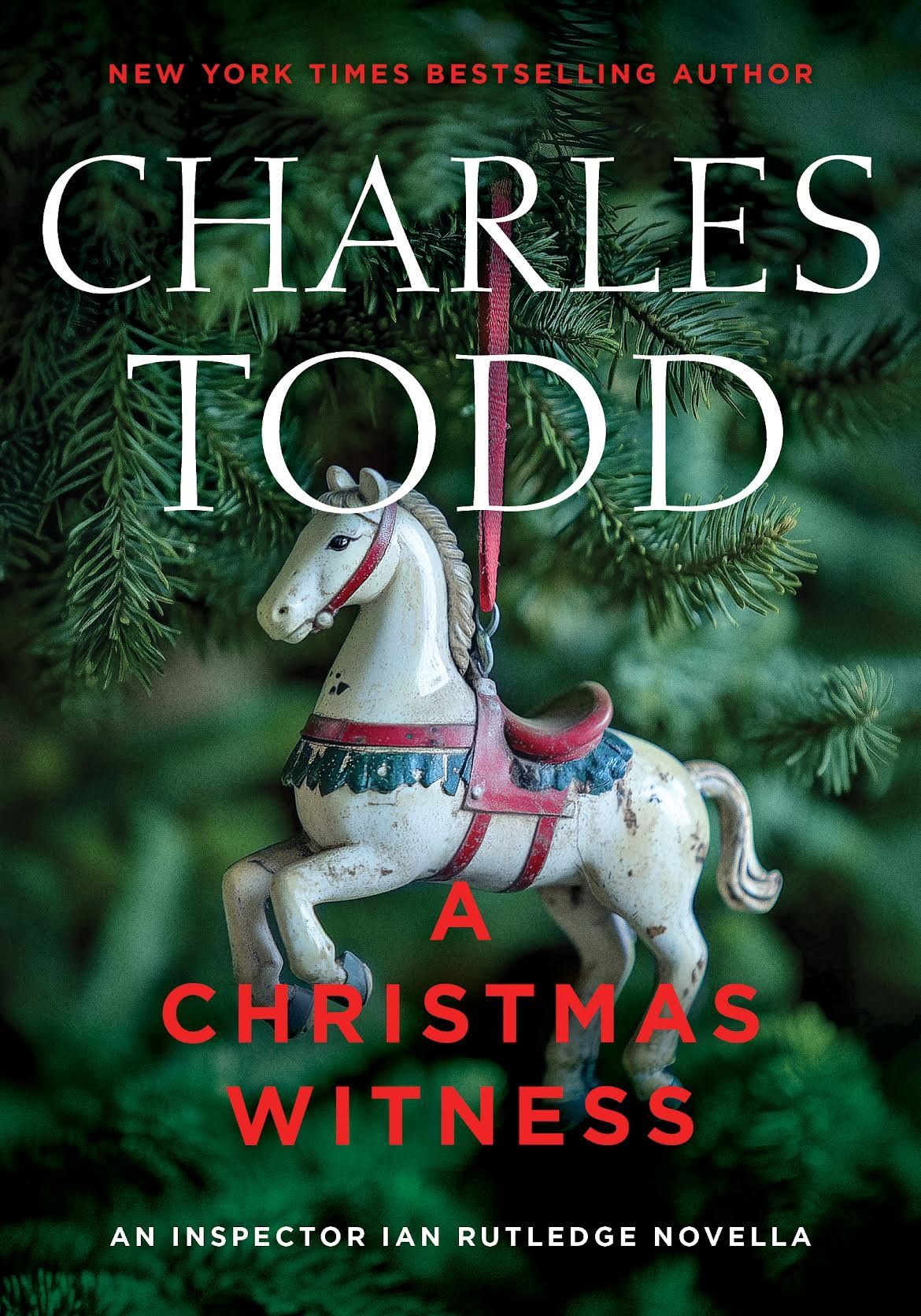
“Don’t choose a period simply because you like the costumes. Ask what conflicts and moral questions mattered then. Would your story make sense in that world? You can’t transplant a modern plot into Elizabethan England and call it historical. When I wrote The Christmas Witness, I tried weaving a familiar Christmas story into Rutledge’s world. I wasn’t sure it would work, but I finished it. You have to think through every choice until history and story become inseparable. That’s when a novel stops being ‘historical fiction’ and becomes simply fiction true to its time.”
“True to its time. I like that.”
“That’s all we can ask, tell a story that feels lived in, not visited. Let the reader forget they’re in another century.”

Clay Stafford is a bestselling writer, filmmaker, and founder of the Killer Nashville International Writers’ Conference, Killer Nashville Magazine, and Killer Nashville University. https://claystafford.com/

Charles Todd is the New York Times bestselling author of the Inspector Ian Rutledge mysteries, the Bess Crawford mysteries, and two stand-alone novels. Originally a mother-and-son writing team, Caroline passed away in August 2021, and Charles lives in Florida. https://charlestodd.com/