Clay Stafford talks with Don Bruns on “Editing, Momentum, and Keeping the Reader Hooked”
Don Bruns interviewed by Clay Stafford
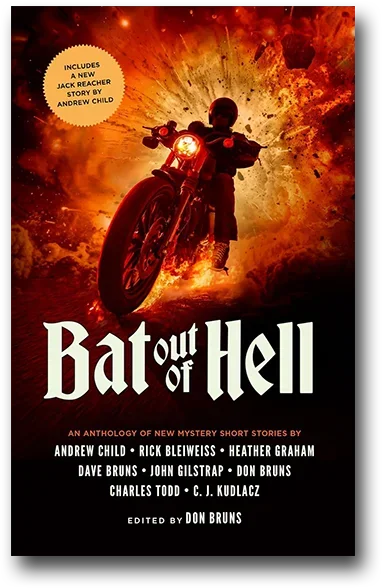
As both a bestselling novelist and an anthology editor, Don Bruns reads fiction from two vantage points: creator and gatekeeper. Through decades of writing, mentoring, and editing crime fiction, from his Caribbean series to multiple themed anthologies, he has developed a keen instinct for narrative momentum, character presence, and the invisible contract between writer and reader. Don and I spoke about common manuscript blind spots, sustaining tension, and the delicate balance between story and atmosphere. “Don, we’ve been friends for about twenty years now. Let’s talk about you as both an author and an editor. What are some common blind spots you see in manuscripts that writers often overlook?”
“One is formula. It’s easy, even for experienced writers, to fall into repeating yourself. I catch myself sometimes thinking, I wrote this scene two books ago. You have to challenge yourself to find a fresh take every time. Another blind spot is rushing character. Even in short stories, writers sometimes skip the small touches that make a person feel real. You don’t have room for a full backstory, but you still need personality, tension, and emotional credibility. Whether you’re seasoned or new, the same rules apply: keep tension alive, keep dialogue working, keep the story moving. The moment it bogs down, you have to find a way to re-energize it.”
“You’ve edited multiple anthologies. When you begin reading submissions, how quickly can you tell whether a story is working?”
“Very quickly. In judging situations, like when we were selecting stories for Blood in the Bayou, you read the first page or two, and you know. You don’t need to read fifty pages to sense whether the story is alive or not. Engagement shows up immediately. That actually makes the editor’s job easier than people think. If something isn’t pulling you in early, it’s rarely fixable later. Strong storytelling announces itself right away.”
“If you’re in a scene that’s dragging, what do you do to perk it up?”
“Pull a gun. I’ve heard that since I was a kid: if a scene drags in a movie or book, have someone pull a gun. It sounds simplistic, but there’s truth in it. Something has to happen. Confrontation, surprise, interruption, anything that changes the energy. Lee Child once said the hardest thing in a book is having a character walk from the door to the car. If nothing happens, it’s dead space. But if he walks past a cup of coffee he poured that morning, tastes it, realizes it’s cold, and tosses it in the sink, that doesn’t move the plot, but it reveals character and keeps the moment alive. Good writers study those transitions carefully.”
“That idea of keeping every moment alive is so important.”
“You can’t let the reader drift. The moment attention drops, they put the book down and pick up another one from the pile.”
“When you’re editing stories, what structural missteps do you see most often?”
“Loss of momentum, especially in scene transitions. I once read a manuscript in which a man is pushed from a sixteenth-story window, hits an awning, and rolls to the sidewalk, an incredibly vivid, gripping scene. Then the next line was essentially, across town, Joe was having coffee. All the energy vanished. That shift yanked me out of the story. Writers forget that you can change scenes, but you must carry emotional continuity with you. If you drop tension, the reader’s investment collapses.”
“Like losing viewers during a commercial break.”
“Exactly. If there’s no cliffhanger, they don’t come back. Fiction works the same way. You have to maintain interest every second.”
“You’re known for making settings feel almost like a character, especially in your Caribbean and New Orleans books. How do you balance atmosphere with forward motion?”
“Setting is color and flavor, and to me that’s almost as important as plot, but it can’t stall the story. I want readers to feel they’re there: smell the salt air, taste the margarita, see the beach. If they’ve been there, they recognize it; if not, it’s a cheap trip. I grew up loving that kind of writing. Authors like James Lee Burke or Don Winslow create such rich environments that you want to reread passages just for the texture, but you never leave the story. That’s the goal: an atmosphere that deepens immersion without slowing momentum.”
“When you’re editing work by major authors, how do you balance preserving their vision with sharpening it for readers?”
“Carefully. I stay away from content with writers at that level. If Andrew Child gives me a Jack Reacher story, I’m not going to tell him how to write Reacher. Same with someone like Heather Graham. These authors understand their worlds and characters deeply. But even with pros, if something feels off, you can flag it respectfully. I once reached out to a very well-known author about a story that needed work. They were gracious and fixed it immediately. Editing at that level is about clarity and alignment, not rewriting someone else’s voice. When we edited anthology stories selected by judges, we were also very careful not to change the content. If a story made the final cut, it deserved to stand as chosen. Editing in that context is about clarity and presentation, not rewriting someone else’s work. Respecting the author’s voice and the judge’s decision is part of the responsibility.”
“Earlier, you mentioned rewriting and reading with fresh eyes. How do you step back and see your own work as a reader?”
“I read it twice in my head: once as the writer who knows everything, and once as the reader who knows nothing. That’s the difference. The writer knows what’s coming; the reader doesn’t. So, I reread and think, ‘They won’t understand this yet; I need one more line.’ Sometimes it’s just a few words to bring them up to speed. You have to keep the reader aligned with your knowledge without overwhelming them. My wife Linda, who was an English teacher for thirty-five years, has edited every one of my books. She reads differently than I do, as a reader first, not as the person who wrote the story, and that perspective is invaluable. Every manuscript has its own issues, its own rhythm, its own pacing needs. You learn quickly that no two stories require exactly the same editorial solution.”
“Many writers struggle with that separation.”
“It comes down to remembering that you always know more than the reader. If you forget that, gaps appear. My instinct in revision is constant: I know this, but they don’t. Then I adjust.”
“You’ve mentored writers for years. Do you believe writing can be taught?”
“A friend of mine wrote a bestselling novel about a boy trapped in civil war Africa. He later said, ‘You can’t teach writing; you can teach structure and English, but not the spark.’” I’m not sure I agree completely. You can absolutely teach craft: tension, pacing, dialogue, construction. But there has to be something internal driving it. If it isn’t in the writer’s heart, technique won’t create it. For years, people asked me to mentor or teach, and I resisted. I honestly felt I didn’t know enough to tell anyone else how to write. Eventually, my wife said, ‘You’ve been paid for a lot of books; you do know what you’re doing.’ That was a turning point. I realized experience itself has value, even if you’re still learning. Every working writer develops instincts worth sharing.”
“That internal drive seems tied to reader engagement.”
“Exactly. The reader senses whether you care about the story. That’s what keeps pages turning, not technique alone, but urgency.”
“Going back to revision, many writers can’t reread their work objectively. You seem to do that naturally.”
“For me, it’s simply awareness: I know I’m ahead of the reader. So, I check constantly: are they where I am? If not, I add clarity, context, or texture. Sometimes just one line keeps them connected. That’s really the core of rewriting: bringing the reader up to speed with what the writer already knows.”
“It sounds like everything you’re describing—tension, character detail, scene continuity, reader alignment—comes back to momentum.”
“It does. Storytelling is motion. You can have beautiful prose and rich atmosphere, but if the reader’s interest stalls, nothing else matters. Every paragraph has to carry forward energy: plot, character, mood, something. If not, fix it.”
“And that awareness guides both your writing and your editing.”
“Yes. Whether I’m writing or reading someone else’s work, I’m always asking: Am I still engaged? If the answer is ‘no,’ the writer has lost me, and probably other readers too. That’s the test that matters.”

Clay Stafford is a bestselling writer, filmmaker, and founder of the Killer Nashville International Writers’ Conference, Killer Nashville Magazine, and Killer Nashville University. https://claystafford.com/

Don Bruns is a USA Today bestselling author and musician whose career spans comedy clubs, crime scenes, and Caribbean sunsets. He’s written three acclaimed mystery series, including the Caribbean, Stuff, and Quentin Archer novels, all praised for their wit, rhythm, and heart. Once a touring guitarist, he still writes with a musician’s ear. https://donbrunsbooks.com/